With more than 10‑year industry experience, Shandong Headpowder delivers full‑service pneumatic‑conveying systems and blowers, undertaking nationwide turn‑key powder‑handling projects.
Wheat starch is a vital raw material across multiple industries, including food processing, pharmaceuticals, and cosmetics. The efficient and reliable transportation of wheat starch from storage to processing units is crucial for maintaining production efficiency and product quality. Pneumatic conveying systems have become a preferred solution for handling wheat starch due to their ability to transport powders in a dust-free environment, reducing contamination risks and enhancing operational safety. This article provides an overview of wheat starch pneumatic conveying equipment, focusing on its structural components and operational principles.
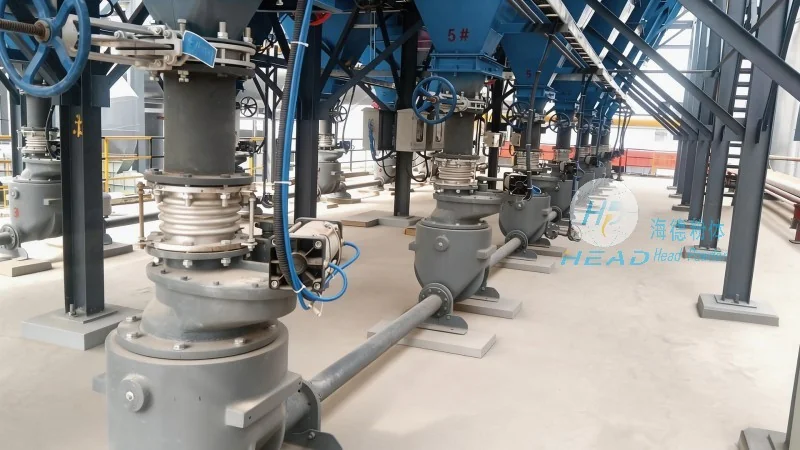
Wheat starch pneumatic conveying systems typically consist of several critical components that collaborate to ensure smooth material transport. The primary components include the hopper, feeder, air compressor, conveying pipeline, and receiver. Each component serves a vital function in the overall system.
The hopper is the initial storage unit where wheat starch is loaded. It is designed with a conical or rectangular shape to facilitate uniform material flow. The hopper is equipped with a discharge valve or gate to control the release of starch into the feeder. This component ensures that the material is stored in a way that minimizes segregation and compaction, which can affect subsequent processing.
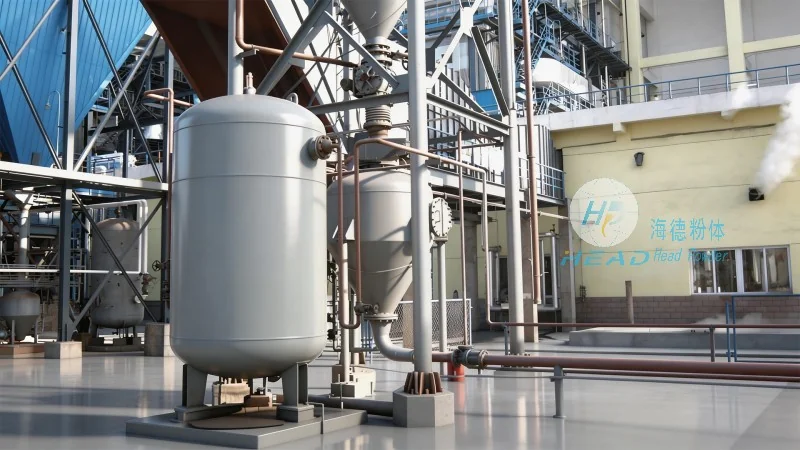
The feeder is a critical component that regulates the flow rate of wheat starch into the conveying system. It can be a rotary valve, a screw feeder, or a vibratory feeder, depending on the system design and material characteristics. The feeder maintains a consistent flow rate, preventing overloading or underloading of the system, which could lead to blockages or inefficient transport. For wheat starch, a rotary valve or a screw feeder is commonly used due to their ability to handle fine powders without causing excessive pressure drops.
The air compressor is the heart of the pneumatic conveying system, responsible for generating the necessary air pressure to move the wheat starch through the pipeline. The compressor can be a positive displacement type, such as a rotary screw or a piston compressor, or a centrifugal type. The choice of compressor depends on the system's capacity, pressure requirements, and energy efficiency considerations. The air compressor delivers compressed air to the conveying pipeline, creating a pressure differential that propels the starch particles forward.
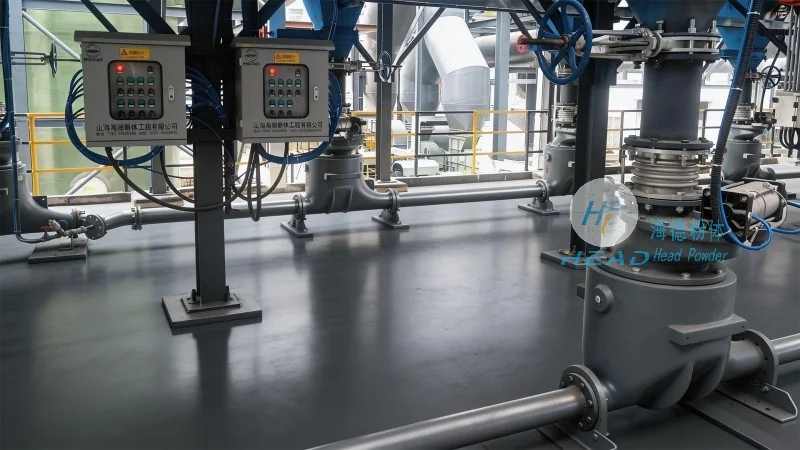
The conveying pipeline is the pathway through which wheat starch travels from the feeder to the receiver. It is typically made of stainless steel or plastic, chosen for its resistance to corrosion and wear from the fine powder. The pipeline is designed with smooth internal surfaces to minimize friction and pressure losses. The pipeline may include bends, elbows, and straight sections, with each component carefully sized to maintain the desired air velocity and pressure. Proper pipeline design is crucial to prevent material deposition and ensure consistent transport.
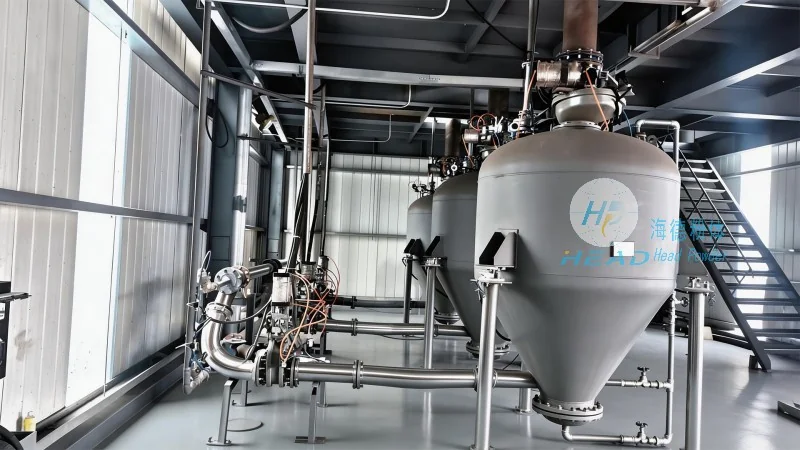
The receiver is the final storage unit where the wheat starch is deposited after being conveyed. It is similar in design to the hopper, with a conical or rectangular shape to allow for easy discharge. The receiver is equipped with a discharge valve or outlet to direct the starch to the next processing stage. The receiver may also include a dust collection system to capture any particles that escape during the conveying process, ensuring environmental compliance and product purity.
The operation of a wheat starch pneumatic conveying system involves a sequence of steps that ensure the material is transported efficiently and safely. The process begins with the loading of wheat starch into the hopper. The feeder then regulates the flow rate, allowing a controlled amount of starch to enter the conveying pipeline. The air compressor generates compressed air, which is introduced into the pipeline at the feeder end. The air flow creates a pressure differential, pulling the starch particles into the pipeline along with the air stream.

 Shandong Headpowder Engineering Co., Ltd.
 156-6277-7102(Manager Zhang)
  0531-83386006
  Zhangqiu District, Jinan City, Shandong Province, China
telephone
WeChatconsult
top