With more than 10‑year industry experience, Shandong Headpowder delivers full‑service pneumatic‑conveying systems and blowers, undertaking nationwide turn‑key powder‑handling projects.
Nitrogen circulation pneumatic conveying represents a sophisticated material handling technology that leverages nitrogen gas as the primary conveying medium within a closed-loop system. This method is particularly advantageous in industries where maintaining material purity, controlling moisture, and ensuring a contamination-free environment are critical. The system operates by generating a pressure differential through a network of sealed pipelines, where nitrogen is continuously circulated to transport dry bulk materials from a source to a destination. Unlike traditional open-loop systems, this approach minimizes exposure to ambient air, thereby preserving the integrity of sensitive materials such as pharmaceuticals, food products, or specialized chemicals.
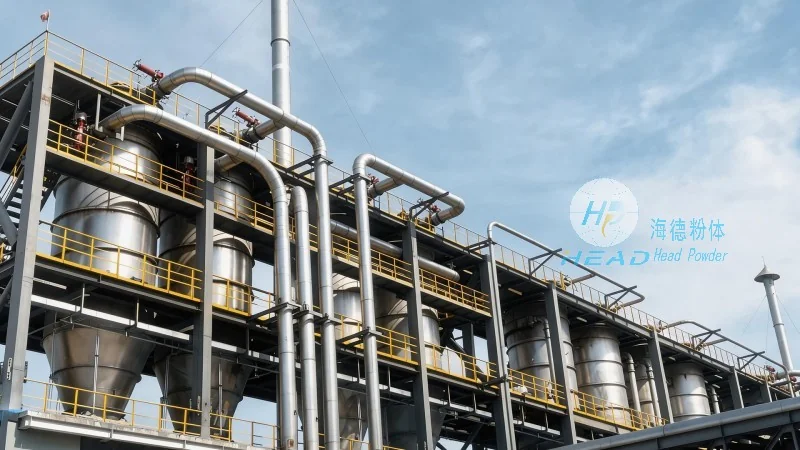
The nitrogen circulation pneumatic conveying system comprises several essential components that collaborate to achieve efficient material transport. At the heart of the system is a nitrogen compressor or blower, which supplies the necessary pressure to drive the conveying process. This compressor feeds nitrogen gas into the main pipeline, establishing a stable flow throughout the network. The material to be conveyed is introduced into the system via a hopper or feeder, where it is either suspended in the nitrogen stream or transported as a slurry. The gas velocity within the pipeline is carefully regulated to maintain a consistent suspension of the material particles, preventing blockages and ensuring smooth movement. Additionally, the system may include filters, cyclones, and receivers to separate the material from the gas and collect it at the destination, completing the closed-loop cycle.
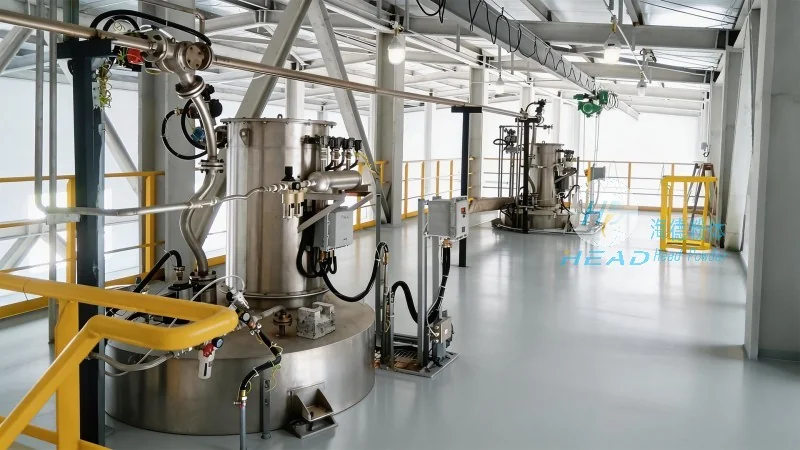
One of the most significant benefits of nitrogen circulation pneumatic conveying is its ability to maintain a controlled, inert environment for the conveyed material. By using nitrogen—an inert gas—the system effectively prevents oxidation, moisture absorption, or contamination from ambient air. This is especially vital for applications involving sensitive products, as it ensures that the material remains in its original state throughout the handling process. Furthermore, the closed-loop design enhances energy efficiency by minimizing gas loss and reducing the need for frequent cleaning. The system’s energy consumption is optimized through variable speed drives and intelligent control systems, which adjust the gas flow rate based on the material load and conveying distance. This adaptability not only improves operational efficiency but also reduces operational costs over time.
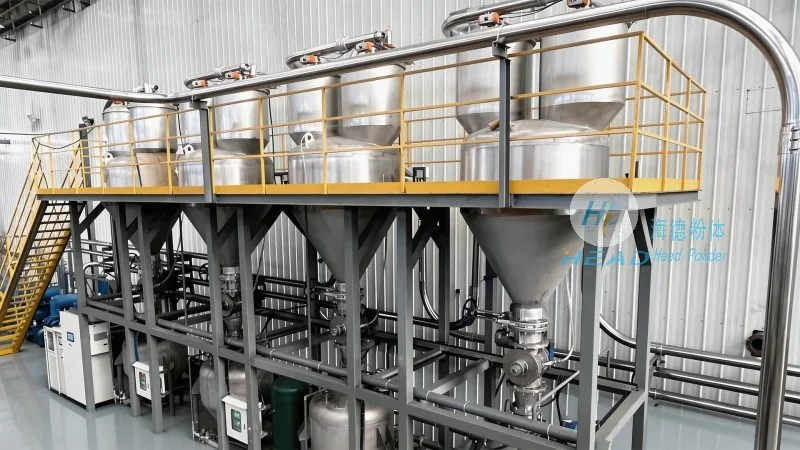
Nitrogen circulation pneumatic conveying is widely adopted across various industries, each benefiting from its unique advantages. In the pharmaceutical sector, it is used to transport active pharmaceutical ingredients (APIs) and excipients from storage silos to manufacturing lines, ensuring that the products remain free from contaminants and maintain their potency. In the food industry, the system is employed to handle dry ingredients like flour, sugar, or spices, preserving their freshness and preventing spoilage. The chemical industry utilizes this technology for transporting reactive or moisture-sensitive chemicals, protecting them from unwanted reactions and maintaining product quality. Moreover, in the manufacturing of electronic components and precision parts, nitrogen circulation conveying helps maintain a clean, dust-free environment, which is crucial for preventing particle contamination on sensitive surfaces and ensuring product reliability.
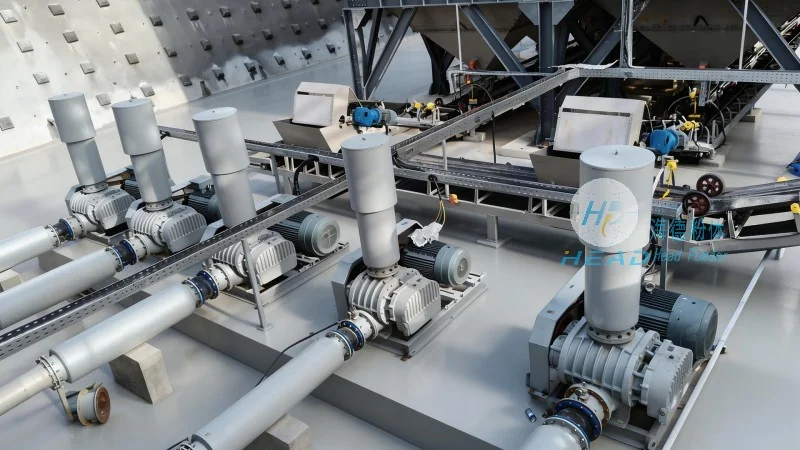
Shandong HeadPowder Engineering Co., Ltd., commonly referred to as HeadPowder, is a prominent manufacturer and supplier of advanced material handling solutions, specializing in nitrogen circulation pneumatic conveying systems. HeadPowder, headquartered in Shandong, China, has established itself as a trusted partner in the industry, delivering high-quality equipment that meets stringent performance and safety standards. The company’s expertise lies in designing and manufacturing customized systems tailored to the specific needs of diverse applications, from small-scale operations to large industrial facilities. HeadPowder’s commitment to innovation and customer satisfaction has enabled it to develop cutting-edge solutions that enhance operational efficiency, reduce downtime, and lower maintenance costs. With a focus on research and development, the company continuously improves its product line to incorporate the latest technological advancements, ensuring that its clients benefit from the most effective and reliable material handling solutions available.

 Shandong Headpowder Engineering Co., Ltd.
 156-6277-7102(Manager Zhang)
  0531-83386006
  Zhangqiu District, Jinan City, Shandong Province, China
telephone
WeChatconsult
top