With more than 10‑year industry experience, Shandong Headpowder delivers full‑service pneumatic‑conveying systems and blowers, undertaking nationwide turn‑key powder‑handling projects.
HeadPowder, a leading engineering company based in Shandong, China, specializes in the design, manufacturing, and installation of advanced pneumatic conveying systems tailored for handling aluminum dross materials. This article provides a detailed overview of the operational process and working principles of such systems, highlighting their efficiency and reliability in material transport.
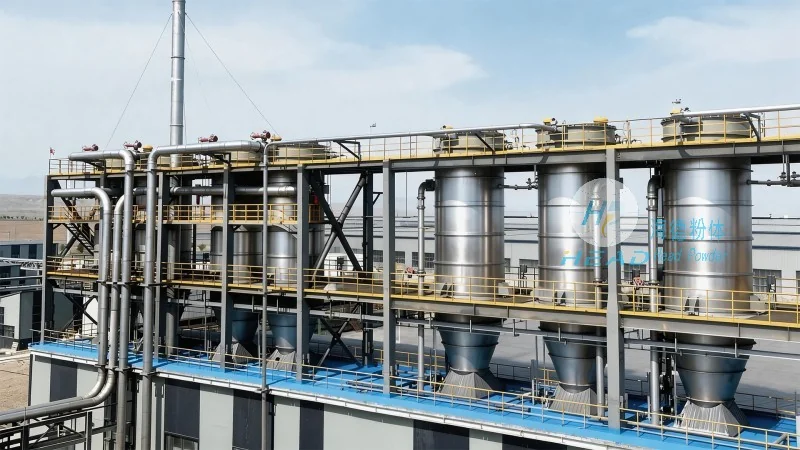
The core principle of a pneumatic conveying system for aluminum dross involves the use of compressed air to transport bulk materials through a pipeline network. The system typically consists of several key components, including a material hopper, a rotary valve (or feeder), a conveying pipeline, a dust separator, and a receiver. The process begins when aluminum dross is fed into the material hopper from a storage silo or a processing unit. A rotary valve then controls the flow of dross into the conveying pipeline, ensuring a consistent and controlled discharge rate.
Compressed air, supplied by a high-pressure blower or compressor, is introduced into the pipeline at a specific pressure and flow rate. The air flows through the pipeline, creating a positive pressure environment that propels the aluminum dross particles forward. The dross particles are entrained by the air stream, moving through the pipeline to the destination point, such as a processing plant or a storage silo. The conveying velocity and pressure are carefully optimized to prevent material degradation, blockages, or excessive wear on the system components.
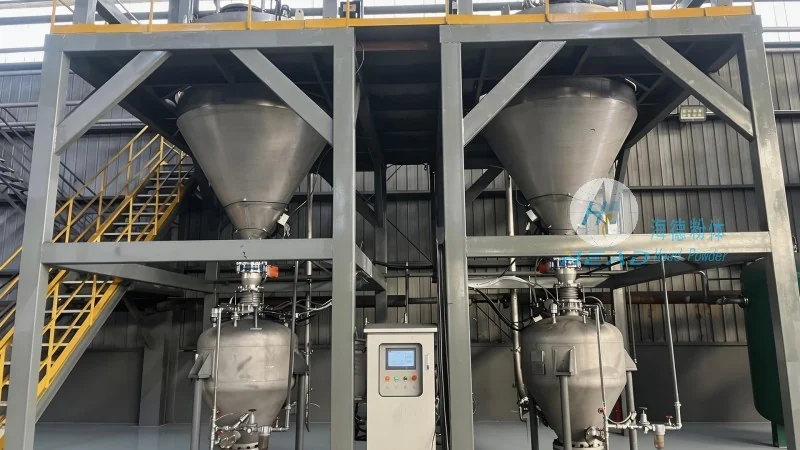
The operational process of the aluminum dross pneumatic conveying system can be broken down into several sequential steps. First, material feeding: the aluminum dross is stored in a hopper and discharged into the conveying pipeline via a rotary valve. Second, air supply: compressed air is generated and regulated to maintain the required pressure and flow. Third, material transport: the air and dross mixture travels through the pipeline to the receiving end. Fourth, separation and collection: at the destination, the air and material are separated, with the dross collected in a receiver and the air directed to a dust filter for purification before release.

Implementing a pneumatic conveying system for aluminum dross offers several advantages over traditional methods like belt conveyors or manual handling. These systems provide a closed-loop transport process, minimizing dust emissions and environmental contamination. The enclosed pipeline design also reduces the risk of material spillage and improves workplace safety. Additionally, pneumatic conveying systems can handle abrasive materials like aluminum dross without significant wear on components, as the air stream cushions the particles during transport. The flexibility of the system allows for easy integration with existing processing lines and can be adjusted to accommodate varying material flow rates and pipeline lengths.
To ensure the reliable and efficient operation of the aluminum dross pneumatic conveying system, regular maintenance is essential. This includes inspecting and cleaning the rotary valve and hopper to prevent material buildup and blockages, checking the air compressor and blower for proper performance, and maintaining the dust separator and filter system to prevent clogging. The system's control panel allows operators to monitor pressure, flow rate, and material level in real-time, enabling quick adjustments to maintain optimal performance. Proper training of personnel on system operation and emergency procedures is also crucial for safe and efficient operation.

 Shandong Headpowder Engineering Co., Ltd.
 156-6277-7102(Manager Zhang)
  0531-83386006
  Zhangqiu District, Jinan City, Shandong Province, China
telephone
WeChatconsult
top