With more than 10‑year industry experience, Shandong Headpowder delivers full‑service pneumatic‑conveying systems and blowers, undertaking nationwide turn‑key powder‑handling projects.
Clay powder, a common raw material in various industrial applications, often requires efficient and reliable transportation methods to ensure smooth production processes. Pneumatic conveying lines, particularly those designed for clay powder, offer a solution that combines effectiveness with minimal material degradation. This article explores the operation process and working principles of such systems, highlighting their benefits and the technical aspects that make them suitable for handling clay powder.
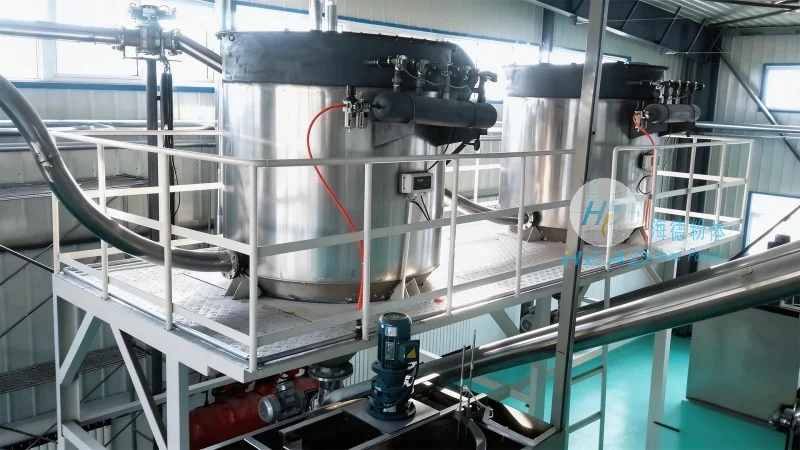
A typical clay powder pneumatic conveying line consists of several critical components that work in tandem to transport the material. These include the material hopper, which stores the clay powder; the air compressor or blower, which generates the necessary air pressure; the conveying line itself, often made of flexible or rigid tubing; and the discharge hopper or destination vessel. Each component plays a vital role in the overall system's performance and efficiency.
The operation of a clay powder pneumatic conveying line begins with the material being fed from the hopper into the conveying line. The air compressor then supplies compressed air, which creates a flow that draws the clay powder particles into the line. As the air and powder mixture travels through the system, the particles are carried along by the air stream. The system may include features like cyclones or filters to separate the powder from the air at the discharge end, ensuring that the material is delivered to its intended destination without loss or contamination.
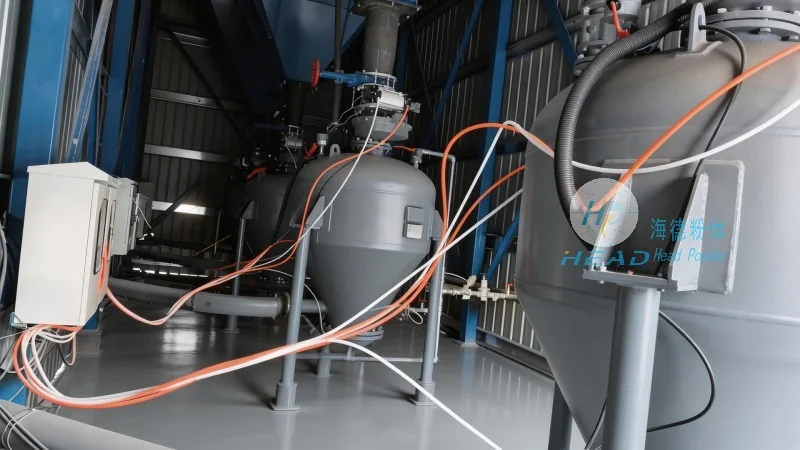
The working principle of a clay powder pneumatic conveying system is based on the principle of fluidization and drag. The compressed air creates a low-pressure environment within the conveying line, which draws the clay powder particles into the air stream. The air flow velocity is carefully controlled to ensure that the powder particles are suspended and transported without settling or clogging the line. This method is particularly effective for clay powder due to its fine particle size and cohesive properties, as the air flow can effectively overcome the gravitational forces acting on the particles.
Implementing a pneumatic conveying line for clay powder offers several advantages over traditional methods like bucket elevators or belt conveyors. These include reduced material degradation due to less mechanical contact, lower maintenance requirements as there are fewer moving parts, and the ability to transport materials over longer distances without the need for multiple transfer points. Additionally, pneumatic conveying systems can be designed to handle varying particle sizes and moisture content, making them versatile for different clay powder applications.
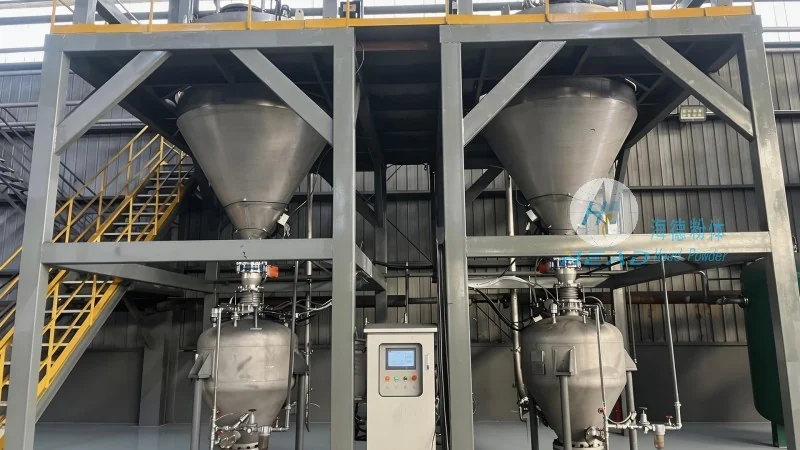
Shandong HeadPowder Engineering Co., Ltd., commonly known as HeadPowder, is a leading provider of specialized engineering solutions for material handling, including pneumatic conveying systems for clay powder. With years of experience in the industry, HeadPowder has developed a deep understanding of the unique challenges associated with handling clay powder, such as its tendency to clump or degrade under certain conditions. The company's team of engineers and technicians work closely with clients to design and implement customized pneumatic conveying lines that meet their specific operational requirements and production goals.
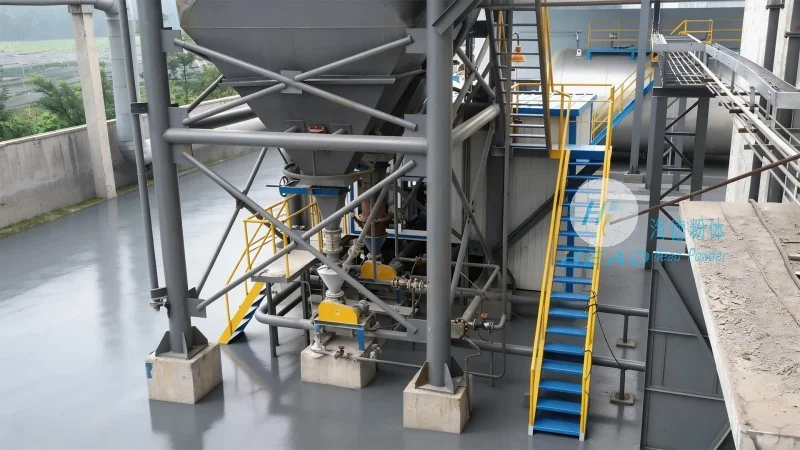
HeadPowder recognizes that each clay powder application has unique characteristics, and therefore, offers a range of customization options for its pneumatic conveying systems. This includes selecting appropriate air compressor types (such as rotary lobe or centrifugal blowers) based on the required air volume and pressure, choosing the right material for the conveying line (e.g., stainless steel or plastic tubing) to prevent corrosion or material interaction, and incorporating features like pulse jets or cyclone separators to enhance efficiency and material recovery. The company's engineers also consider factors like the distance of transport, the height of elevation, and the desired flow rate when designing the system, ensuring optimal performance for each client's needs.
At HeadPowder, quality is a top priority. The company adheres to strict quality control standards throughout the design, manufacturing, and installation of its pneumatic conveying systems. This includes using high-quality materials, conducting thorough testing of components, and providing detailed documentation for each system. To ensure long-term reliability, HeadPowder also offers maintenance and support services, including regular inspections, component replacement, and troubleshooting assistance. This commitment to quality and service helps clients maintain the efficiency and performance of their clay powder pneumatic conveying lines over time.

 Shandong Headpowder Engineering Co., Ltd.
 156-6277-7102(Manager Zhang)
  0531-83386006
  Zhangqiu District, Jinan City, Shandong Province, China
telephone
WeChatconsult
top