With more than 10‑year industry experience, Shandong Headpowder delivers full‑service pneumatic‑conveying systems and blowers, undertaking nationwide turn‑key powder‑handling projects.
HeadPowder, a leading manufacturer based in Shandong, China, specializes in the design and production of advanced pneumatic conveying systems tailored for lithium carbonate powder. This article provides a detailed overview of the operation process and working principle of such equipment, highlighting the key components, operational steps, and the technical advantages that ensure efficient and reliable material handling.
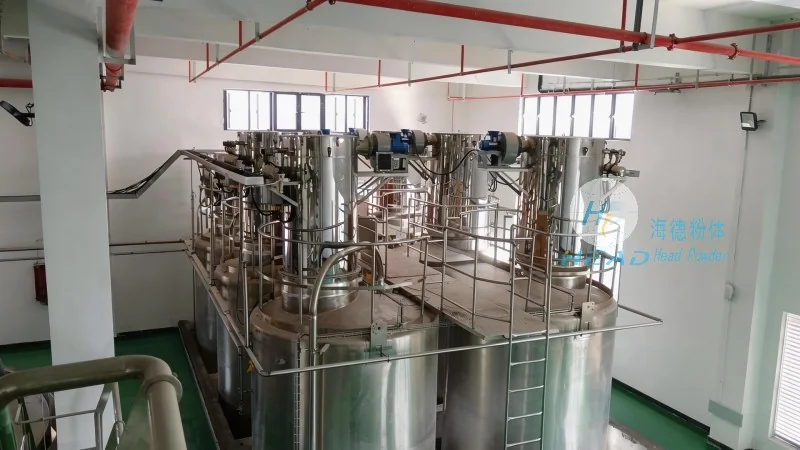
The lithium carbonate powder pneumatic conveying equipment typically consists of several critical components that work in tandem to achieve seamless material transport. These include a material hopper for storage, a rotary airlock valve to control the flow of powder, a conveying pipeline, a venturi or pressure vessel for air acceleration, and a dust collector or filter system to maintain air quality and prevent contamination. Each component plays a vital role in the overall system's performance, ensuring that the powder is moved safely and efficiently from the source to the destination.
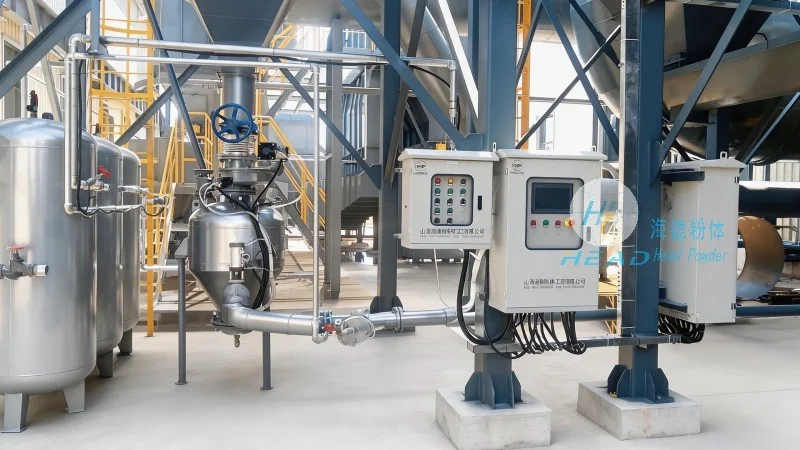
The operation of the lithium carbonate powder pneumatic conveying system follows a systematic sequence of steps. Initially, the powder is fed into the material hopper from the storage silo or production line. The rotary airlock valve then regulates the discharge of the powder into the conveying pipeline, preventing backflow and maintaining a consistent flow rate. Simultaneously, a high-pressure air compressor supplies compressed air to the system, which is then directed into the venturi or pressure vessel. The air accelerates as it passes through the venturi, creating a negative pressure that draws the powder particles into the air stream. The mixture of air and powder travels through the pipeline to the receiving hopper or processing unit. At the receiving end, a rotary airlock valve or a dust separator separates the powder from the air, allowing the powder to be deposited in the target container while the air is filtered and recycled back to the system.
The core working principle of the pneumatic conveying system relies on the fundamental physics of fluid dynamics and particle motion. When compressed air is introduced into the conveying pipeline, it creates a high-velocity flow that generates a pressure differential. This differential draws the lithium carbonate powder particles into the air stream, forming a suspension. The air velocity is maintained at a level sufficient to keep the powder particles suspended and prevent settling or clogging in the pipeline. The system's design ensures that the air-powder ratio is optimized to achieve the best conveying efficiency, minimizing energy consumption and maximizing material throughput. Additionally, the use of appropriate pipeline diameters and bends, along with the incorporation of air knives or pulse jets, helps to maintain the flow of powder and prevent blockages, ensuring continuous operation.
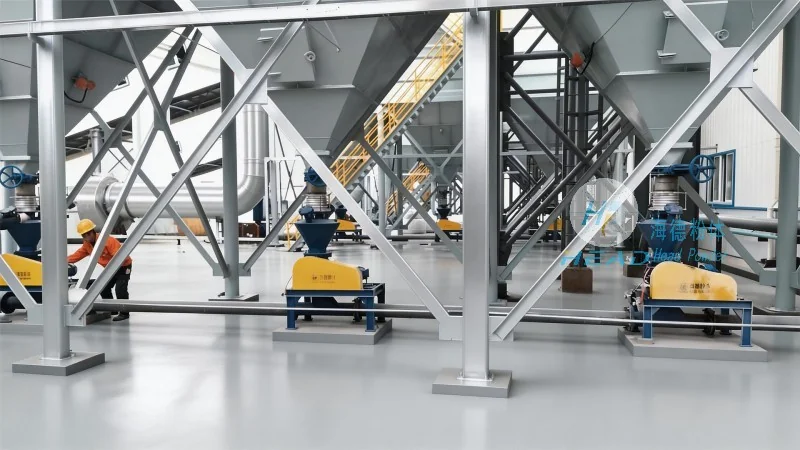
HeadPowder's lithium carbonate powder pneumatic conveying equipment offers several technical advantages that make it ideal for industrial applications. The system provides a dust-free and hygienic method of material transport, which is crucial for handling lithium carbonate, a material often used in pharmaceutical and battery industries where contamination must be strictly controlled. The equipment is also highly flexible, allowing for vertical, horizontal, or mixed conveying configurations to suit different plant layouts and operational requirements. Furthermore, the system's ability to handle varying particle sizes and moisture content makes it versatile for different production stages. In industrial settings, such as lithium battery manufacturing plants or chemical processing facilities, this equipment ensures reliable and efficient material handling, reducing downtime and improving overall productivity.

 Shandong Headpowder Engineering Co., Ltd.
 156-6277-7102(Manager Zhang)
  0531-83386006
  Zhangqiu District, Jinan City, Shandong Province, China
telephone
WeChatconsult
top