With more than 10‑year industry experience, Shandong Headpowder delivers full‑service pneumatic‑conveying systems and blowers, undertaking nationwide turn‑key powder‑handling projects.
HeadPowder, a leading provider in the field of material handling solutions, specializes in advanced air-driven conveying systems designed for efficient and reliable transportation of gypsum. This article delves into the operational workflow and underlying principles of the gypsum air-driven conveying system equipment, highlighting its design, functionality, and practical applications.
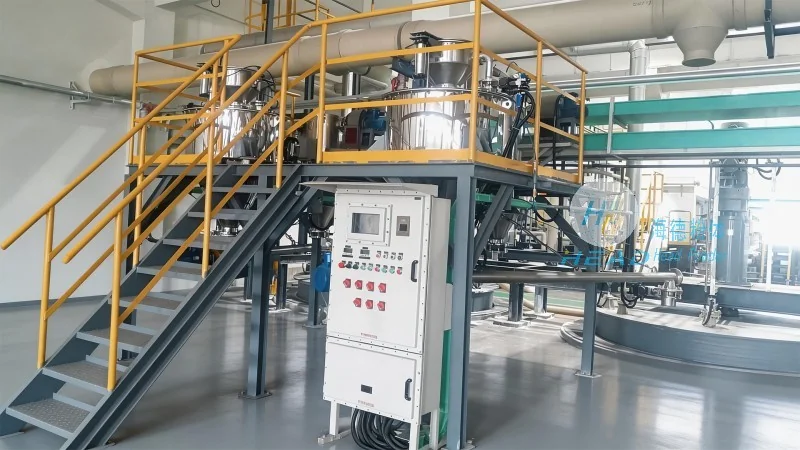
Shandong HeadPowder Engineering Co., Ltd., commonly known as HeadPowder, is headquartered in Shandong, China. The company is dedicated to developing and manufacturing high-quality material handling equipment, with a focus on air-driven conveying systems that meet the demands of various industrial sectors, including the gypsum processing industry.
The gypsum air-driven conveying system is a sophisticated piece of equipment engineered to transport gypsum powder or granules through a pipeline using compressed air. This system offers a dust-free, low-maintenance, and energy-efficient alternative to traditional mechanical conveying methods. It is particularly suitable for applications where material handling needs to be performed in a controlled environment, minimizing the risk of contamination and ensuring product integrity.
The operation of the gypsum air-driven conveying system involves several key steps that ensure smooth and continuous material transport. Initially, the gypsum material is fed into the inlet hopper of the system. The hopper is designed to accommodate bulk quantities of gypsum, allowing for consistent feeding without interruptions. Once the material is in the hopper, it is drawn into the conveying line by the action of compressed air. The compressed air, typically generated by a dedicated air compressor, creates a low-pressure zone within the pipeline, which pulls the gypsum particles along with it. The air and material mixture travels through the pipeline at a controlled velocity, ensuring that the gypsum is conveyed without excessive pressure or velocity that could cause degradation or blockages.
As the mixture moves through the pipeline, it passes through various components such as bends, valves, and filters. These components are strategically placed to maintain the integrity of the conveying process. For instance, bends are designed with smooth curves to minimize friction and prevent material buildup, while valves are used to control the flow rate and direction of the material. Filters are incorporated to remove any debris or dust particles from the air stream, ensuring that the system operates efficiently and maintains a clean environment.
The conveying process continues until the material reaches the discharge point, which is typically a collection bin or storage silo. At this stage, the compressed air is separated from the gypsum, often through a cyclone separator or a venturi system. The separated air is then released back into the atmosphere or recirculated if necessary, while the gypsum is collected in the designated container. This separation process is crucial for maintaining the purity of the gypsum and preventing contamination from the air stream.
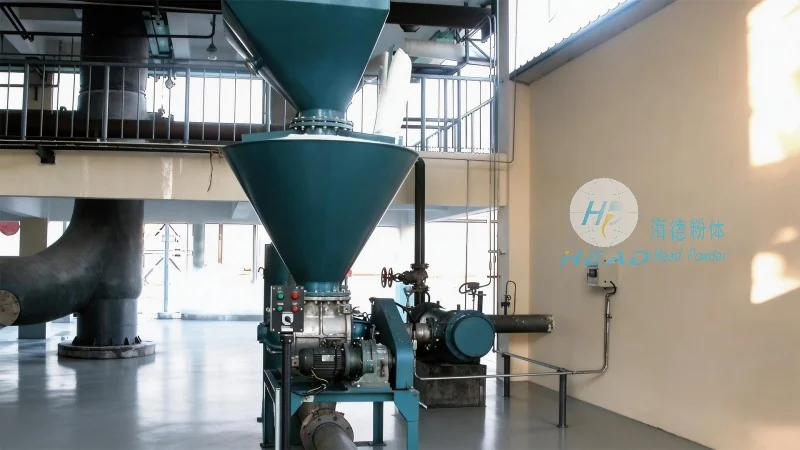
The core working principle of the gypsum air-driven conveying system is based on the principle of pneumatic conveying, where compressed air is used to transport solid materials. The system operates on the concept of creating a pressure differential between the inlet and outlet of the conveying line. The inlet of the system is connected to the material source (hopper), and the outlet is connected to the discharge point. The compressed air is introduced at the inlet, creating a low-pressure area that draws the gypsum particles into the pipeline.
The air velocity within the pipeline is carefully controlled to ensure that the gypsum particles are carried along without settling or causing blockages. The velocity is typically maintained at a level that is sufficient to overcome the gravitational force acting on the particles and any frictional forces within the pipeline. This controlled velocity is essential for preventing material degradation, such as caking or agglomeration, which could lead to system inefficiencies or blockages.
The system also incorporates features to manage the air and material ratio, which is the ratio of air volume to material volume. An optimal air-material ratio is crucial for efficient conveying. If the ratio is too low, the material may not be adequately suspended, leading to blockages or uneven flow. Conversely, if the ratio is too high, the system may consume excessive energy without improving conveying efficiency. HeadPowder's gypsum air-driven conveying systems are designed with adjustable air flow controls that allow operators to fine-tune the air-material ratio according to the specific characteristics of the gypsum being conveyed, such as particle size, density, and moisture content.
The gypsum air-driven conveying system consists of several key components, each playing a vital role in the overall operation. These components include the air compressor, which provides the necessary compressed air; the inlet hopper, which stores and feeds the gypsum material; the conveying pipeline, which transports the material; the discharge system, which separates the air and material; and the control system, which monitors and regulates the operation of the entire system.
The air compressor is responsible for generating the compressed air required for the conveying process. It is typically a high-efficiency model that can deliver a consistent flow of air at the required pressure. The inlet hopper is designed to handle bulk quantities of gypsum and features a feeding mechanism that ensures a steady flow of material into the conveying line. The conveying pipeline is made of durable materials, such as stainless steel or PVC, which are resistant to corrosion and abrasion from the gypsum particles. The discharge system, often a cyclone separator or a venturi system, separates the air from the gypsum by utilizing the centrifugal force or the pressure drop, respectively.
The control system is an integral part of the gypsum air-driven conveying system, as it allows operators to monitor the system's performance and make adjustments as needed. The control system typically includes sensors that measure parameters such as air pressure, material flow rate, and temperature. These sensors provide real-time data to the operator, enabling them to detect any anomalies or inefficiencies and take corrective action promptly. The control system may also include automatic controls that adjust the air flow or material feed rate based on the system's operating conditions, ensuring optimal performance and minimizing downtime.
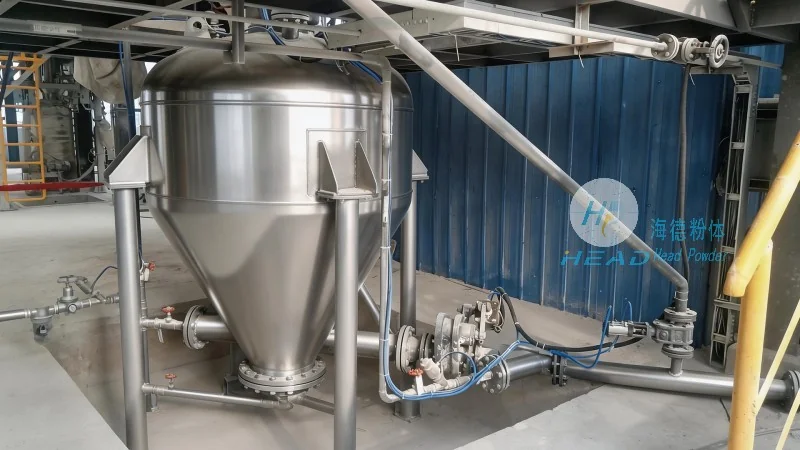
HeadPowder's gypsum air-driven conveying system offers several advantages over traditional mechanical conveying methods. One of the primary advantages is its ability to transport gypsum in a dust-free environment. Unlike mechanical systems that rely on belts or screws, which can generate dust and cause contamination, the pneumatic system keeps the material enclosed within the pipeline, reducing the risk of dust exposure and ensuring a clean working environment. This is particularly important in industries where dust control is a regulatory requirement or where product purity is critical.
Another significant advantage is the low maintenance requirement of the system. Since there are no moving parts in direct contact with the gypsum material, the system experiences less wear and tear compared to mechanical conveying systems. This reduces the need for frequent maintenance and replacement of parts, resulting in lower operational costs over the system's lifespan. Additionally, the system is designed to be energy-efficient, as it uses compressed air to transport the material, which can be more cost-effective than mechanical systems that rely on motors and belts.
The gypsum air-driven conveying system also offers flexibility in terms of layout and installation. The pipeline can be installed in various configurations, including horizontal, vertical, or a combination of both, to suit the specific requirements of the facility. This flexibility allows for the system to be integrated into existing production lines or new installations without significant modifications to the facility's structure. Furthermore, the system can handle a wide range of gypsum types, including powdered and granular forms, making it suitable for various applications within the gypsum processing industry.
The gypsum air-driven conveying system is widely used in various industries that require the transportation of gypsum materials. One of the primary applications is in the construction industry, where gypsum is used as a raw material for producing gypsum boards, which are commonly used in building and interior decoration. The system is also used in the manufacturing of gypsum products, such as plaster and drywall, where the efficient transportation of gypsum is essential for maintaining production efficiency.
Another application is in the agricultural sector, where gypsum is used as a soil conditioner to improve soil quality and fertility. The system is used to transport gypsum from storage facilities to application sites, ensuring that the material is delivered in a controlled manner and without contamination. Additionally, the system is used in the pharmaceutical and food industries, where the purity and quality of the gypsum are critical. The dust-free and low-maintenance nature of the system makes it suitable for these industries, where product purity is a top priority.

 Shandong Headpowder Engineering Co., Ltd.
 156-6277-7102(Manager Zhang)
  0531-83386006
  Zhangqiu District, Jinan City, Shandong Province, China
telephone
WeChatconsult
top