With more than 10‑year industry experience, Shandong Headpowder delivers full‑service pneumatic‑conveying systems and blowers, undertaking nationwide turn‑key powder‑handling projects.
Shandong HeadPowder Engineering Co., Ltd. specializes in the design, manufacturing, and installation of advanced pneumatic conveying systems for bulk materials, including sugar. The company's expertise lies in providing efficient and reliable solutions that ensure seamless material handling from storage to processing units. This article delves into the operation process and working principle of the sugar pneumatic conveying system equipment, highlighting key components and operational mechanisms.
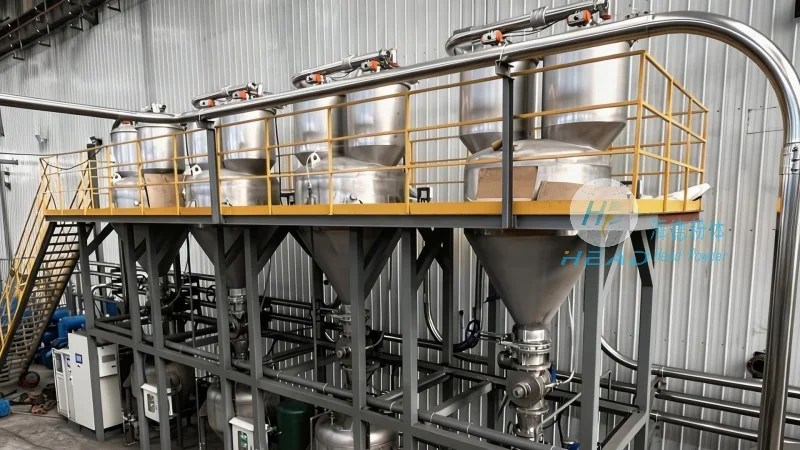
The sugar pneumatic conveying system typically consists of several critical components that work in tandem to achieve effective material transport. These include a material hopper for storage, a feeder to control the flow rate, a compressor or blower to generate the air pressure, a pipeline network for conveying the material, and a receiver for depositing the conveyed sugar. Each component plays a vital role in maintaining the system's efficiency and preventing material degradation or blockages.
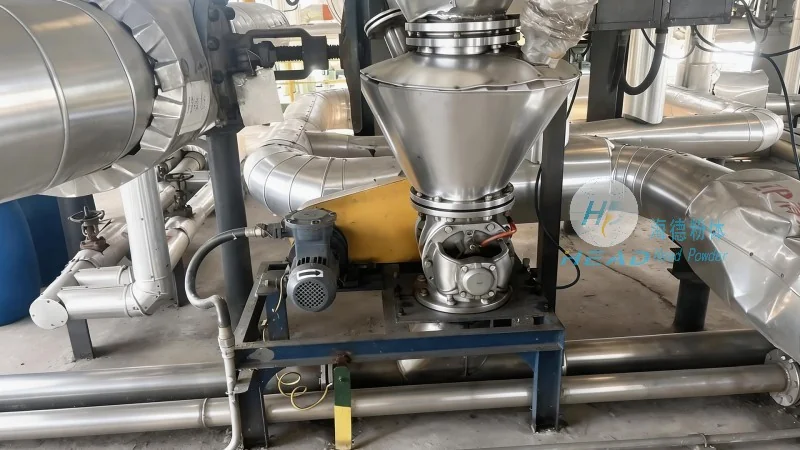
The core working principle of the sugar pneumatic conveying system is based on the use of air as the conveying medium. The process begins with the material being fed from the hopper into the pipeline. Simultaneously, the compressor or blower generates high-pressure air that is introduced into the pipeline. As the air flows through the pipeline, it creates a flow that entrains the sugar particles, carrying them along the entire length of the system. The air-sugar mixture travels through the pipeline until it reaches the receiver, where the air is separated from the material, typically through a cyclone or filter system. The separated air is then discharged, while the sugar is collected in the receiver, ready for further processing or packaging.
The operation process of the sugar pneumatic conveying system involves several sequential steps that ensure smooth and continuous material handling. First, the system is started by activating the compressor or blower, which establishes the necessary air pressure. Next, the feeder is adjusted to control the flow rate of the sugar from the hopper into the pipeline. As the material is fed, the air flow entrains the sugar particles, and the mixture is conveyed through the pipeline. The receiver is positioned at the end of the pipeline to collect the conveyed sugar. The system operates continuously as long as the material supply is maintained and the air pressure is sufficient. Regular monitoring of pressure, flow rate, and material level is essential to ensure optimal performance and prevent system failures.
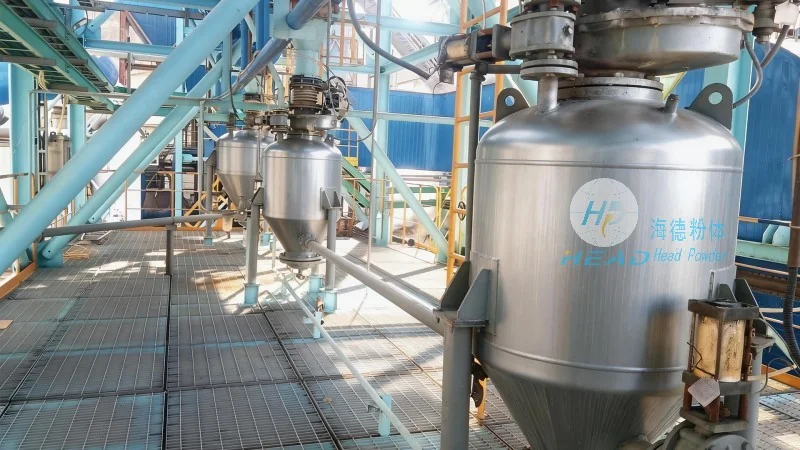
Implementing a pneumatic conveying system for sugar handling offers several advantages over traditional methods such as belt conveyors or bucket elevators. These advantages include reduced risk of material contamination, as the system operates in a closed environment, preventing exposure to dust and external factors. Additionally, the system minimizes material degradation due to reduced friction and exposure to air, which is crucial for maintaining the quality of sugar products. The compact design of the system allows for efficient use of space, making it suitable for both new installations and retrofitting in existing facilities. Furthermore, the system provides high flexibility in terms of layout and material transport, enabling easy integration with other processing equipment.

 Shandong Headpowder Engineering Co., Ltd.
 156-6277-7102(Manager Zhang)
  0531-83386006
  Zhangqiu District, Jinan City, Shandong Province, China
telephone
WeChatconsult
top