With more than 10‑year industry experience, Shandong Headpowder delivers full‑service pneumatic‑conveying systems and blowers, undertaking nationwide turn‑key powder‑handling projects.
For industrial facilities dealing with dust and particulate matter, efficient material handling is crucial to maintaining operational efficiency and environmental compliance. The pneumatic conveying system at dust extraction stations plays a pivotal role in transporting collected dust and powders from collection points to storage or processing units. This article delves into the operation process and working principle of such systems, highlighting their importance in modern industrial applications.
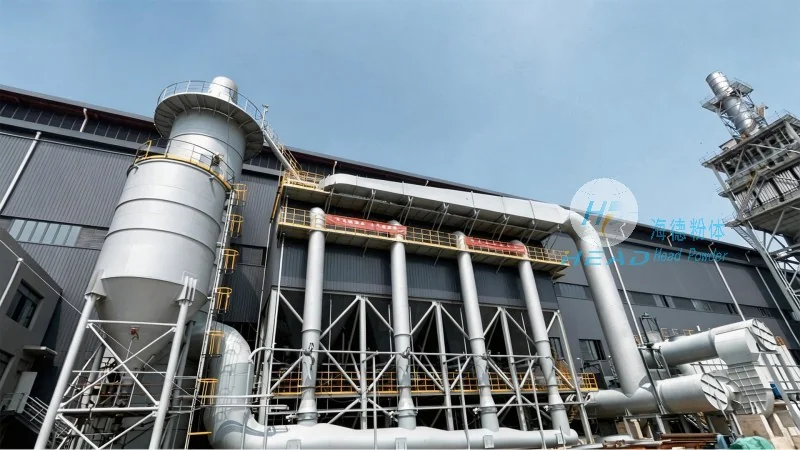
In dust extraction stations, the primary function of a pneumatic conveying system is to transport collected dust and powders from dust collectors or hoppers to designated storage silos or processing equipment. These systems are designed to handle fine particles, ensuring minimal loss and maintaining a clean, controlled environment. The system typically integrates with the dust extraction equipment, forming a closed-loop or semi-closed-loop system to prevent dust re-entrainment and ensure safe material transport.
The pneumatic conveying system in a dust extraction station consists of several critical components that work in tandem to achieve efficient material transport. These components include:
The operation process of the pneumatic conveying system at a dust extraction station involves several sequential steps, each critical to the system's efficiency and reliability. The process typically begins when the dust collector or hopper is filled with collected dust. The blower then starts, creating a pressure differential that draws the material into the pipeline.
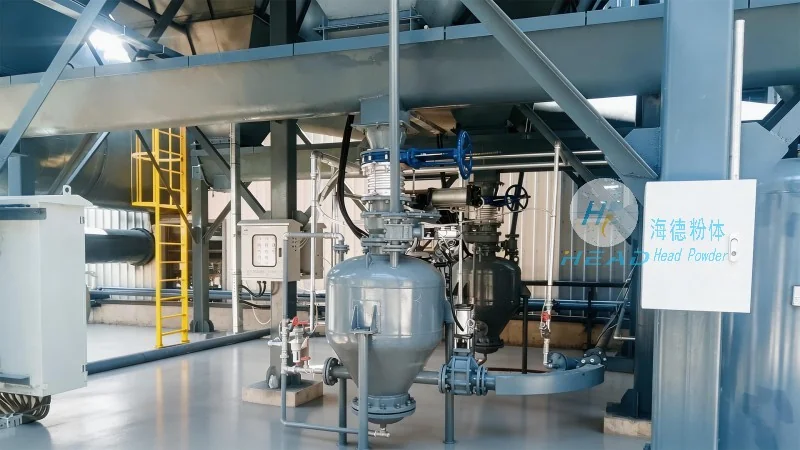
As the air flows through the pipeline, it entrains the dust particles, forming a slurry or "pneumatic stream" that moves toward the receiver. The velocity of the air is carefully controlled to ensure the material is transported without excessive wear on the pipeline or equipment. At the receiver, the air is separated from the material, often using a cyclone separator or a filter, and the air is discharged back into the system or to the atmosphere.
The material is then deposited into the receiver or storage silo, where it can be further processed or stored. The system may include a discharge valve or a conveyor to move the material from the receiver to the next stage of the process. Throughout the operation, control valves and regulators adjust the air flow and pressure to maintain optimal conditions, ensuring consistent material transport and preventing system failures.
The working principle of the pneumatic conveying system is based on the fundamental physics of fluid dynamics and particle transport. The system relies on the creation of a pressure differential between the source (dust collector) and the destination (receiver) to move the material through the pipeline. The blower or air compressor generates the necessary pressure, which is then used to entrain the dust particles into the air stream.
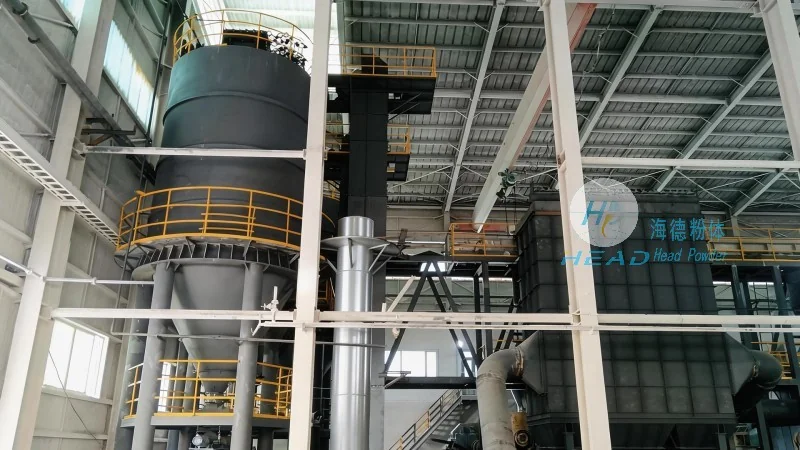
When the air flows through the pipeline at a sufficient velocity, it creates a drag force on the dust particles, lifting them into the air stream. The particles are then carried along the pipeline by the moving air, forming a homogeneous mixture known as a "pneumatic slurry." The velocity of the air must be high enough to overcome the gravitational force acting on the particles but not so high as to cause excessive wear or damage to the pipeline or equipment.
The separation of air and material at the receiver is achieved through a cyclone separator or a filter. The cyclone uses centrifugal force to separate the heavier particles from the air, while the filter traps fine particles. The separated air is then discharged, and the material is collected in the receiver. The system's efficiency depends on the proper design of the pipeline, the blower's capacity, and the control of air velocity and pressure.
Pneumatic conveying systems in dust extraction stations offer several advantages over traditional mechanical conveying methods. These advantages are exemplified by systems designed and manufactured by Shandong HeadPowder Engineering Co., Ltd. (headpowder), which have proven to be efficient, reliable, and compliant with environmental regulations. The company's expertise in industrial material handling ensures that the systems are tailored to the specific needs of each application, providing optimal performance and minimal maintenance.

 Shandong Headpowder Engineering Co., Ltd.
 156-6277-7102(Manager Zhang)
  0531-83386006
  Zhangqiu District, Jinan City, Shandong Province, China
telephone
WeChatconsult
top