With more than 10‑year industry experience, Shandong Headpowder delivers full‑service pneumatic‑conveying systems and blowers, undertaking nationwide turn‑key powder‑handling projects.
For industries dealing with bulk dry materials like soybeans, efficient and reliable material handling is crucial. Pneumatic conveying systems offer a solution that minimizes product damage, reduces contamination risks, and enhances operational flexibility. This article delves into the operation process and working principles of dry soybean pneumatic conveying, highlighting the key components, operational mechanisms, and practical applications. The information is presented by Shandong HeadPowder Engineering Co., Ltd., a leading provider of material handling solutions based in China.
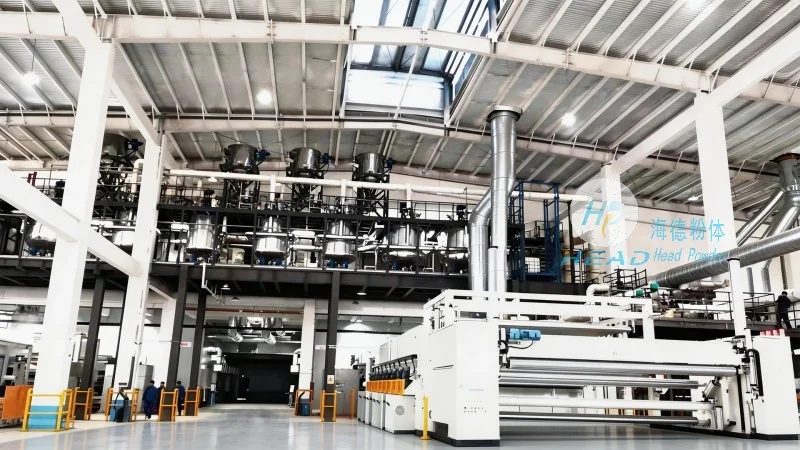
A pneumatic conveying system for dry soybeans typically consists of several essential components that work in tandem to transport the material. The primary components include a material hopper or silo for storing the soybeans, a feeder to control the flow rate, a conveying line (usually made of metal or flexible tubing), a blower or compressor to generate the air flow, and a receiver or discharge hopper where the soybeans are deposited. Additionally, the system may incorporate filters, cyclones, and dust collection equipment to ensure air quality and prevent product loss. Each component plays a critical role in maintaining the efficiency and safety of the conveying process.
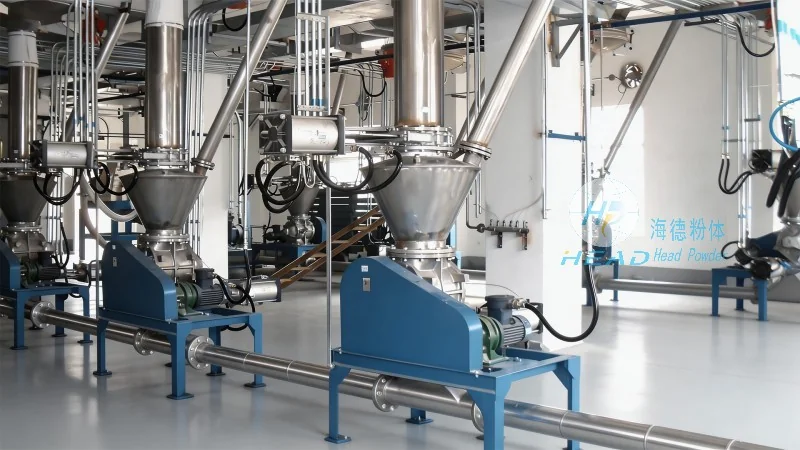
Pneumatic conveying systems for dry soybeans are generally classified into two main types: vacuum (suction) systems and pressure (blow) systems. Vacuum systems operate by creating a negative pressure in the conveying line, drawing the soybeans and air mixture from the source to the receiver. This method is ideal for short to medium distances and when the material needs to be transported from multiple points. Pressure systems, on the other hand, use positive pressure to push the material through the line, making them suitable for longer distances and when the material must be conveyed from a single source to multiple destinations. Both systems rely on the same fundamental principles but differ in the direction and magnitude of air flow, which affects their performance and application suitability.
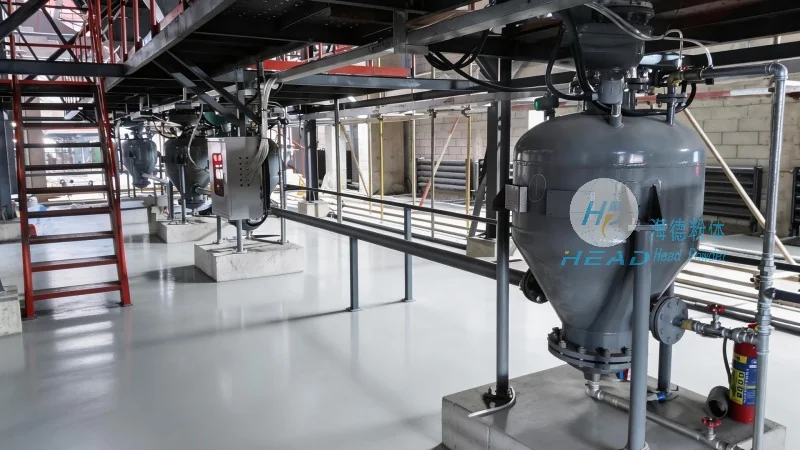
The operation process of a dry soybean pneumatic conveying system involves several sequential steps. First, the soybeans are loaded into the material hopper or silo. The feeder then regulates the flow rate, ensuring a consistent supply of material to the conveying line. The blower or compressor generates the required air flow, which is introduced into the conveying line. In a vacuum system, the air flow creates a negative pressure that pulls the soybeans and air mixture from the hopper into the line. The mixture travels through the conveying line to the receiver, where the air is separated from the soybeans, often using a cyclone or filter. The separated soybeans are then discharged into the receiver hopper. In a pressure system, the air flow pushes the soybeans through the line, and the receiver is typically located at a higher elevation to allow gravity to assist in the separation process. The entire process is controlled by a system of valves, sensors, and controls that monitor pressure, flow rate, and material level, ensuring smooth and continuous operation.
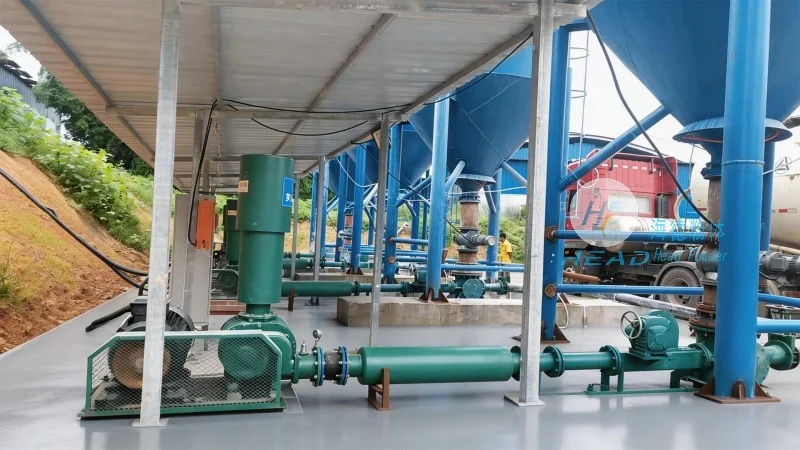
The working principle of pneumatic conveying for dry soybeans is based on the fundamental physics of fluid dynamics and particle transport. In both vacuum and pressure systems, the air flow creates a drag force on the soybean particles, lifting them and carrying them through the conveying line. The key to efficient transport is maintaining a sufficient air velocity to overcome the gravitational force acting on the particles and to prevent particle settling or blockages. The air velocity must be high enough to keep the particles suspended but not so high as to cause excessive wear on the system components or to create excessive pressure drops. The system's design, including the size of the conveying line, the type of blower, and the flow rate of air, is critical in achieving optimal performance. Additionally, the moisture content and size distribution of the soybeans can affect the conveying efficiency, as larger or wetter particles may require higher air velocities or different system configurations.

 Shandong Headpowder Engineering Co., Ltd.
 156-6277-7102(Manager Zhang)
  0531-83386006
  Zhangqiu District, Jinan City, Shandong Province, China
telephone
WeChatconsult
top