With more than 10‑year industry experience, Shandong Headpowder delivers full‑service pneumatic‑conveying systems and blowers, undertaking nationwide turn‑key powder‑handling projects.
HeadPowder, a leading engineering company based in Shandong, China, specializes in the design and implementation of efficient pneumatic conveying systems for aluminum turnings. This article delves into the operational process and underlying principles that govern the effective transport of aluminum turnings using pneumatic technology, providing a comprehensive overview for industry professionals and potential clients.
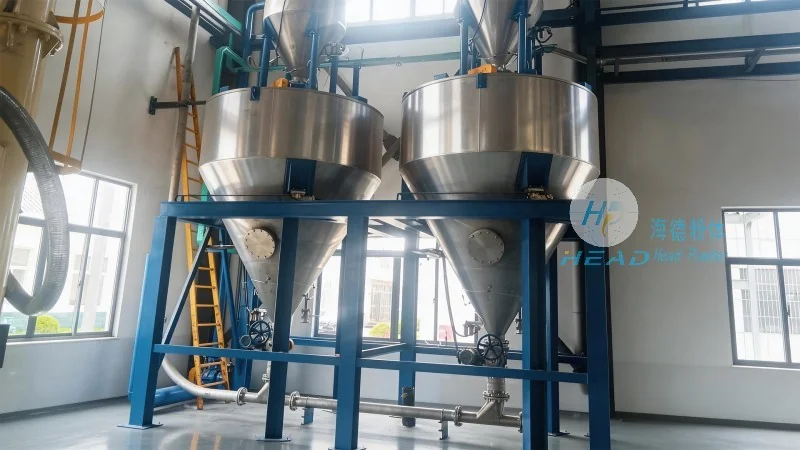
Aluminum turnings are small, irregularly shaped pieces of aluminum generated during machining processes, such as turning or milling. These turnings are often collected in bulk and require reliable transportation to processing facilities or storage areas. Pneumatic conveying offers a flexible and efficient solution for moving these materials, leveraging air pressure to transport the turnings through a pipeline system. The process involves several key components, including a hopper for material storage, a feeder to control the flow rate, a conveyor line, and a receiver for the delivered material.
The operation of a pneumatic conveying system for aluminum turnings typically follows a structured sequence. Initially, the aluminum turnings are fed into a hopper, where they accumulate until the system is ready to transport them. A feeder, often a rotary valve or a screw feeder, regulates the discharge rate from the hopper, ensuring a consistent flow of material into the conveyor line. The feeder is connected to a pipeline, which may be either a positive pressure or negative pressure system, depending on the specific application and material characteristics.
Once the material enters the pipeline, it is propelled by compressed air. In a positive pressure system, air is blown into the pipeline, pushing the turnings forward. In a negative pressure system, air is drawn out of the pipeline, creating a vacuum that pulls the material. The choice between these systems depends on factors such as the distance to be covered, the material's density, and the desired flow rate. The conveyor line may include bends, elbows, or other components to navigate the path from the hopper to the receiver, with each component designed to minimize friction and maintain the material's flow.
As the aluminum turnings travel through the pipeline, they are mixed with the air stream. The velocity of the air must be sufficient to keep the turnings in suspension, preventing them from settling or clogging the system. This requires careful calculation of the air velocity and the material's properties, such as particle size and density. The system also includes a receiver at the end of the pipeline, where the turnings are deposited. The receiver may be equipped with a discharge valve or a hopper to control the release of the material, ensuring a smooth and controlled delivery.
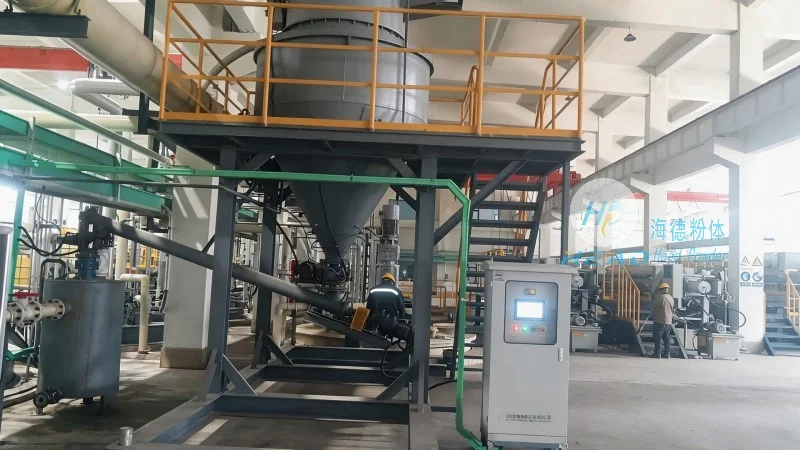
The fundamental principle behind pneumatic conveying is the use of air as a medium to transport solid materials. The system operates by creating a pressure differential between the inlet and outlet of the pipeline. In a positive pressure system, the inlet is pressurized with air, while the outlet is at atmospheric pressure. The pressure difference drives the material forward, with the air acting as a carrier. In a negative pressure system, the outlet is evacuated, creating a vacuum that pulls the material through the pipeline. The air flow rate and pressure are critical parameters that determine the system's capacity and efficiency.
Key components of the system, such as the feeder and the pipeline, play essential roles in the conveying process. The feeder ensures a uniform flow of material, preventing blockages or surges that could disrupt the operation. The pipeline's design, including its diameter, length, and bends, affects the air velocity and pressure drop, which in turn influence the conveying efficiency. Proper sizing of the pipeline and air compressor is essential to maintain the required velocity and pressure to keep the aluminum turnings in suspension.
The material's properties, including its particle size, shape, and density, also impact the conveying performance. Aluminum turnings are typically fine and irregular, which can lead to challenges such as clogging or uneven flow. To mitigate these issues, the system may include features like air classifiers or cyclones to separate oversized particles or to adjust the air flow. Additionally, the use of additives or lubricants may be employed to reduce friction and improve the material's flow characteristics.
Pneumatic conveying offers several advantages over traditional methods, such as belt conveyors or bucket elevators, for transporting aluminum turnings. One of the primary benefits is the ability to handle materials in a closed system, which reduces dust emissions and improves safety in the workplace. The enclosed pipeline prevents the aluminum turnings from being exposed to the environment, minimizing the risk of contamination or loss. Additionally, the system is flexible and can be easily reconfigured to accommodate changes in production or facility layout.
Another advantage is the high capacity and efficiency of pneumatic conveying. The system can transport large volumes of material over long distances with minimal energy consumption compared to other methods. The use of compressed air allows for precise control over the flow rate and pressure, ensuring consistent delivery of the aluminum turnings to the processing facility. This consistency is crucial for maintaining the quality of the final product and optimizing the production process.
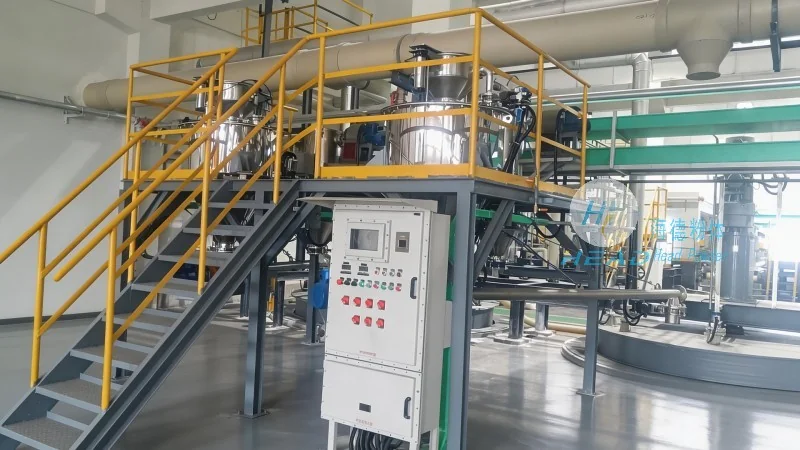
Furthermore, pneumatic conveying systems are relatively low maintenance compared to other material handling equipment. The components are designed to withstand the abrasive nature of aluminum turnings, and the system can be easily cleaned and maintained to prevent clogging or wear. The enclosed design also reduces the need for frequent cleaning and reduces the risk of material buildup in the system.
The pneumatic conveying of aluminum turnings is widely used in various industries, including automotive manufacturing, aerospace, and metalworking. In the automotive industry, aluminum turnings are used in the production of engine components, such as pistons and cylinder heads. The efficient transport of these materials is essential for maintaining production schedules and meeting quality standards. In the aerospace industry, aluminum turnings are used in the manufacturing of aircraft parts, where the precision and quality of the material are critical.
Other applications include the recycling of aluminum, where turnings are collected from various sources and transported to recycling facilities. The pneumatic conveying system allows for the efficient collection and transport of these materials, reducing the environmental impact of aluminum waste. Additionally, the system is used in research and development facilities, where small quantities of aluminum turnings are needed for testing and experimentation.
HeadPowder, with its expertise in engineering and design, provides comprehensive solutions for the pneumatic conveying of aluminum turnings. By understanding the operational process and working principles of these systems, industries can optimize their material handling processes, improve efficiency, and reduce costs. The advantages of pneumatic conveying, including its enclosed design, high capacity, and flexibility, make it an ideal solution for transporting aluminum turnings. As a leading company based in Shandong, China, HeadPowder continues to innovate and provide reliable solutions for the material handling needs of its clients.

 Shandong Headpowder Engineering Co., Ltd.
 156-6277-7102(Manager Zhang)
  0531-83386006
  Zhangqiu District, Jinan City, Shandong Province, China
telephone
WeChatconsult
top