With more than 10‑year industry experience, Shandong Headpowder delivers full‑service pneumatic‑conveying systems and blowers, undertaking nationwide turn‑key powder‑handling projects.
Calcium oxide, commonly known as quicklime, is a widely used industrial material in sectors such as construction, chemical manufacturing, and environmental treatment. Efficient handling and transportation of calcium oxide are critical for industrial operations, and pneumatic conveying has become a preferred method due to its advantages in safety, efficiency, and flexibility. This article explores the fundamental principles of calcium oxide material pneumatic conveying and highlights the key characteristics of its working scenes, offering insights into how this technology optimizes material handling processes.
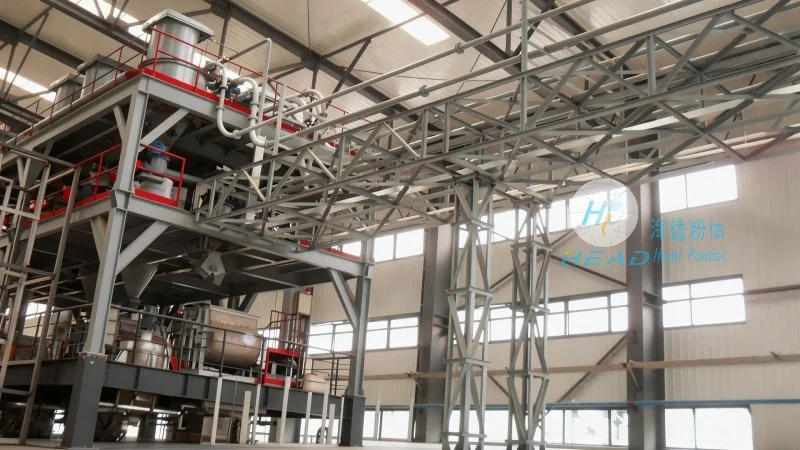
The pneumatic conveying system for calcium oxide operates on the principle of transporting bulk materials through a pipeline using a gas stream, typically air or a combination of air and other gases. The system includes components like a material feeder, conveying line, gas source (e.g., blower or compressor), and a receiver or discharge unit. The process involves feeding calcium oxide into the line while the gas stream propels the material forward. Gas velocity and line design are critical for efficiency, ensuring material is fully suspended and transported without clogging or degradation. The system must account for calcium oxide's physical properties—density, particle size, and flow characteristics—to maintain optimal performance.
The working scenes for calcium oxide pneumatic conveying vary by industrial needs and operational conditions. One common scenario is in large-scale production facilities where calcium oxide serves as a raw material for chemicals or construction materials. Here, the system handles high volumes over long distances, requiring consistent flow rates and minimal material loss. Another application is in environmental treatment, such as flue gas desulfurization or waste neutralization, where precise material delivery to reactors is essential under strict regulations. Smaller-scale or laboratory settings may use the system for R&D, demanding flexibility and precision. These scenes involve varying flow rates, pipeline lengths, and environmental conditions that influence system design and operation.
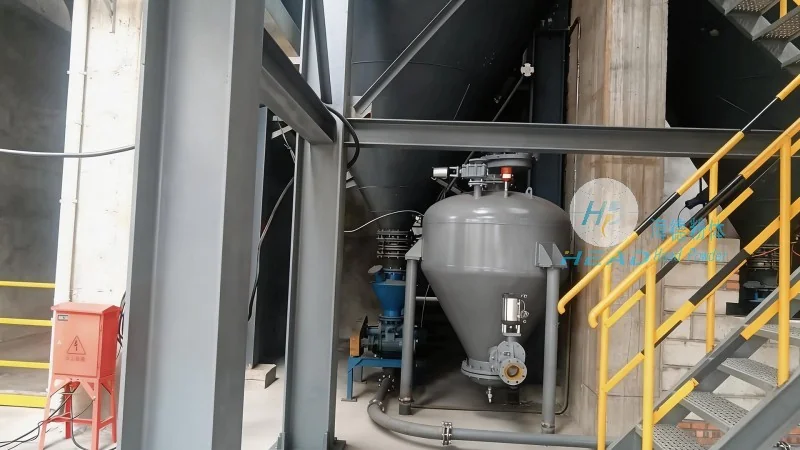
Pneumatic conveying offers advantages over traditional methods like belt conveyors or bucket elevators. It eliminates mechanical contact, reducing material degradation or contamination—critical for reactive calcium oxide. The system transports materials over long distances with minimal loss, maintaining consistent pressure and velocity. Flexibility in layout allows easy integration into existing facilities, and it adapts to dynamic loads. These benefits make it suitable for industrial plants needing material transport between processing units.
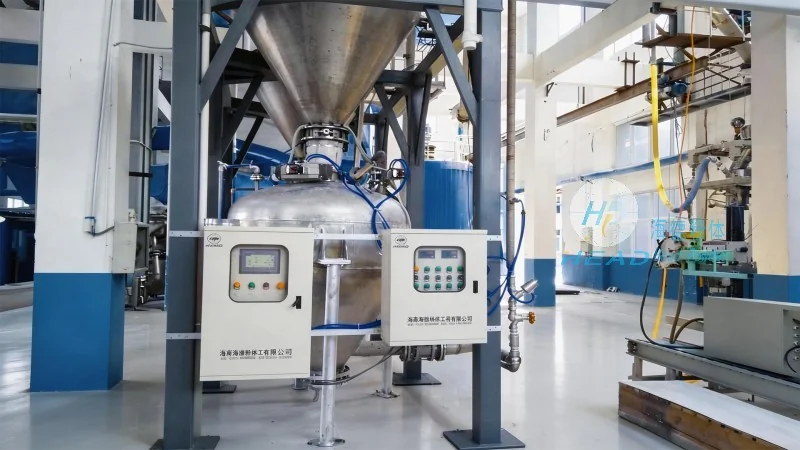
Implementing an effective system requires careful technical planning. Appropriate gas velocity must balance suspension and energy efficiency. Particle size distribution influences gas velocity and line design. System pressure and flow rates must match application needs (short or long distances). Material feeder and discharge unit design prevent blockages. Regular maintenance (line cleaning, gas source inspection) and durable materials (stainless steel, specialized coatings) enhance system longevity and resistance to corrosion.
In summary, pneumatic conveying is a highly effective method for handling calcium oxide, offering safety, efficiency, and flexibility. Its principles and working scene characteristics enable industrial operations to optimize material handling. By understanding technical factors and application needs, companies can implement reliable systems. Applications span large-scale manufacturing to environmental treatment, highlighting its versatility. As industrial demands evolve, refined pneumatic conveying systems remain essential for efficient bulk material handling.

 Shandong Headpowder Engineering Co., Ltd.
 156-6277-7102(Manager Zhang)
  0531-83386006
  Zhangqiu District, Jinan City, Shandong Province, China
telephone
WeChatconsult
top