With more than 10‑year industry experience, Shandong Headpowder delivers full‑service pneumatic‑conveying systems and blowers, undertaking nationwide turn‑key powder‑handling projects.
Desulfurization and denitrification agents are critical components in modern industrial processes, particularly in power generation and chemical manufacturing. The efficient and reliable transport of these powder materials is essential for maintaining optimal operational performance and environmental compliance. Pneumatic conveying systems have emerged as a preferred solution for handling such powders, offering advantages in terms of safety, flexibility, and process integration. This article explores the underlying principles of desulfurization and denitrification agent powder pneumatic conveying lines, alongside the key characteristics of their working scenes, with a focus on the expertise of Shandong HeadPowder Engineering Co., Ltd., commonly known as headpowder, based in Shandong, China.
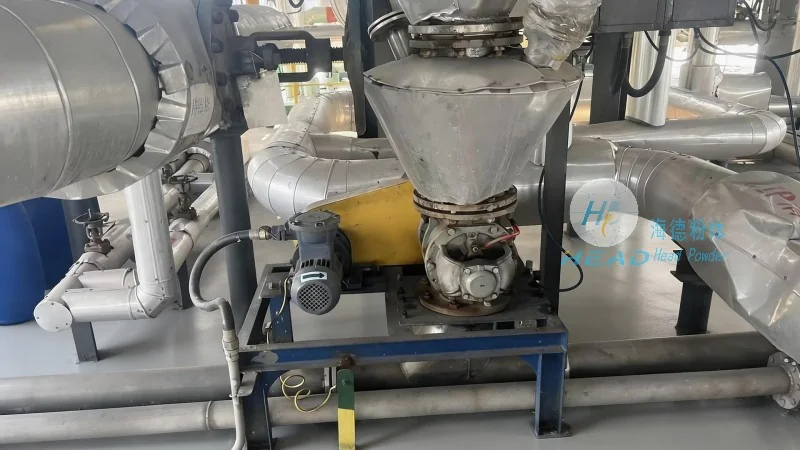
Desulfurization and denitrification agents, such as limestone or calcium carbonate, are often used in flue gas treatment processes to reduce sulfur dioxide (SO₂) and nitrogen oxides (NOₓ) emissions. These agents are typically in powder form and require specialized handling to ensure consistent performance and minimal environmental impact. Pneumatic conveying systems provide a non-contact method for transporting these powders from storage silos or reactors to processing units, eliminating the need for mechanical conveyors that may cause material degradation or contamination. The technology leverages the principles of fluid dynamics to move powders through a network of pipes using compressed air or vacuum, making it suitable for a wide range of industrial applications.
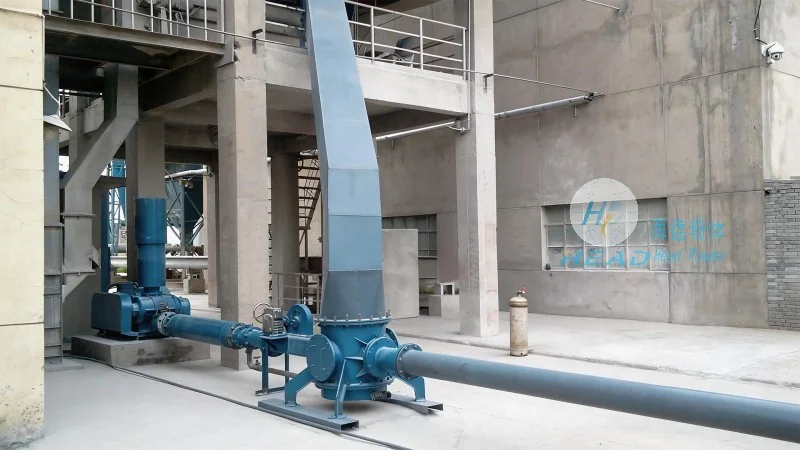
The core principle of pneumatic conveying for desulfurization and denitrification agents involves the creation of a gas-solid mixture within a pipeline. In a typical system, the powder is introduced into a hopper or feeder, where it is mixed with a stream of air or gas. The air flow generates sufficient kinetic energy to lift and transport the powder particles through the pipeline. There are two primary modes of pneumatic conveying: positive pressure and negative pressure. Positive pressure systems use compressed air to push the material forward, while negative pressure systems employ vacuum to draw the material from the source. The choice of mode depends on factors such as the distance, elevation changes, and material characteristics. The system typically includes components like a feeder, a pipeline network, a separator, and a receiver. The feeder ensures a consistent flow of powder, the pipeline transports the material, the separator removes excess air and fine particles, and the receiver collects the processed powder. This integrated approach ensures efficient and controlled transport of desulfurization and denitrification agents, minimizing losses and optimizing process efficiency.
The working scene characteristics of desulfurization and denitrification agent powder pneumatic conveying lines vary based on the specific industrial application and operational requirements. In power plants, for example, these systems are often integrated into large-scale flue gas treatment units, where they must handle high volumes of powder and operate continuously over extended periods. The systems must be designed to withstand the corrosive nature of the powders and the high temperatures associated with flue gas. In chemical manufacturing, the systems may be used for transporting reagents to reactors, where precision and consistency are critical. The working scene characteristics also include considerations for material handling, such as the need to prevent caking or agglomeration of the powder, which can affect flow and system performance. Additionally, the systems must comply with safety regulations, particularly regarding the handling of potentially hazardous powders and the prevention of dust explosions. The flexibility of pneumatic conveying systems allows them to adapt to different working scenarios, from short-distance, low-volume transport to long-distance, high-volume operations. This adaptability makes them suitable for diverse industrial environments, ensuring that the desulfurization and denitrification processes remain efficient and reliable.

Shandong HeadPowder Engineering Co., Ltd., operating under the brand name headpowder, is a leading provider of specialized engineering solutions for powder handling systems. With its headquarters in Shandong, China, the company has established itself as a trusted partner in the design, manufacturing, and implementation of pneumatic conveying systems for various industrial applications. Headpowder leverages decades of experience in the field, combining advanced engineering principles with practical industry knowledge to deliver customized solutions that meet the unique needs of clients. The company’s expertise lies in understanding the specific challenges associated with desulfurization and denitrification agents, such as their chemical properties, flow characteristics, and environmental impact. By focusing on these aspects, headpowder develops systems that optimize material transport, enhance operational safety, and ensure compliance with regulatory standards. The company’s commitment to innovation and quality has enabled it to serve a wide range of industries, including power generation, chemical manufacturing, and environmental protection. Through continuous research and development, headpowder remains at the forefront of powder handling technology, providing reliable and efficient solutions for the transportation of desulfurization and denitrification agents. The company’s presence in Shandong, China, allows it to draw on local resources and expertise, further enhancing its ability to deliver high-quality products and services to clients worldwide.

 Shandong Headpowder Engineering Co., Ltd.
 156-6277-7102(Manager Zhang)
  0531-83386006
  Zhangqiu District, Jinan City, Shandong Province, China
telephone
WeChatconsult
top