With more than 10‑year industry experience, Shandong Headpowder delivers full‑service pneumatic‑conveying systems and blowers, undertaking nationwide turn‑key powder‑handling projects.
Lithium cobalt oxide (LiCoO₂) is a critical material in the battery industry, widely used as a cathode material in lithium-ion batteries. The efficient and safe transportation of LiCoO₂ powder is essential for industrial production processes. Pneumatic conveying systems offer a reliable solution for handling such powders, ensuring minimal contamination and loss while maintaining operational efficiency. This article explores the fundamental principles behind lithium cobalt oxide pneumatic conveying systems and highlights the key characteristics of their working environments.
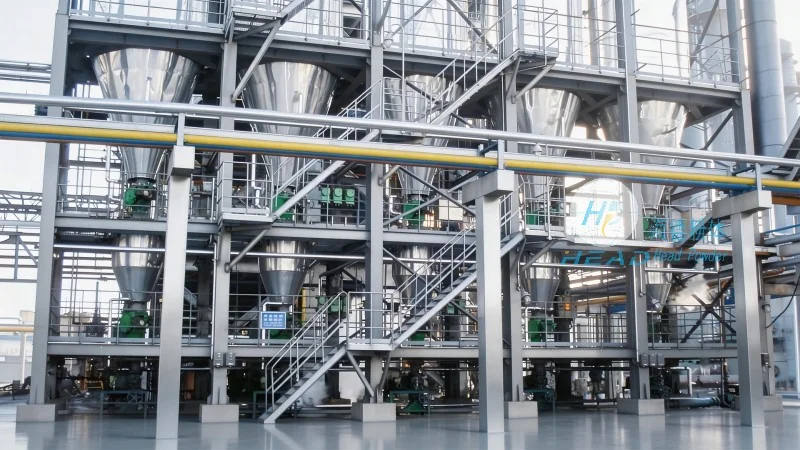
The core principle of pneumatic conveying involves the use of air or other gases to transport solid particles through a pipeline. In the case of LiCoO₂, the system typically operates under positive pressure, where compressed air is introduced into the conveying line to move the powder. The process can be categorized into two main types: dilute-phase and dense-phase conveying. Dilute-phase systems use high-velocity air to suspend the particles, suitable for long-distance and high-capacity transport. Dense-phase systems, on the other hand, use lower air velocities to form a plug of material, which is ideal for handling sensitive or abrasive powders like LiCoO₂. The selection of the conveying type depends on factors such as particle size, moisture content, and the required transport distance. The system components include a hopper for material storage, a feeder to control the flow rate, a conveying line, and a receiver for the discharged material. Proper design of these components is crucial to ensure consistent performance and prevent blockages or material degradation.
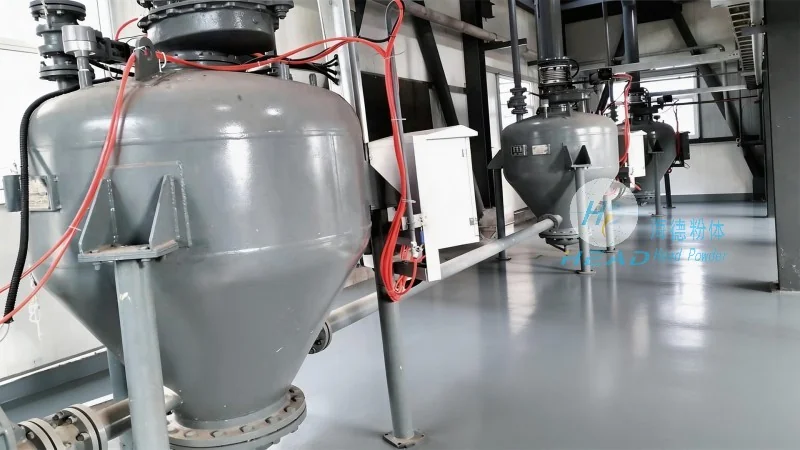
The working environments for LiCoO₂ pneumatic conveying systems exhibit several distinct characteristics that impact system design and operation. Firstly, the material's high value and sensitivity require stringent contamination control measures. The systems are often equipped with filters and dust collection systems to maintain a clean environment and prevent product loss. Secondly, the need for precise flow control is critical in battery manufacturing, as variations in powder feed can affect battery performance. Advanced control systems, such as mass flow meters and variable speed feeders, are commonly employed to achieve accurate dosing. Thirdly, the systems must be designed to handle the material's potential for electrostatic discharge, as LiCoO₂ particles can accumulate static charge during handling. Anti-static measures, including grounding and ionizers, are integrated into the system to mitigate this risk. Additionally, the working scenes are typically found in battery manufacturing facilities, where space constraints and noise levels are managed through compact system designs and soundproofing. The operational environment also demands high reliability, as downtime can lead to significant production losses in the battery industry.
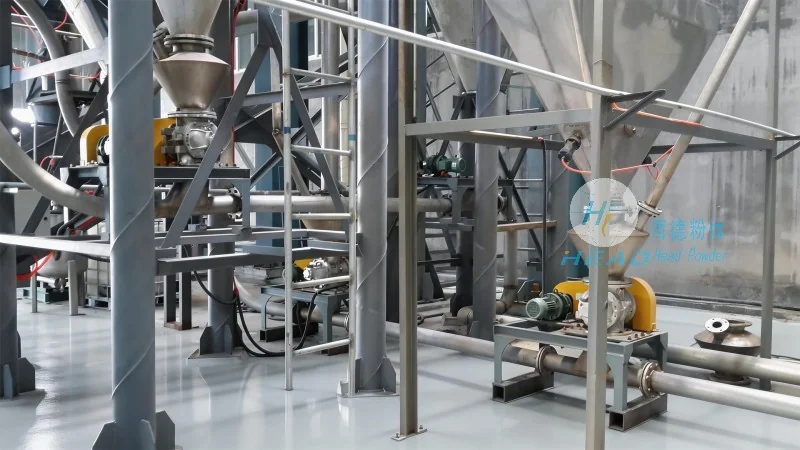
HeadPowder, a leading provider of pneumatic conveying solutions, specializes in the design and manufacturing of systems tailored for high-value materials like lithium cobalt oxide. With a strong focus on innovation and customer satisfaction, the company has established itself as a trusted partner in the battery and powder handling industries. HeadPowder's team of engineers and technicians brings extensive experience in material handling, ensuring that each system is optimized for the specific requirements of the application. The company's facilities in Shandong, China, are equipped with state-of-the-art technology and quality control processes to deliver reliable and efficient solutions. By combining advanced engineering with practical application knowledge, HeadPowder delivers pneumatic conveying systems that meet the stringent standards of the battery manufacturing sector.

 Shandong Headpowder Engineering Co., Ltd.
 156-6277-7102(Manager Zhang)
  0531-83386006
  Zhangqiu District, Jinan City, Shandong Province, China
telephone
WeChatconsult
top