With more than 10‑year industry experience, Shandong Headpowder delivers full‑service pneumatic‑conveying systems and blowers, undertaking nationwide turn‑key powder‑handling projects.
Resin pneumatic conveying is a key technology in material handling, particularly for transporting resin powders efficiently and safely. This method leverages air pressure to move resin particles through a pipeline system, offering advantages such as low maintenance, minimal product contamination, and the ability to handle a wide range of resin types. The core principle involves creating a pressure differential between the conveying line and the ambient environment, which propels the resin particles forward. By controlling air flow rates and pressure levels, operators can optimize the conveying process for different resin characteristics, including particle size, density, and moisture content.
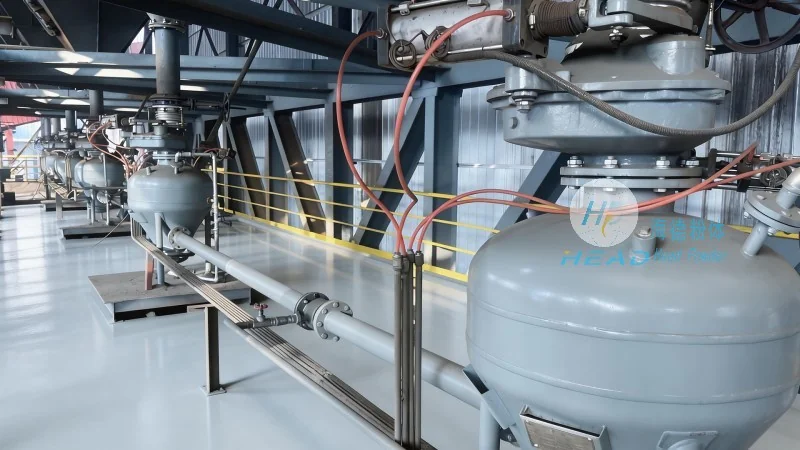
The fundamental principle of resin pneumatic conveying is based on the use of compressed air to transport resin powders. In this system, resin particles are introduced into a hopper or feeder, where they are mixed with a controlled amount of air. The air-resin mixture is then forced through a pipeline network under pressure. The pressure differential between the conveying line and the receiving end ensures that the resin particles are propelled forward. This process can be categorized into two main types: pressure and vacuum systems. Pressure systems use positive pressure to push the material, while vacuum systems use negative pressure to pull the material. The choice between these systems depends on factors like the distance to be conveyed, the height of the transfer, and the specific resin properties.
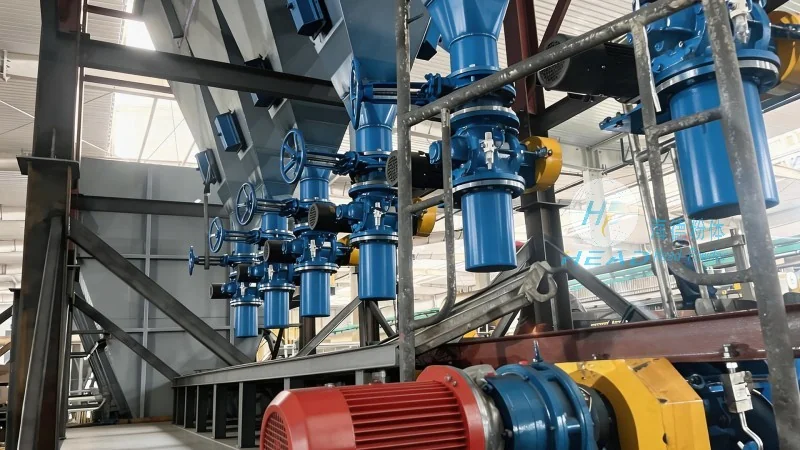
Resin pneumatic conveying is widely applied in various industrial scenarios, each with distinct characteristics that influence the system design and operation. For instance, in manufacturing plants, resin pneumatic conveying is used to transport resin powders from storage silos to processing equipment, such as mixers or extruders. The key characteristics in these scenarios include high throughput, consistent material flow, and the ability to integrate with existing production lines. Another common application is in the chemical and pharmaceutical industries, where resin pneumatic conveying is employed to handle sensitive materials that require minimal contamination and precise control. In these cases, the system design often includes features like closed-loop conveying, which prevents dust emissions and maintains a clean environment. Additionally, resin pneumatic conveying is used in recycling facilities to transport reclaimed resin particles from sorting equipment to reprocessing units. The characteristics in this scenario include the need for robust systems that can handle abrasive or contaminated materials, ensuring long-term reliability and efficiency.
Resin pneumatic conveying offers several advantages that make it a preferred choice for many industries. One of the primary benefits is the ability to transport resin powders over long distances without the need for intermediate storage or handling. This reduces the risk of material degradation and improves overall production efficiency. Another advantage is the low maintenance requirements, as the system has fewer moving parts compared to mechanical conveying systems. However, there are also considerations to keep in mind. For example, the system's performance is highly dependent on the air flow rate and pressure, which must be carefully controlled to avoid issues like blockages or material degradation. Additionally, the design of the conveying line, including the diameter and length of the pipes, plays a crucial role in ensuring smooth operation. Proper maintenance, such as regular cleaning and inspection of the system components, is essential to prevent clogging and ensure consistent performance.
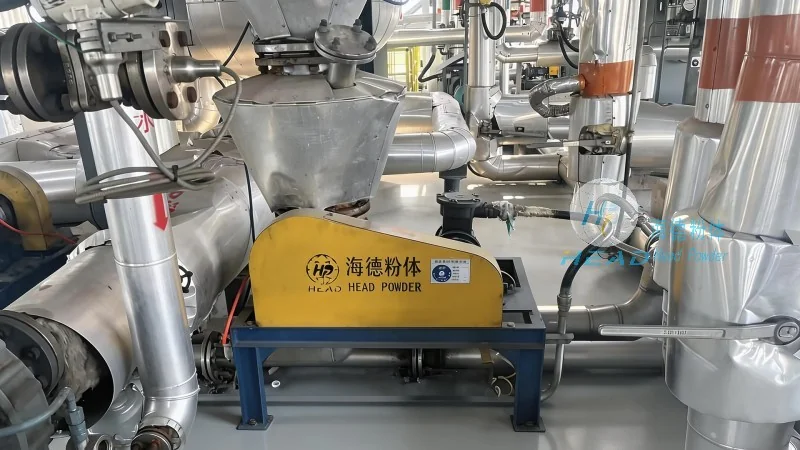
Shandong HeadPowder Engineering Co., Ltd. specializes in providing resin pneumatic conveying solutions tailored to the specific needs of various industries. In the automotive industry, resin pneumatic conveying is used to transport resin powders for manufacturing components like car parts and interior materials. The system ensures that the resin particles are delivered to the production line with minimal loss and consistent quality. In the construction industry, resin pneumatic conveying is employed to transport resin-based materials for applications like floor coatings and structural components. The ability to handle large volumes of material efficiently makes this system ideal for construction projects. Furthermore, in the electronics industry, resin pneumatic conveying is used to transport resin powders for manufacturing electronic components, such as circuit boards and connectors. The precision and control offered by the system help maintain the quality and reliability of the final products.

 Shandong Headpowder Engineering Co., Ltd.
 156-6277-7102(Manager Zhang)
  0531-83386006
  Zhangqiu District, Jinan City, Shandong Province, China
telephone
WeChatconsult
top