

What is a Film-Coated Sand Powder Pneumatic Conveying System? What are its Design Principles?
For industrial applications that require efficient and reliable transport of film-coated sand powders, understanding the pneumatic conveying system is crucial. This article will explore the fundamental concepts of such a system and delve into its design principles, providing insights into how these systems are engineered to meet the demands of modern manufacturing processes.
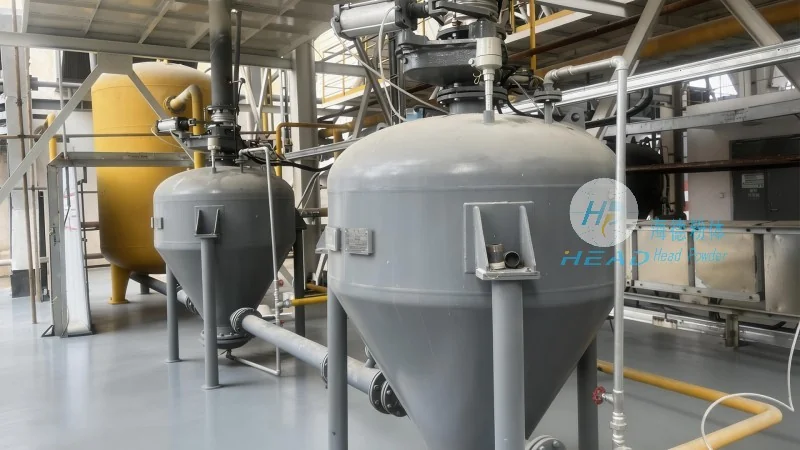
Overview of Film-Coated Sand Powder Pneumatic Conveying Systems
A film-coated sand powder pneumatic conveying system is a specialized industrial solution designed to transport fine, abrasive, or potentially dusty materials like film-coated sand. Unlike traditional bulk material handling methods, this system utilizes compressed air or other gases to move the material through a pipeline network. The system typically consists of a hopper for material storage, a feeder to control the flow rate, a conveying line, and a receiver for the material's final destination. The key advantage lies in its ability to handle materials that are difficult to transport via conventional methods, such as those with high moisture content or those that tend to agglomerate.
Design Principles of the System
The design of a film-coated sand powder pneumatic conveying system is based on several critical principles to ensure optimal performance and efficiency. First, the system must be engineered to handle the specific properties of the film-coated sand, including its particle size, density, and flow characteristics. This involves selecting appropriate components like the hopper design, which may include a cone or a hopper with a discharge valve to prevent material bridging or caking. The feeder, often a rotary valve or a star feeder, is crucial for maintaining a consistent flow rate, as fluctuations can lead to system inefficiencies or even blockages.
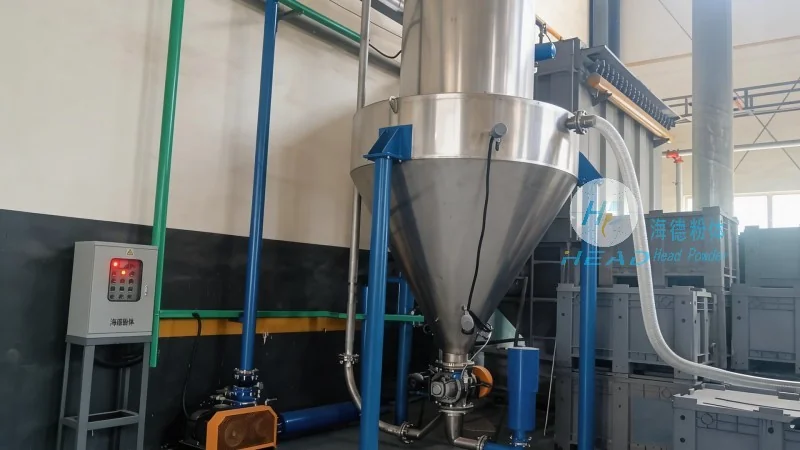
Second, the conveying line design is critical. The pipeline diameter, length, and layout are carefully calculated to ensure that the air velocity is sufficient to keep the material suspended without causing excessive pressure drops or wear on the system components. The choice of material for the pipeline, such as stainless steel or high-density polyethylene, is also important to resist corrosion and abrasion from the abrasive film-coated sand particles. Additionally, the system may incorporate features like pulse jets or air locks to prevent material buildup and maintain smooth operation.
Technical Advantages and Performance Considerations
One of the primary advantages of a film-coated sand powder pneumatic conveying system is its ability to transport materials over long distances with minimal loss and contamination. Unlike mechanical conveyors, which can cause material degradation or segregation, pneumatic systems keep the material in a closed environment, reducing exposure to external factors. This is particularly important for film-coated sand, which may be sensitive to moisture or air exposure. The system also offers flexibility in terms of layout, as the pipeline can be installed in various configurations to accommodate the spatial constraints of a facility.
Performance considerations include the system's capacity, which is determined by the air flow rate and the material's bulk density. Engineers must calculate the required air velocity to achieve a stable conveying condition, often using the "critical velocity" concept, where the air velocity is sufficient to keep the particles suspended but not so high as to cause excessive energy consumption. The system's efficiency is also influenced by the pressure drop across the pipeline, which must be minimized to reduce energy costs and prevent excessive wear on the compressor.
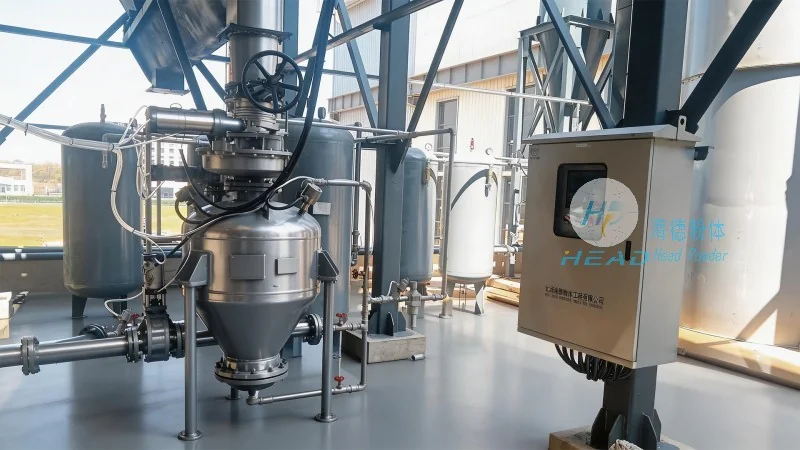
Application Scenarios and Industry Relevance
Film-coated sand powder pneumatic conveying systems are widely used in various industries, including foundries, where the material is used in sand casting processes. The system's ability to handle abrasive materials without causing wear on components makes it ideal for applications where durability and reliability are paramount. Other industries that benefit from this technology include chemical processing, where fine powders need to be transported without contamination, and food processing, where hygiene and material purity are critical. In each of these applications, the system's design principles are tailored to meet the specific requirements of the material and the process, ensuring optimal performance and cost-effectiveness.
Conclusion
In summary, a film-coated sand powder pneumatic conveying system is a sophisticated industrial solution that leverages compressed air to transport fine materials efficiently and reliably. The design principles, including material handling considerations, pipeline engineering, and performance optimization, are critical to the system's success. By understanding these principles, manufacturers can select or design a system that meets their specific needs, ensuring smooth operation and long-term performance. As a leading provider in this field, Shandong HeadPowder Engineering Co., Ltd. specializes in the design and manufacturing of such systems, leveraging years of experience to deliver high-quality solutions tailored to the demands of modern industrial applications.