With more than 10‑year industry experience, Shandong Headpowder delivers full‑service pneumatic‑conveying systems and blowers, undertaking nationwide turn‑key powder‑handling projects.
Aluminum foil powder conveying is a specialized process used in various industrial applications where aluminum foil powders need to be transported efficiently and safely. This method is crucial for industries such as pharmaceuticals, food processing, and chemical manufacturing, where the handling of fine powders requires precision and control. The design of aluminum foil powder conveying systems is tailored to address the unique challenges posed by aluminum foil powders, including their light weight, tendency to form agglomerates, and sensitivity to moisture and contamination.
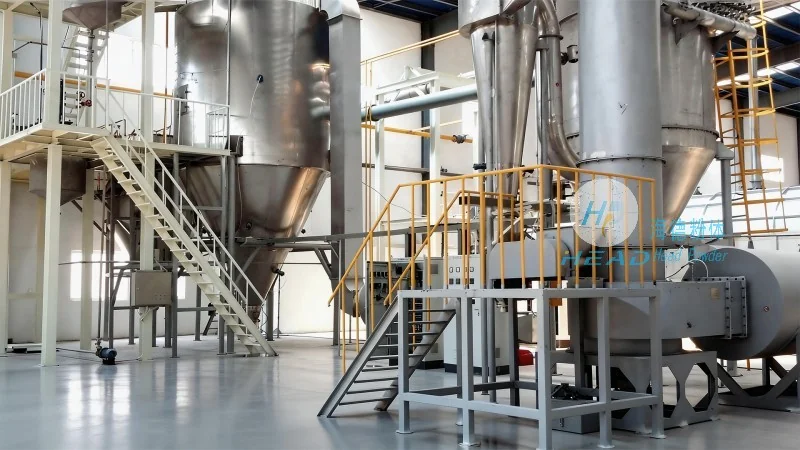
The design of aluminum foil powder conveying systems is guided by several fundamental principles aimed at ensuring efficient, reliable, and safe operation. One of the primary principles is the use of low-pressure, high-volume air flow to transport the powder. This approach minimizes the risk of particle degradation and ensures that the powder remains in a stable state during transport. Additionally, the system incorporates features like pulse-jet or rotary airlock valves to control the flow rate and prevent blockages, which are common issues with fine powders.
Another critical design principle is the selection of appropriate materials for the conveying components. Since aluminum foil powders can be abrasive and corrosive, the system components, including ducts, hoppers, and valves, are typically made from stainless steel or other corrosion-resistant materials. This ensures longevity and maintains the purity of the powder. The design also emphasizes the use of smooth, non-stick surfaces to prevent powder buildup and ensure consistent flow.
Aluminum foil powder conveying systems typically consist of several key components that work in tandem to achieve effective powder transport. The primary components include a hopper or feeder that holds the aluminum foil powder, a conveying duct or pipeline that transports the powder, and a receiver or discharge unit where the powder is deposited. The system may also include a filter or dust collector to capture any airborne particles and maintain a clean environment.
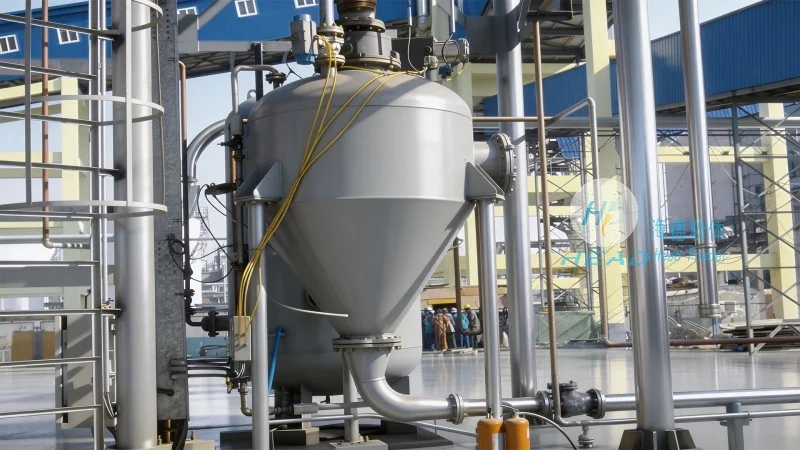
The feeder or hopper is designed to provide a consistent feed rate to the conveying system. This is often achieved through the use of a rotary valve or a vibratory feeder, which ensures that the powder is discharged at a controlled rate. The conveying duct is usually made of flexible or rigid tubing, depending on the application, and is equipped with a series of bends and turns that are carefully designed to minimize pressure loss and prevent particle separation.
The receiver or discharge unit is where the aluminum foil powder is collected after being conveyed. This component is typically designed with a large opening to allow for easy discharge and may include a level indicator to monitor the powder level. In some systems, the receiver is equipped with a dust collection system to capture any particles that may escape during the discharge process.
Aluminum foil powder conveying systems offer several advantages over traditional bulk material handling methods. One of the main advantages is the ability to transport powders over long distances without the need for mechanical components like belts or screws. This reduces maintenance costs and minimizes the risk of product contamination. Additionally, the system is highly flexible and can be easily integrated into existing production lines, allowing for seamless operation.
Another advantage is the ability to handle a wide range of powder characteristics, including varying particle sizes and moisture content. The design of the conveying system can be adjusted to accommodate different powder types, ensuring optimal performance. Furthermore, the system is energy-efficient, as it uses low-pressure air flow, which reduces operational costs compared to other conveying methods.
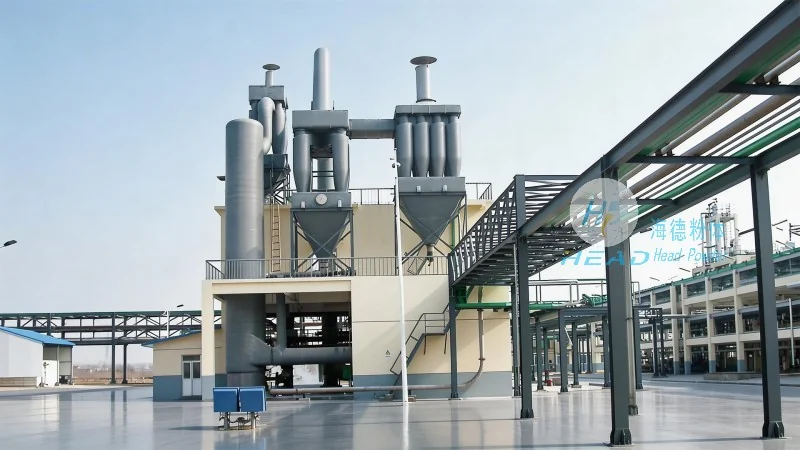
Aluminum foil powder conveying systems are widely used in various industries due to their versatility and efficiency. In the pharmaceutical industry, these systems are used to transport active pharmaceutical ingredients (APIs) and excipients, ensuring that the powders are handled in a sterile and controlled environment. In the food processing industry, they are used to transport food-grade powders, such as sugar or spices, while maintaining product quality and safety.
In the chemical manufacturing industry, aluminum foil powder conveying systems are used to transport various chemical powders, including catalysts and reagents. The system's ability to handle abrasive and corrosive powders makes it suitable for these applications. Additionally, the system is used in the production of aluminum foil products, where the powder is used as a raw material in the manufacturing process.
Aluminum foil powder conveying systems are essential for industries that require the efficient and safe handling of fine powders. The design principles and components of these systems are carefully engineered to address the unique challenges posed by aluminum foil powders, ensuring reliable and consistent operation. With the right design and maintenance, aluminum foil powder conveying systems can provide long-term benefits to industrial operations, including reduced costs, improved product quality, and enhanced safety.

 Shandong Headpowder Engineering Co., Ltd.
 156-6277-7102(Manager Zhang)
  0531-83386006
  Zhangqiu District, Jinan City, Shandong Province, China
telephone
WeChatconsult
top