With more than 10‑year industry experience, Shandong Headpowder delivers full‑service pneumatic‑conveying systems and blowers, undertaking nationwide turn‑key powder‑handling projects.
When it comes to the manufacturing of lithium batteries, the efficient and reliable transportation of raw materials is a critical factor that directly impacts production efficiency and product quality. A pneumatic conveying system for lithium battery raw materials is a specialized equipment solution designed to handle the movement of various powders and granules used in the battery production process. This system utilizes air as the conveying medium to transport materials from one location to another, offering a dust-free, closed-loop operation that enhances safety and environmental compliance.
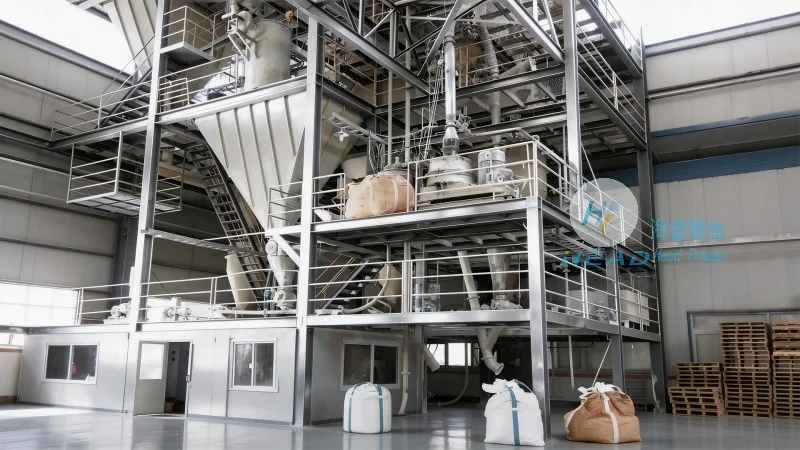
HeadPowder, a leading company in the field of material handling solutions, specializes in the design, manufacturing, and implementation of advanced pneumatic conveying systems tailored for the lithium battery industry. With a strong presence in Shandong, China, HeadPowder Engineering Co., Ltd. leverages decades of experience and technical innovation to deliver customized solutions that meet the unique demands of modern battery production facilities. The company's commitment to quality and customer satisfaction has established it as a trusted partner for businesses seeking to optimize their material handling processes.
The design of a pneumatic conveying system for lithium battery raw materials is based on several key principles that ensure efficient material transport while maintaining product integrity. The system typically consists of a series of components, including a material feed hopper, a conveying line (often with multiple sections), a control system, and a discharge outlet. The choice of conveying method—such as pressure or vacuum systems—depends on factors like material properties, distance, and required flow rates. For lithium battery raw materials, which often include powders like lithium carbonate, graphite, and other additives, the system must be designed to handle fine particles and prevent agglomeration or degradation during transport.
One of the core design considerations is the selection of appropriate air velocity and pressure. High air velocity is essential to maintain material suspension and prevent blockages, while the pressure level is adjusted to ensure sufficient force to overcome friction and elevation changes in the conveying line. The system also incorporates features like pulse jets or rotary valves to control material flow and prevent clogging. Additionally, the design must address the need for dust control and environmental protection, as lithium battery raw materials can be hazardous if not handled properly. Advanced filtration systems and sealed components are integrated to minimize dust emissions and ensure compliance with industrial safety standards.
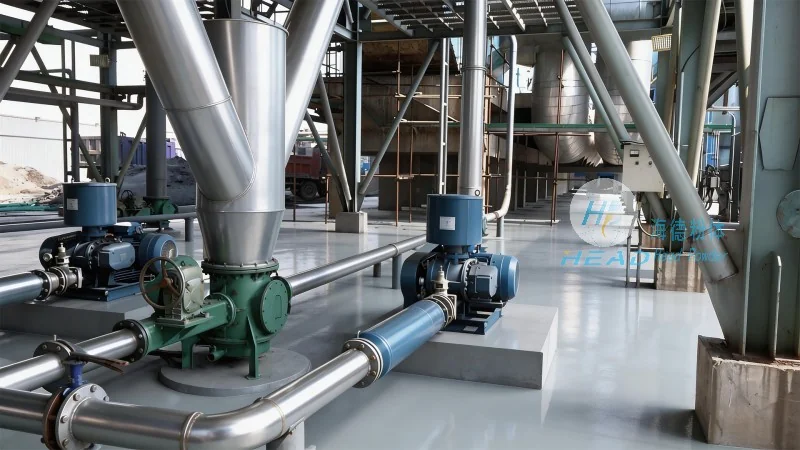
The pneumatic conveying system for lithium battery raw materials includes several critical components that work in tandem to achieve efficient material transport. The material feed hopper is designed to store and feed the raw materials into the system at a controlled rate. It often features a discharge valve or rotary feeder to regulate the flow of material into the conveying line. The conveying line itself is typically made of stainless steel or other corrosion-resistant materials to withstand the chemical properties of the raw materials and ensure durability. The line may include bends, elbows, or expansion joints to accommodate changes in direction or elevation, with each component carefully engineered to minimize pressure loss and maintain consistent air flow.
The control system plays a vital role in managing the operation of the pneumatic conveying system. It monitors parameters such as air pressure, flow rate, and material level, and adjusts the system settings in real-time to optimize performance. The system may also include sensors and alarms to detect potential issues like blockages or pressure drops, allowing for immediate intervention to prevent system downtime. The discharge outlet is designed to deliver the material to the next processing stage, such as mixing or packaging, with precision and minimal loss. In some cases, the system may include a dust collection unit to capture any airborne particles and return them to the conveying line, enhancing material recovery and reducing waste.
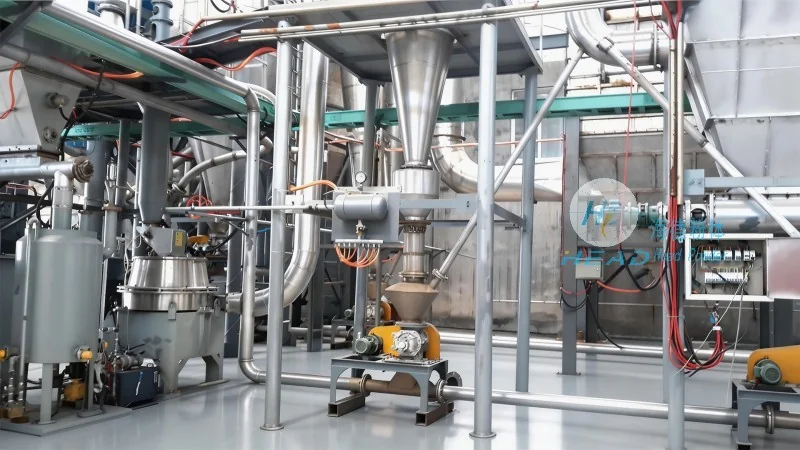
The adoption of a pneumatic conveying system for lithium battery raw materials offers numerous benefits that contribute to improved operational efficiency and product quality. One of the primary advantages is the ability to handle fine powders and granules without the need for mechanical conveying equipment, which can cause contamination or damage to the material. The closed-loop operation of the system minimizes dust exposure, creating a safer working environment for personnel and reducing the risk of fire or explosion in the production facility. Additionally, the system’s ability to transport materials over long distances with minimal maintenance requirements makes it a cost-effective solution for large-scale battery production plants.
HeadPowder’s pneumatic conveying systems are widely used in various stages of lithium battery manufacturing, including the handling of raw materials, intermediate products, and finished components. For example, in the production of lithium iron phosphate (LFP) batteries, the system efficiently transports lithium carbonate and graphite powders from storage silos to the mixing and coating lines. In the case of lithium nickel manganese cobalt oxide (NMC) batteries, the system handles complex additive blends, ensuring precise proportioning and uniform mixing. The versatility of the system allows it to adapt to different production scales and material types, making it a flexible solution for evolving battery technologies.
In conclusion, a pneumatic conveying system for lithium battery raw materials is a sophisticated and essential component of modern battery production facilities. Its design principles, based on efficient material transport and product integrity, are tailored to meet the specific demands of the lithium battery industry. HeadPowder Engineering Co., Ltd., with its expertise and commitment to innovation, provides customized solutions that enhance the performance and reliability of these systems. As the battery industry continues to grow and evolve, the importance of efficient material handling will only increase, making advanced pneumatic conveying systems a critical investment for businesses seeking to optimize their operations and maintain a competitive edge.

 Shandong Headpowder Engineering Co., Ltd.
 156-6277-7102(Manager Zhang)
  0531-83386006
  Zhangqiu District, Jinan City, Shandong Province, China
telephone
WeChatconsult
top