With more than 10‑year industry experience, Shandong Headpowder delivers full‑service pneumatic‑conveying systems and blowers, undertaking nationwide turn‑key powder‑handling projects.
Slag pneumatic conveying systems are specialized industrial equipment designed to transport slag, a byproduct of steelmaking and other metallurgical processes, from one location to another using compressed air or other gas as the conveying medium. These systems are crucial in modern industrial operations as they provide an efficient, flexible, and often safer alternative to traditional bulk material handling methods like belt conveyors or trucks. The principle behind these systems revolves around creating a flow of air that lifts and propels the solid particles through a pipeline network.
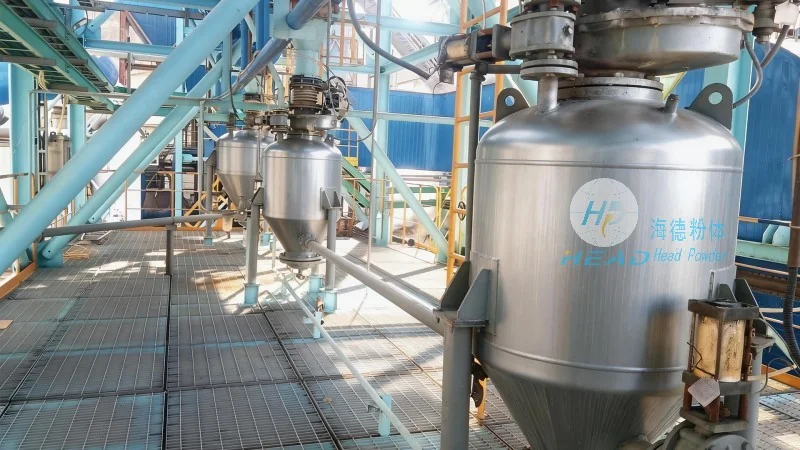
The core mechanism of a slag pneumatic conveying system is based on the fundamental physics of fluid dynamics and particle transport. When compressed air is introduced into a hopper or feeding point, it creates a low-pressure zone that draws the slag particles into the pipeline. The air flow, typically moving at high velocities (often 20-30 meters per second or more), generates sufficient kinetic energy to overcome the gravitational force acting on the particles. This results in a dense phase or dilute phase flow, depending on the system design and operating conditions. In dense phase systems, the particles are carried in a relatively thick slurry of air and solids, which reduces particle degradation and minimizes pressure drop along the pipeline. Dilute phase systems, on the other hand, use higher air velocities to keep particles suspended in a more dispersed state, suitable for longer distances or when handling lighter materials.
Effective slag pneumatic conveying relies on several critical components working in concert. The primary components include a feeding hopper equipped with a rotary valve or feeder to control the flow of slag into the system, a compressor or blower to generate the necessary air pressure, a pipeline network that transports the slag from the source to the destination, and a receiver or discharge unit where the material is deposited. Additional components may include filters to remove dust from the exhaust air, pressure regulators to maintain consistent air pressure, and control systems to monitor and adjust the conveying process in real-time. Each component is engineered to handle the specific characteristics of slag, such as its high temperature, abrasive nature, and potential for clumping or agglomeration.

Compared to traditional handling methods, slag pneumatic conveying systems offer several advantages that make them preferable in many industrial applications. One of the most significant benefits is the ability to transport slag over long distances without the need for intermediate transfer points or storage facilities. This reduces the overall footprint of the operation and minimizes the risk of material spillage or contamination. Additionally, pneumatic systems can handle high volumes of material efficiently, often with lower energy consumption per tonne of material transported compared to other methods. The enclosed pipeline design also provides better environmental control, preventing dust emissions and reducing the impact on local air quality. Furthermore, these systems are more flexible in terms of layout, as the pipeline can be routed around obstacles or adapted to changing operational needs without major reconfiguration.
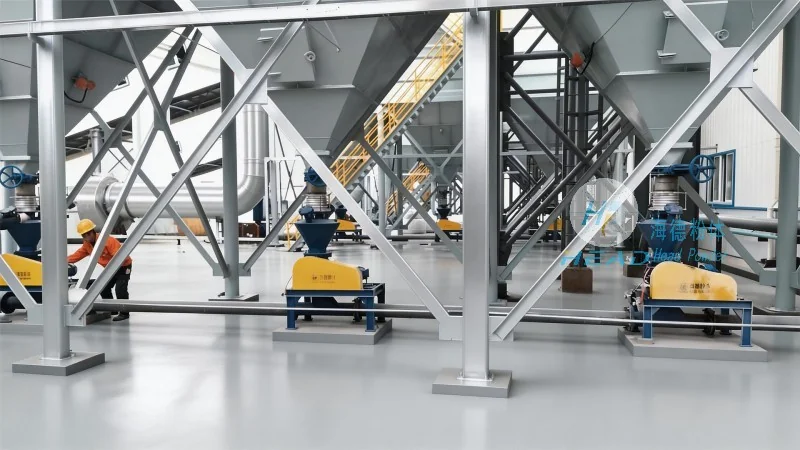
Slag pneumatic conveying systems are widely used in various industrial sectors, particularly in the steel and metallurgical industries. They are commonly employed to transport slag from the blast furnace or electric arc furnace to disposal sites, recycling facilities, or storage areas. In some cases, the slag may be processed further for use as a raw material in cement production or as a construction aggregate. The versatility of these systems allows them to handle different types of slag, including hot slag from high-temperature processes, which requires specialized equipment to prevent heat loss and maintain material integrity. Companies like Shandong HeadPowder Engineering Co., Ltd. specialize in designing and manufacturing customized slag pneumatic conveying systems tailored to the specific requirements of their clients, ensuring optimal performance and reliability.
Shandong HeadPowder Engineering Co., Ltd., a leading provider of industrial conveying solutions, offers comprehensive services for slag pneumatic conveying systems. The company’s expertise lies in understanding the unique challenges of handling slag, such as its abrasive properties and high temperature, and designing systems that address these issues effectively. HeadPowder engineers work closely with clients to assess their specific operational needs, including the volume of slag to be transported, the distance of the conveying route, and the desired discharge location. Based on this analysis, they design a system that incorporates the appropriate components, such as high-quality materials for the pipeline and hopper to withstand wear and corrosion, and advanced control systems to ensure smooth and efficient operation. The company’s commitment to quality and innovation ensures that their slag pneumatic conveying systems meet the highest industry standards and provide long-term reliability and performance.

 Shandong Headpowder Engineering Co., Ltd.
 156-6277-7102(Manager Zhang)
  0531-83386006
  Zhangqiu District, Jinan City, Shandong Province, China
telephone
WeChatconsult
top