With more than 10‑year industry experience, Shandong Headpowder delivers full‑service pneumatic‑conveying systems and blowers, undertaking nationwide turn‑key powder‑handling projects.
For companies operating in the lithium-ion battery industry, efficient material handling is critical to maintaining production efficiency and ensuring product quality. Pneumatic conveying systems have emerged as a key technology for transporting various lithium-ion materials, including powders, granules, and fine particles. These systems utilize air or other gases to move materials through a pipeline network, offering advantages such as dust-free operation, low maintenance, and the ability to handle a wide range of material properties. In this article, we will explore the different types of pneumatic conveying systems commonly used in lithium-ion material handling and their practical applications.
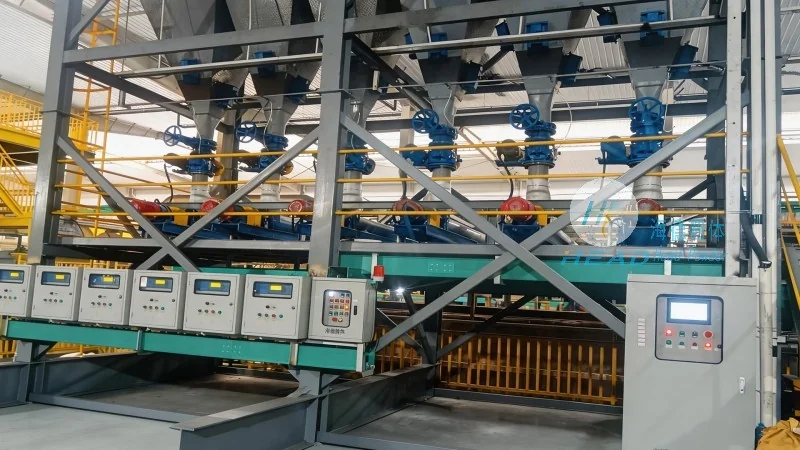
There are primarily two main categories of pneumatic conveying systems: positive pressure and negative pressure systems. Each type has distinct characteristics and is suitable for different material handling scenarios.
Positive pressure systems operate by blowing air or gas into the conveying line, creating a pressure higher than the ambient air pressure. This method is ideal for high-concentration, long-distance material transport. The system typically includes a blower, a hopper for material storage, and a discharge point at the destination. Positive pressure systems are particularly effective for transporting abrasive or corrosive materials, as the high pressure helps to maintain material flow and prevent blockages. They are commonly used in lithium-ion battery production for moving raw materials such as lithium carbonate, nickel oxide, and cobalt oxide from storage to processing lines.
Negative pressure systems, also known as vacuum systems, work by creating a vacuum in the conveying line, drawing material from the source into the pipeline. This approach is suitable for applications requiring dust collection or material transfer from multiple sources. Negative pressure systems are often used for handling fine powders that are prone to dust generation, as the vacuum helps to capture and transport particles without releasing them into the environment. In lithium-ion material handling, negative pressure systems may be employed for collecting dust from production lines or transferring materials from hoppers to processing equipment.
Mixed-pressure systems combine elements of both positive and negative pressure operation. They use a combination of blowers and vacuum pumps to achieve optimal material transport. This type of system is versatile and can handle a wide range of material types and distances. Mixed-pressure systems are particularly useful when transporting materials over varying distances or when the material properties change along the conveying path. For example, in lithium-ion battery manufacturing, mixed-pressure systems may be used to transport materials from a central storage facility to multiple processing lines, ensuring consistent flow and minimal material loss.
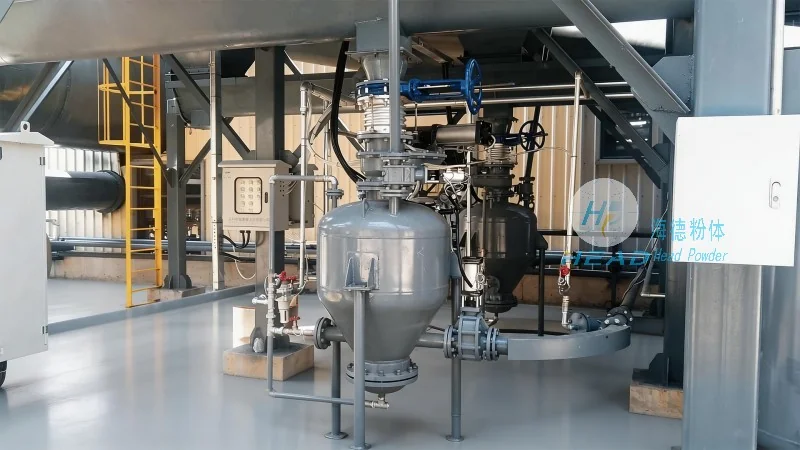
Now, let's examine how these pneumatic conveying systems are applied in real-world lithium-ion material handling scenarios. The choice of system depends on factors such as material type, required transport distance, and environmental considerations.
One of the most common applications is the transport of raw materials from storage silos or bulk containers to the production lines. For instance, lithium carbonate, a key component in lithium-ion batteries, is often stored in large silos and needs to be conveyed to mixing and processing equipment. Positive pressure systems are frequently used for this purpose due to their ability to handle high material concentrations and long distances. The system can be designed with multiple inlets and outlets, allowing for the simultaneous transport of different materials or the sequential transfer of materials as production demands change.
Lithium-ion battery production involves handling fine powders that can generate significant dust. Negative pressure systems are ideal for dust collection and material transfer in such environments. These systems can be integrated with production lines to capture dust from processing equipment and transport it to a central collection point. This not only improves workplace safety by reducing airborne particles but also ensures that valuable materials are not lost. The vacuum created by the system helps to maintain a clean working environment, which is crucial for maintaining product quality and preventing contamination.
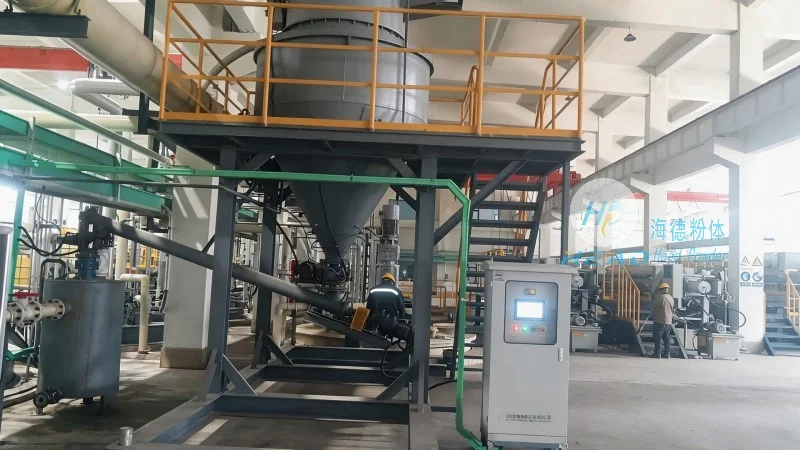
During the battery manufacturing process, materials often need to be transferred between different processing stages, such as from mixing to coating or from coating to drying. Pneumatic conveying systems provide a flexible and efficient method for this transfer. Mixed-pressure systems are particularly suitable for this application as they can handle varying material properties and distances. For example, after the mixing stage, the material may be conveyed to a coating machine using a positive pressure system, and then to a drying oven using a negative pressure system. This flexibility allows manufacturers to optimize the production process and minimize downtime.
Compared to traditional material handling methods like belt conveyors or bucket elevators, pneumatic conveying systems offer several advantages that make them ideal for lithium-ion material handling.
Pneumatic systems can transport materials at high speeds, reducing the time required for material transfer. This is particularly important in high-volume production environments where efficiency directly impacts profitability. The ability to move materials quickly and continuously ensures that production lines operate at optimal capacity, minimizing bottlenecks and delays.

One of the most significant advantages of pneumatic conveying is its ability to operate in a dust-free environment. Unlike belt conveyors, which can generate dust and cause health hazards, pneumatic systems enclose the material in a pipeline, preventing dust from escaping into the workplace. This not only improves safety but also helps to maintain product quality by preventing contamination from airborne particles.
Pneumatic conveying systems have fewer moving parts compared to other material handling equipment, resulting in lower maintenance requirements and longer operational lifespans. The absence of belts, chains, or buckets reduces the risk of mechanical failure and the need for frequent repairs. This makes pneumatic systems a cost-effective solution for long-term material handling needs.
Pneumatic conveying systems are highly flexible and can be easily scaled to meet changing production demands. The modular design allows for the addition or removal of conveying lines as production volumes increase or decrease. This adaptability is crucial for lithium-ion battery manufacturers, who often experience fluctuations in production due to market demand or technological advancements.
Pneumatic conveying systems play a vital role in the efficient and safe handling of lithium-ion materials. By understanding the different types of systems and their practical applications, manufacturers can choose the most suitable technology to optimize their production processes. Companies like Shandong HeadPowder Engineering Co., Ltd. specialize in designing and implementing customized pneumatic conveying solutions tailored to the specific needs of lithium-ion battery manufacturers. With their expertise in material handling technology, HeadPowder helps to ensure that production lines operate efficiently, safely, and with minimal material loss, contributing to the overall success of lithium-ion battery production.

 Shandong Headpowder Engineering Co., Ltd.
 156-6277-7102(Manager Zhang)
  0531-83386006
  Zhangqiu District, Jinan City, Shandong Province, China
telephone
WeChatconsult
top