With more than 10‑year industry experience, Shandong Headpowder delivers full‑service pneumatic‑conveying systems and blowers, undertaking nationwide turn‑key powder‑handling projects.
For industries dealing with synthetic rubber, efficient material handling is crucial for maintaining production efficiency and product quality. Pneumatic conveying systems offer a versatile solution for transporting synthetic rubber powders, granules, and other forms of rubber materials. This equipment is designed to handle the unique properties of synthetic rubber, ensuring safe and reliable material transport within manufacturing facilities.
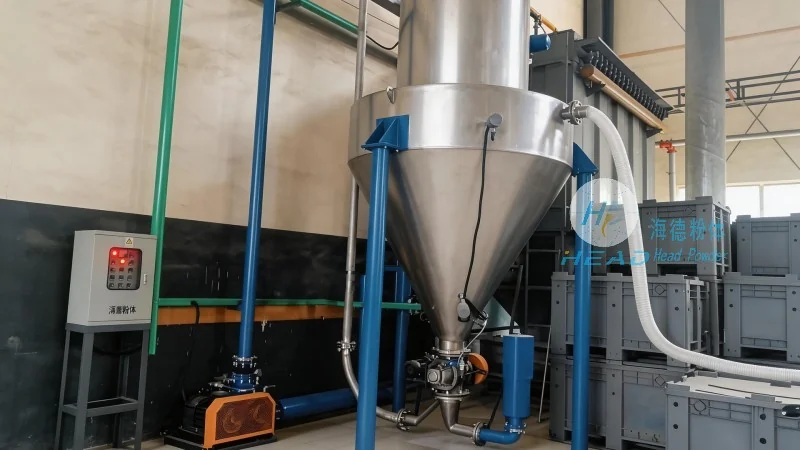
The core of a synthetic rubber pneumatic conveyor system lies in its ability to use air pressure to move materials through a closed pipeline network. The system typically consists of several key components, including a hopper for material storage, a feeder to control the flow rate, a conveying line, and a receiver for the discharged material. Each component is engineered to handle the specific characteristics of synthetic rubber, such as its density, particle size, and potential for static charge accumulation.
The hopper serves as the primary storage vessel, providing a controlled environment for the synthetic rubber material. It is often equipped with a discharge valve or gate to regulate the material flow into the feeder. The feeder, which may be a rotary valve or a screw feeder, ensures a consistent and controlled feed rate, preventing overloading of the conveying line and maintaining system efficiency. The conveying line, usually made of stainless steel or other corrosion-resistant materials, is designed to withstand the chemical properties of synthetic rubber and maintain airtight integrity to prevent material leakage or air loss.
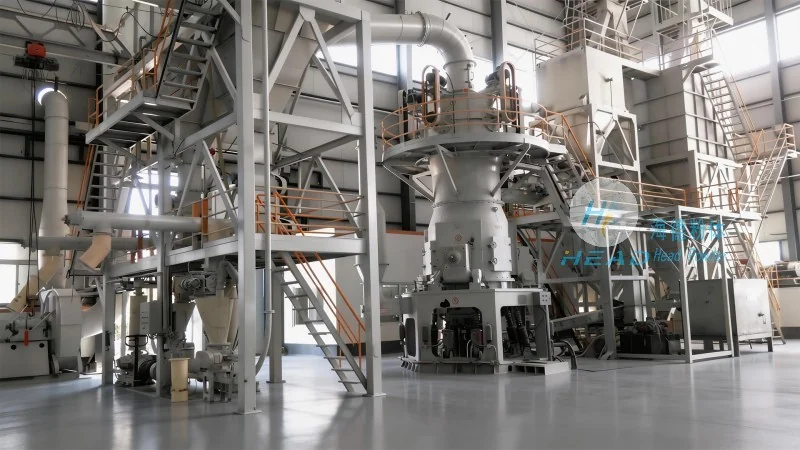
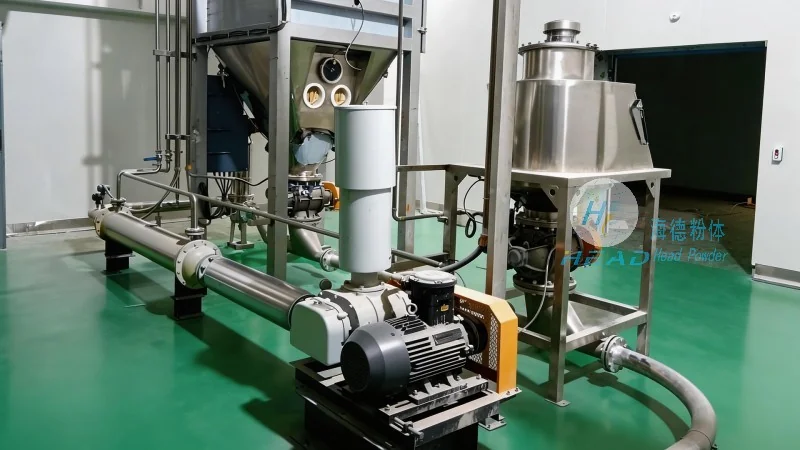
The operation of a synthetic rubber pneumatic conveyor begins with the material being fed from the hopper into the feeder. The feeder then releases the material into the conveying line, where it is entrained by a stream of air. The air, typically supplied by a positive displacement blower or a rotary lobe pump, creates a pressure differential that propels the material through the pipeline. The receiver at the end of the line collects the discharged material, completing the transport cycle. This process is continuous and can be adjusted to handle varying material volumes and distances, making it suitable for both short and long-distance conveying applications.
Implementing a pneumatic conveying system for synthetic rubber offers several advantages over traditional methods like belt conveyors or bucket elevators. Firstly, it eliminates the need for mechanical contact with the material, reducing the risk of contamination and product degradation. Synthetic rubber is often sensitive to moisture and dust, and pneumatic systems provide a closed environment that minimizes exposure to these elements. Secondly, the system is highly flexible, allowing for changes in material flow direction and distance without major modifications. This adaptability is particularly beneficial in dynamic manufacturing environments where production needs may change frequently. Additionally, pneumatic conveyors can handle materials with varying particle sizes and shapes, including fine powders and irregularly shaped granules, which can be challenging for other transport methods.
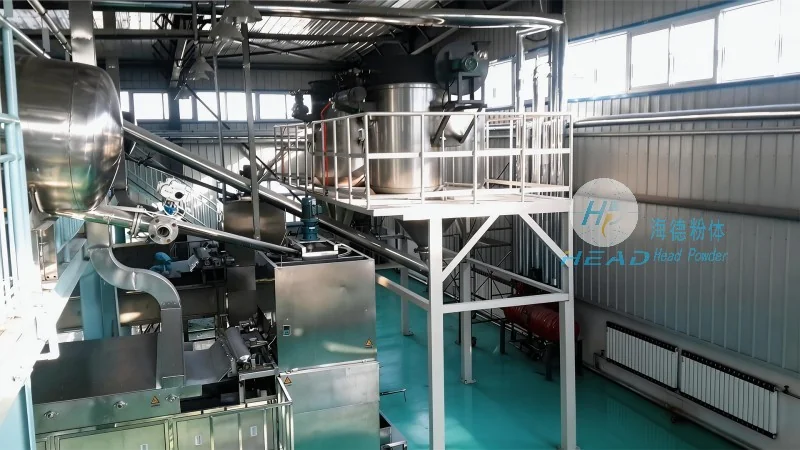
Shandong HeadPowder Engineering Co., Ltd., a leading manufacturer in the field, offers customized pneumatic conveying solutions tailored to the specific needs of synthetic rubber processing facilities. The company’s expertise lies in designing systems that address the unique challenges of synthetic rubber, such as static electricity management and material handling efficiency. When selecting a pneumatic conveyor for synthetic rubber applications, several factors should be considered, including the material's bulk density, flow characteristics, and the required conveying distance. The system's design should also account for potential issues like material buildup in the pipeline or air leakage, which can impact performance and energy efficiency.
Synthetic rubber pneumatic conveying equipment, as provided by Shandong HeadPowder Engineering Co., Ltd., represents a reliable and efficient solution for material handling in rubber manufacturing. By leveraging the structural principles and advanced components of these systems, industries can enhance their production processes, reduce operational costs, and maintain product quality. The company's commitment to customization and quality ensures that clients receive equipment that meets their specific requirements, supporting long-term operational success in the synthetic rubber industry.

 Shandong Headpowder Engineering Co., Ltd.
 156-6277-7102(Manager Zhang)
  0531-83386006
  Zhangqiu District, Jinan City, Shandong Province, China
telephone
WeChatconsult
top