With more than 10‑year industry experience, Shandong Headpowder delivers full‑service pneumatic‑conveying systems and blowers, undertaking nationwide turn‑key powder‑handling projects.
When it comes to the efficient handling and transportation of foundry sand, selecting the right conveying method is crucial for maintaining productivity and ensuring the quality of the casting process. As a leading provider in the industry, Shandong HeadPowder Engineering Co., Ltd. specializes in offering comprehensive solutions tailored to the unique needs of foundry operations. Based in Shandong, China, the company leverages years of expertise to deliver reliable and effective sand conveying systems that meet the demands of modern foundries.
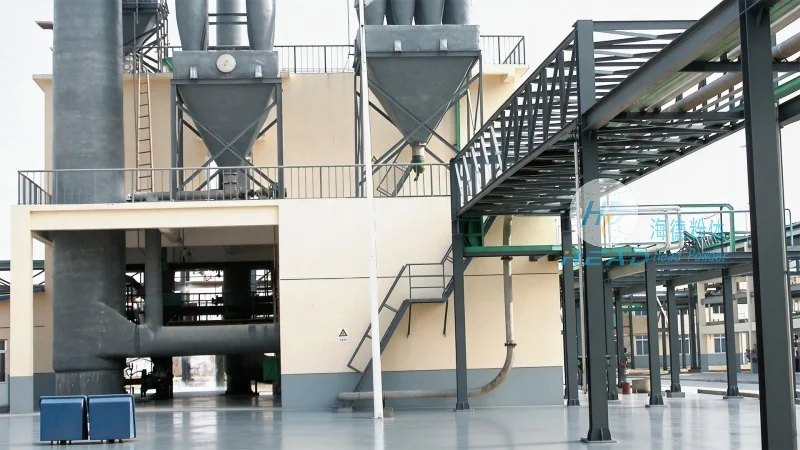
There are several effective methods available for transporting foundry sand, each with its own advantages and applications. The choice of method depends on factors such as the type of sand, the distance to be covered, the required capacity, and the environmental considerations of the facility. Below are some of the most widely used approaches:
Belt conveyors are one of the most common and versatile methods for foundry sand transportation. These systems utilize a continuous belt that moves the sand from one point to another, making them ideal for both short and long distances. The design of belt conveyors can be customized to handle different types of foundry sand, including green sand, dry sand, and reclaimed sand. Key features include adjustable speed controls, robust construction to withstand heavy loads, and easy maintenance. For instance, a typical belt conveyor used in a foundry might have a capacity ranging from 50 to 200 tons per hour, depending on the width and speed of the belt. The belt material is often chosen for its durability and resistance to abrasion, ensuring a long service life even when handling abrasive foundry sand.
Screw conveyors, also known as auger conveyors, are another popular option for foundry sand handling. These systems consist of a rotating screw inside a trough, which moves the sand forward through the conveyor. Screw conveyors are particularly effective for vertical or inclined transport, as well as for handling sand with a high moisture content. They are compact and can be installed in tight spaces, making them suitable for foundries with limited floor space. The screw's pitch and diameter can be adjusted to control the flow rate and the degree of mixing or blending of the sand. For example, a horizontal screw conveyor might be used to transport sand from a storage bin to a mixing machine, while a vertical screw conveyor could be employed to lift sand from the ground floor to an upper level for processing. The smooth operation of screw conveyors also helps in minimizing the segregation of sand particles, which is essential for maintaining consistent casting quality.
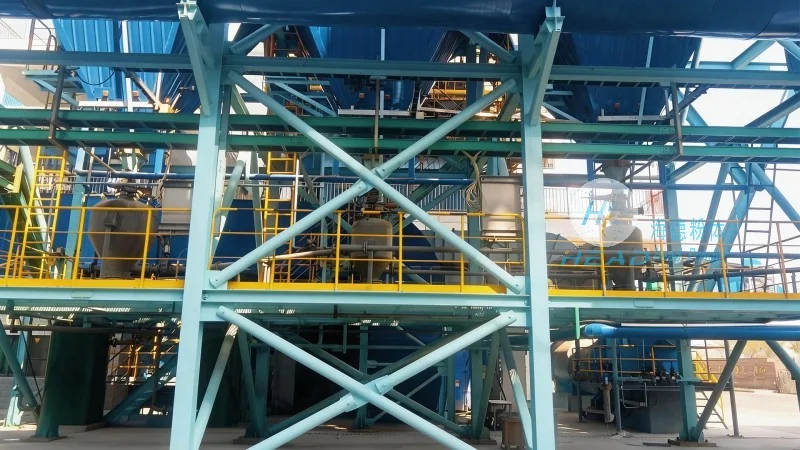
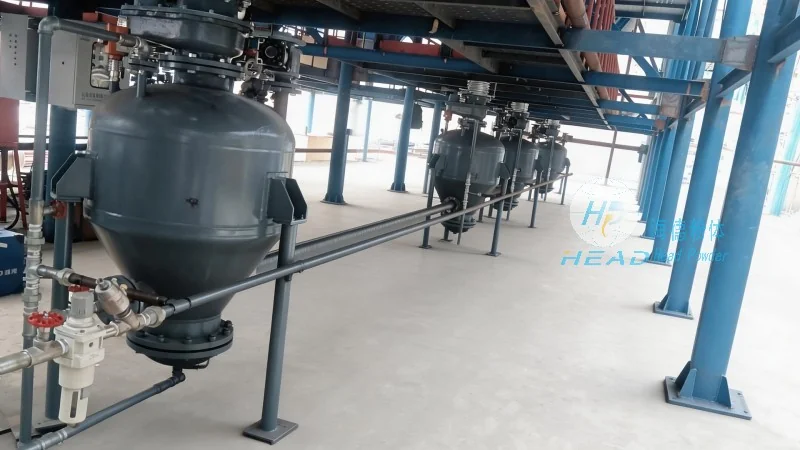
Pneumatic conveying, or air-powered transport, is a method that uses air pressure or vacuum to move foundry sand through a pipeline. This approach is highly effective for transporting sand over long distances and in environments where dust control is a priority. Pneumatic systems can be classified into two main types: positive pressure and negative pressure. Positive pressure systems blow air through the pipeline, pushing the sand forward, while negative pressure systems create a vacuum to draw the sand into the line. Both types offer advantages in terms of flexibility and dust containment. For foundry applications, pneumatic conveying is often used to transport sand from storage silos to the molding or casting areas without the need for multiple transfer points. The system can also be equipped with filters and cyclones to separate the sand from the air, ensuring that the sand remains clean and free from contaminants. This method is particularly beneficial in foundries that require high levels of cleanliness and minimal dust generation during the sand handling process.
Bucket elevators are vertical or inclined conveyors that use a series of buckets attached to a chain or belt to transport foundry sand. These systems are designed to handle vertical lifts and are commonly used to move sand from lower levels to higher levels in a foundry. The buckets are filled with sand as they travel up the elevator and then discharged at the top. Bucket elevators are known for their high capacity and ability to handle abrasive materials without significant wear. They are often used in conjunction with other conveying systems to complete the sand handling process. For example, a bucket elevator might be used to lift sand from a ground-level storage area to an upper level where it is used in the molding process. The design of bucket elevators includes features such as heavy-duty buckets, robust chains or belts, and protective covers to prevent dust leakage. These systems are also equipped with safety mechanisms to ensure that the operation is safe and reliable, even when handling large volumes of foundry sand.
Vibrating conveyors use vibration to move foundry sand along a trough. The conveyor consists of a trough that is mounted on springs and driven by an electric motor, which causes the trough to vibrate. This vibration helps to move the sand forward, and the speed and amplitude of the vibration can be adjusted to control the flow rate. Vibrating conveyors are particularly effective for handling sand with high moisture content or sticky materials, as the vibration helps to prevent the sand from sticking to the conveyor surface. They are also suitable for inclined or horizontal transport and can be used in both batch and continuous operations. In foundries, vibrating conveyors are often used to transport sand from a storage hopper to a mixing machine or to feed sand into a molding line. The design of vibrating conveyors includes features such as adjustable vibration settings, easy access for maintenance, and a compact footprint. These systems are known for their low maintenance requirements and ability to handle a wide range of foundry sand types without the need for extensive modifications.
When selecting a conveying method for foundry sand, it is essential to consider several factors to ensure optimal performance and efficiency. First, the type of sand being handled is a critical factor. Different sands have different properties, such as moisture content, particle size, and abrasiveness, which can affect the choice of conveyor. For example, abrasive sands may require more durable materials and components to prevent wear and tear. Second, the distance and layout of the foundry facility play a role in determining the most suitable method. For short distances, a belt or screw conveyor might be sufficient, while for longer distances, pneumatic or bucket elevators may be more appropriate. Third, the required capacity and throughput of the system must be matched to the production needs of the foundry. A conveyor with insufficient capacity can lead to bottlenecks and reduced productivity, while an over-engineered system may result in unnecessary costs. Fourth, environmental considerations, such as dust control and noise levels, should be taken into account. Some methods, like pneumatic conveying, offer better dust containment compared to others, which may be a deciding factor for foundries operating in enclosed or sensitive environments. Finally, the cost of installation, operation, and maintenance should be evaluated. While some methods may have a higher initial cost, they may offer lower long-term maintenance costs or higher efficiency, making them a more economical choice over time.
Efficient foundry sand conveying is a vital component of any foundry operation, as it directly impacts productivity, quality, and cost. Shandong HeadPowder Engineering Co., Ltd. offers a range of conveying solutions tailored to the specific needs of foundries, ensuring that the right method is selected for each application. By considering factors such as sand type, distance, capacity, and environmental requirements, foundries can choose the most suitable conveying method to optimize their operations. Whether using belt conveyors, screw conveyors, pneumatic systems, bucket elevators, or vibrating conveyors, the goal is to maintain consistent sand quality, minimize downtime, and enhance overall productivity. With the expertise and experience of companies like HeadPowder, foundries can achieve reliable and efficient sand handling, supporting their production goals and maintaining a competitive edge in the industry.

 Shandong Headpowder Engineering Co., Ltd.
 156-6277-7102(Manager Zhang)
  0531-83386006
  Zhangqiu District, Jinan City, Shandong Province, China
telephone
WeChatconsult
top