With more than 10‑year industry experience, Shandong Headpowder delivers full‑service pneumatic‑conveying systems and blowers, undertaking nationwide turn‑key powder‑handling projects.
Calcined limestone powder conveying equipment is a critical component in industrial processes that handle fine powders, particularly in applications involving calcined limestone. This equipment is designed to efficiently transport the powder from storage silos or processing units to the next stage of production, ensuring consistent flow and minimizing material loss. The operation of such systems involves several key components and a systematic process that ensures reliable and safe material handling. HeadPowder, a leading manufacturer based in Shandong, China, specializes in providing high-quality calcined limestone powder conveying equipment tailored to meet the specific needs of industrial clients.
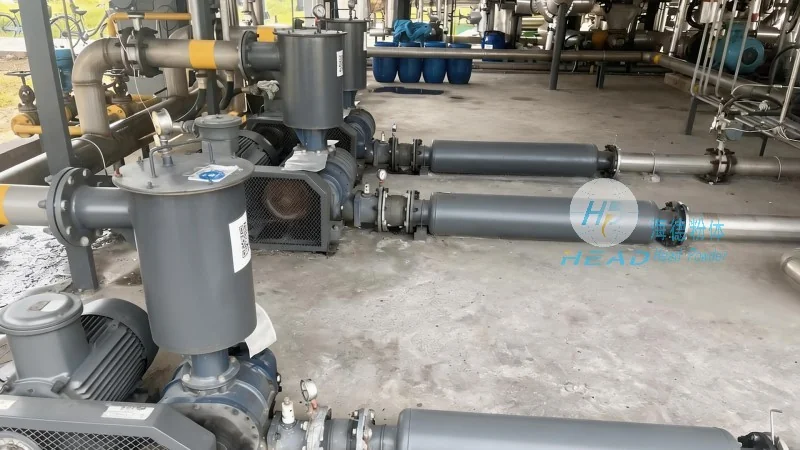
The calcined limestone powder conveying equipment typically consists of several essential parts that work in tandem to achieve effective material transport. These components include a hopper for material storage, a feeder to control the flow rate, a conveyor system (such as a pneumatic or mechanical conveyor), and a dust collection system to maintain air quality. Each component plays a vital role in the overall functionality of the equipment. The hopper is designed to hold a sufficient quantity of calcined limestone powder, providing a stable feed source. The feeder, often a rotary valve or a screw feeder, regulates the discharge rate, preventing overloading or underflow. The conveyor system, which may be pneumatic (using air pressure to move the powder) or mechanical (using belts or screws), transports the powder to the destination. Finally, the dust collection system captures any airborne particles, ensuring compliance with environmental regulations and maintaining a safe working environment.
The working principle of calcined limestone powder conveying equipment is based on the principles of fluidization and air movement. In pneumatic conveying systems, for example, compressed air is introduced into the hopper, creating a low-pressure zone that draws the powder into the conveyor line. The air and powder mixture is then transported through the pipeline to the discharge point. The mechanical conveyor systems, on the other hand, rely on the physical movement of the conveyor elements (like belts or screws) to push the powder forward. The choice between pneumatic and mechanical systems depends on factors such as the particle size, moisture content, and the distance to be covered. For calcined limestone, which is typically a fine powder with low moisture content, pneumatic conveying is often preferred due to its ability to handle long distances and provide gentle material handling.
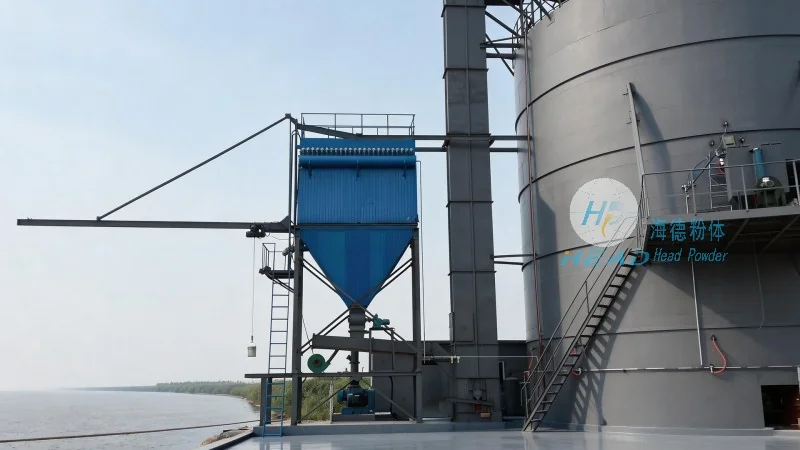
The operation process of calcined limestone powder conveying equipment involves several sequential steps that ensure smooth and efficient material transport. First, the calcined limestone powder is loaded into the hopper from a storage silo or a processing unit. The hopper is equipped with a level indicator to monitor the material volume, ensuring that it does not run out during operation. Next, the feeder is activated to control the flow rate of the powder. The feeder adjusts the discharge rate based on the demand from the downstream process, maintaining a consistent flow. The conveyor system then receives the powder from the feeder and transports it to the discharge point, which may be a mixer, a storage silo, or a processing unit. The dust collection system continuously operates to capture any particles that escape from the system, preventing dust accumulation and maintaining air quality. Throughout the operation, the system is monitored by sensors and control panels to detect any abnormalities, such as blockages or pressure drops, and to adjust the operation parameters accordingly.
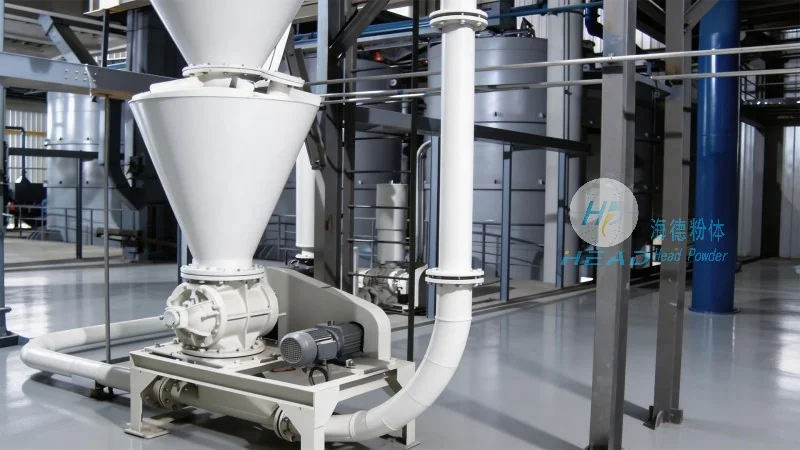
Implementing calcined limestone powder conveying equipment offers several advantages in industrial applications. One of the primary benefits is the ability to handle fine powders efficiently, reducing material loss and improving process consistency. The equipment minimizes the risk of dust explosions by incorporating dust collection systems, enhancing workplace safety. Additionally, the system allows for long-distance transport without the need for intermediate storage, streamlining the production process. The automated control features enable precise regulation of the flow rate, reducing the need for manual intervention and improving operational efficiency. For calcined limestone, which is commonly used in cement production, steel manufacturing, and chemical processing, the conveying equipment ensures that the material is delivered in a controlled manner, meeting the quality standards required for downstream processes.

Calcined limestone powder conveying equipment is widely used in various industrial sectors that rely on fine powders. In the cement industry, it is used to transport calcined limestone from storage to the raw mill, where it is ground into fine particles for cement production. In the steel industry, the equipment is employed to convey limestone to the sintering or blast furnace processes, where it acts as a flux to remove impurities. In chemical processing, it is used to transport limestone for the production of calcium compounds, such as calcium carbonate and calcium hydroxide. The versatility of the equipment makes it suitable for a range of applications, from large-scale industrial production to smaller processing facilities. The ability to handle different particle sizes and moisture contents makes it adaptable to various material types, ensuring its effectiveness in diverse industrial settings.
Maintaining calcined limestone powder conveying equipment is crucial for ensuring its longevity and reliable operation. Regular maintenance includes inspecting the hopper and feeder for wear and tear, cleaning the conveyor system to prevent blockages, and checking the dust collection system for efficiency. The equipment should be cleaned regularly to remove any accumulated powder, which can affect the performance and cause blockages. Safety considerations are also essential when operating the equipment. The system should be equipped with safety interlocks to prevent accidental start-ups, and the dust collection system should be properly maintained to prevent dust explosions. Personnel operating the equipment should be trained on proper safety procedures, including the use of personal protective equipment (PPE) and emergency shutdown protocols. By adhering to regular maintenance and safety guidelines, the equipment can operate efficiently and safely, minimizing downtime and ensuring consistent material transport.

 Shandong Headpowder Engineering Co., Ltd.
 156-6277-7102(Manager Zhang)
  0531-83386006
  Zhangqiu District, Jinan City, Shandong Province, China
telephone
WeChatconsult
top