With more than 10‑year industry experience, Shandong Headpowder delivers full‑service pneumatic‑conveying systems and blowers, undertaking nationwide turn‑key powder‑handling projects.
HeadPowder, a leading manufacturer in the field of material handling solutions, specializes in the design and production of pneumatic conveying equipment tailored for the transportation of nanoparticle calcium carbonate. This article delves into the fundamental principles behind such systems and highlights the key characteristics of their operational environments.
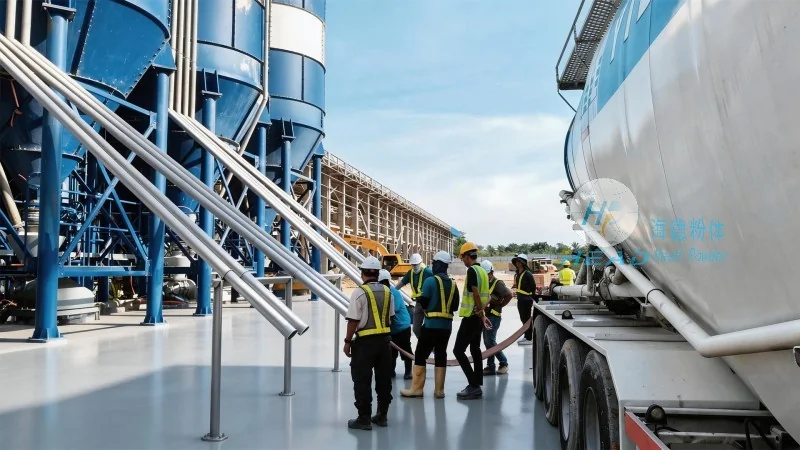
The core principle of pneumatic conveying involves the use of air or gas to transport bulk materials through a pipeline. In the case of nanoparticle calcium carbonate, which is often used in industries like plastics, coatings, and paper, the equipment must be engineered to handle fine, dust-like particles efficiently. The system typically consists of a feeding device, a conveying line, a separation unit, and a discharge mechanism. The feeding device, such as a rotary valve or a screw feeder, introduces the material into the pipeline. As the air is introduced, it creates a flow that lifts and transports the particles. The separation unit, often a cyclone or a bag filter, separates the material from the air stream, allowing the material to be discharged into a collection container while the air is either recirculated or vented.
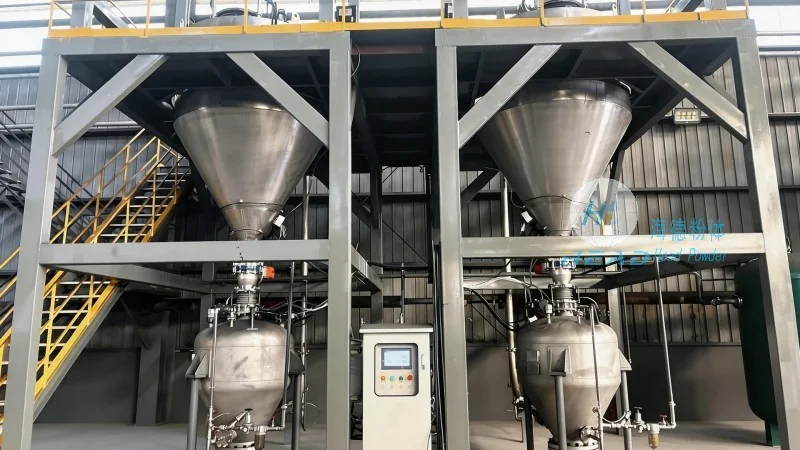
The operational environment of pneumatic conveying systems for nanoparticle calcium carbonate is characterized by several critical factors that influence performance and efficiency. Firstly, the particle size and density of the calcium carbonate are crucial. Nanoparticle calcium carbonate has a very fine particle size, typically ranging from 0.1 to 5 microns, which can lead to issues like caking or blockages if not handled properly. The equipment must be designed with features like anti-caking mechanisms or adjustable air flow to prevent these problems. Secondly, the system's capacity and flow rate are tailored to the specific application. For example, in a plastic manufacturing plant, the conveying system may need to handle large volumes of calcium carbonate to meet production demands, requiring high-capacity blowers and robust pipelines. Thirdly, the system's control and monitoring capabilities are essential for maintaining consistent performance. Modern pneumatic conveying systems often include sensors to monitor pressure, flow, and material level, allowing operators to adjust parameters in real-time to optimize operation. Additionally, the equipment must be constructed from materials that are resistant to corrosion and abrasion, as calcium carbonate particles can be abrasive and may contain acidic components that could damage metal surfaces over time. The design also considers the need for easy maintenance and cleaning, as the fine particles can accumulate in the system and require regular upkeep to prevent downtime.
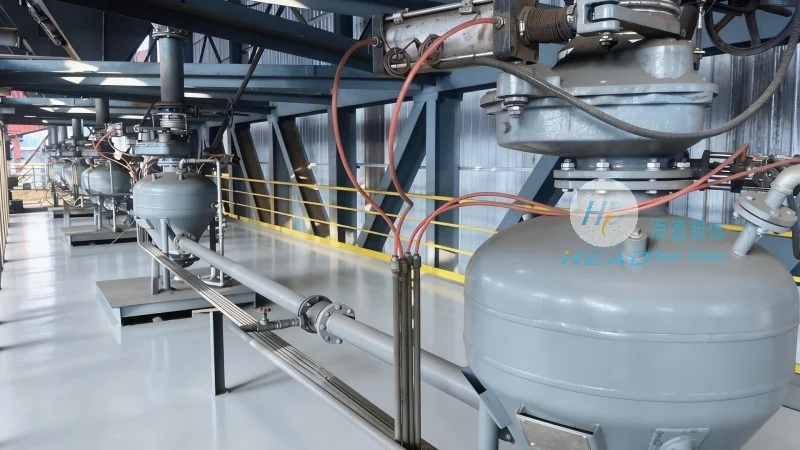
Pneumatic conveying equipment for nanoparticle calcium carbonate is widely used in various industrial settings. One common application is in the plastic industry, where calcium carbonate is used as a filler to improve the mechanical properties and reduce costs of plastic products. The conveying system must be able to handle large quantities of fine powder and deliver it to the mixing or extrusion equipment without clogging. Another application is in the paper industry, where calcium carbonate is used as a coating pigment to enhance the whiteness and smoothness of paper. The system's ability to transport the material with minimal loss and high efficiency is critical in this scenario. Additionally, in the coatings and paints industry, calcium carbonate is used as a pigment or extender, and the pneumatic conveying system ensures that the material is delivered to the production line in a consistent and controlled manner. The operational advantages of pneumatic conveying over other methods, such as belt conveyors or bucket elevators, include higher efficiency in transporting fine powders, reduced risk of material contamination, and lower maintenance costs due to fewer moving parts. Furthermore, the system can be easily integrated into existing production lines, allowing for seamless material handling without the need for extensive modifications.
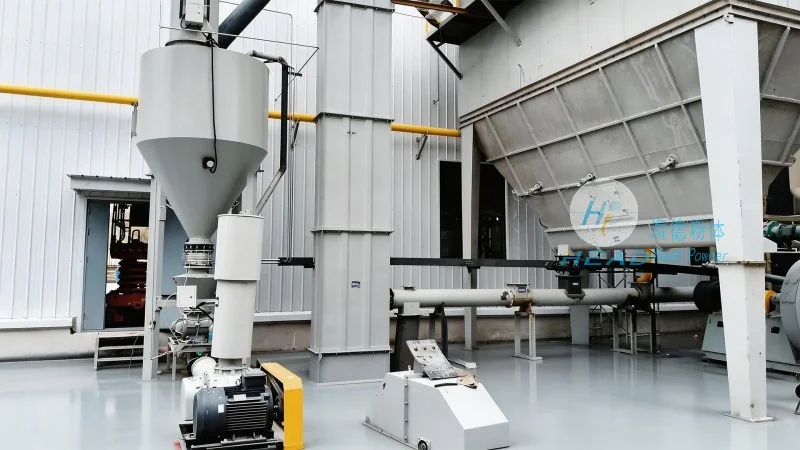
HeadPowder Engineering Co., Ltd., based in Shandong, China, is a reputable company specializing in the development and manufacturing of advanced pneumatic conveying equipment for nanoparticle calcium carbonate. With a focus on innovation and quality, the company provides customized solutions that meet the specific needs of various industries. The principles and characteristics of these systems, as discussed above, highlight the importance of proper design and operation to ensure efficient and reliable material transportation. By leveraging the expertise of HeadPowder, industries can enhance their production processes and achieve higher levels of efficiency and productivity in handling nanoparticle calcium carbonate materials.

 Shandong Headpowder Engineering Co., Ltd.
 156-6277-7102(Manager Zhang)
  0531-83386006
  Zhangqiu District, Jinan City, Shandong Province, China
telephone
WeChatconsult
top