With more than 10‑year industry experience, Shandong Headpowder delivers full‑service pneumatic‑conveying systems and blowers, undertaking nationwide turn‑key powder‑handling projects.
Efficient and reliable conveyance of mica powder is crucial for industries that rely on this mineral for various applications, such as in the production of insulation materials, cosmetics, and industrial coatings. The choice of conveyance method significantly impacts production efficiency, material quality, and operational costs. This article explores the primary methods used for mica powder conveyance, providing insights into the technologies and considerations involved in selecting the most suitable approach for different industrial settings.
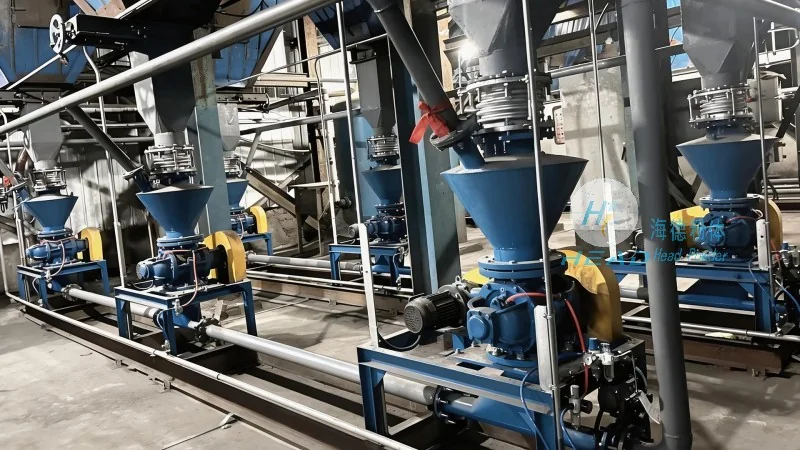
Mica powder, derived from mica minerals, is a versatile material with unique properties including high thermal stability, electrical insulation, and aesthetic appeal. Its fine particle size and light weight make it ideal for applications where uniform distribution and consistent performance are required. However, the handling of mica powder presents challenges due to its dusty nature and tendency to create static charges. Consequently, the selection of an appropriate conveyance system is essential to ensure safe and efficient material transport from storage to processing units.
HeadPowder, or Shandong HeadPowder Engineering Co., Ltd., is a leading manufacturer specializing in mica powder processing and related equipment. With a strong presence in China, particularly in Shandong province, the company has built a reputation for delivering high-quality mica products and innovative solutions tailored to the needs of diverse industries. The company's commitment to quality and customer satisfaction is reflected in its state-of-the-art production facilities and technical expertise in material handling technologies.
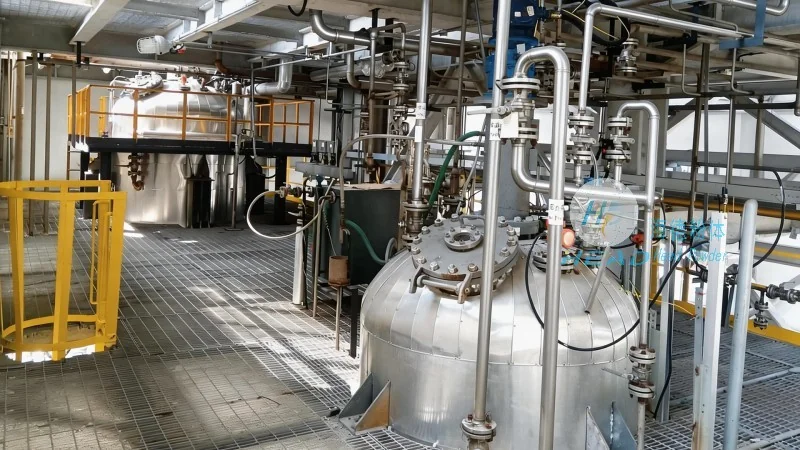
Several methods are commonly employed for the transport of mica powder, each with its own advantages and limitations. The selection of a method depends on factors such as the particle size distribution of the mica powder, the required conveying distance, the volume of material to be moved, and the environmental conditions of the operation. Below are the primary conveyance techniques used in the industry:
Pneumatic conveying, also known as air conveying, is a widely used method for transporting mica powder due to its ability to handle fine powders over moderate distances. This system utilizes compressed air to move the material through a pipeline. There are two main types of pneumatic conveying: pressure and vacuum systems. Pressure systems use positive pressure to push the material forward, while vacuum systems use negative pressure to pull the material. Pneumatic conveyors are particularly effective for mica powder because they minimize material degradation and reduce the risk of dust accumulation compared to mechanical systems. The system typically includes a hopper for material storage, a feeder to control the flow rate, a pipeline for transport, and a receiver at the destination. The choice between pressure and vacuum depends on the distance and the volume of material to be conveyed. For example, pressure systems are often used for short to medium distances, while vacuum systems are suitable for longer distances or when the material needs to be transported from multiple sources to a single destination.
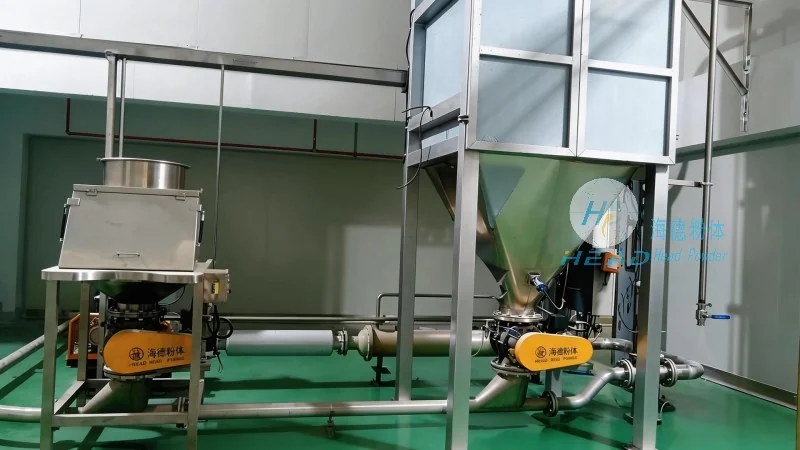
Mechanical conveyors, including belt conveyors, screw conveyors, and bucket elevators, are another common method for mica powder transport. Belt conveyors use a continuous belt to move the material along a path, making them suitable for horizontal or slightly inclined transport. Screw conveyors, also known as augers, use a rotating screw to push the material forward, which is effective for vertical or inclined transport. Bucket elevators use a series of buckets attached to a chain or belt to lift the material vertically. These mechanical systems are generally more cost-effective for short to medium distances and are suitable for handling larger quantities of mica powder. However, they may be less efficient for very fine powders due to the risk of material buildup and blockages. Additionally, mechanical conveyors require regular maintenance to ensure smooth operation and prevent wear and tear from the abrasive nature of mica powder.
Hydraulic conveying systems use a liquid medium, such as water or a specialized fluid, to transport mica powder. The material is suspended in the liquid and carried through a pipeline. This method is particularly useful for transporting mica powder over long distances or in environments where dust control is critical. Hydraulic conveyors are capable of handling high volumes of material and can operate at relatively low speeds, reducing the risk of material degradation. However, they require additional equipment for liquid management, such as pumps and filters, and may be less suitable for applications where the material needs to be used in dry form. The system typically includes a slurry tank, a pump to move the slurry, and a pipeline for transport. The material is then separated from the liquid at the destination, often through a filtration process.
Gravity conveyors utilize the natural force of gravity to move mica powder from a higher to a lower level. This method is simple and cost-effective for short vertical or inclined distances. The material is placed in a trough or chute and allowed to flow down due to gravity. Gravity conveyors are particularly suitable for handling mica powder with a relatively large particle size or when the material is being transferred from a storage silo to a processing unit at a lower level. However, they are limited by the distance and the angle of inclination, as the material must be able to flow freely without blocking the system. Additionally, gravity conveyors may not be suitable for fine mica powders due to the risk of clogging and uneven flow.
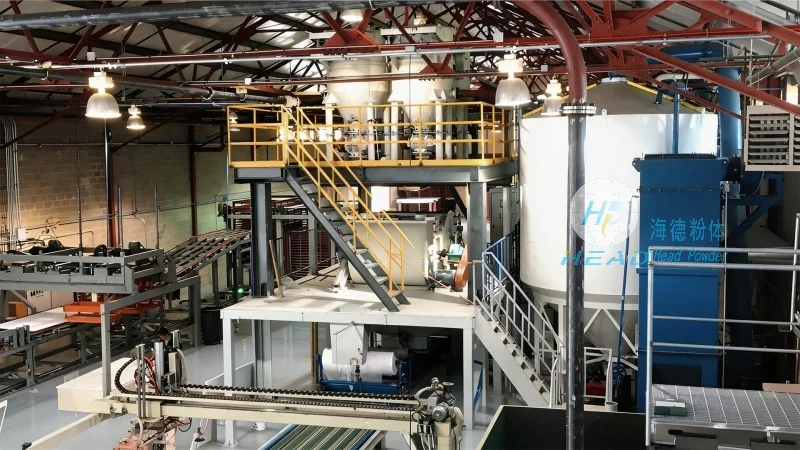
The selection of an appropriate mica powder conveyance method requires careful consideration of several factors. First, the particle size and moisture content of the mica powder should be evaluated, as these properties affect the flowability and handling characteristics of the material. Fine mica powders are more prone to dusting and static charges, making pneumatic or hydraulic systems more suitable. Second, the conveying distance and the required flow rate should be determined, as these factors influence the choice between pressure and vacuum pneumatic systems or mechanical conveyors. Third, the environmental conditions, such as the need for dust control or explosion-proofing, should be considered, as some systems are better suited for these applications. Finally, the cost of installation, operation, and maintenance should be evaluated to ensure that the chosen method provides the best return on investment.
In conclusion, the conveyance of mica powder is a critical aspect of its industrial application, and the choice of method significantly impacts operational efficiency and material quality. Pneumatic, mechanical, hydraulic, and gravity systems each offer unique advantages and are suitable for different industrial scenarios. By understanding the properties of mica powder and the requirements of the application, industries can select the most appropriate conveyance method to ensure safe, efficient, and cost-effective material transport. Shandong HeadPowder Engineering Co., Ltd. continues to provide innovative solutions and high-quality mica products to support the needs of various industries, helping to optimize material handling processes and enhance overall productivity.

 Shandong Headpowder Engineering Co., Ltd.
 156-6277-7102(Manager Zhang)
  0531-83386006
  Zhangqiu District, Jinan City, Shandong Province, China
telephone
WeChatconsult
top