With more than 10‑year industry experience, Shandong Headpowder delivers full‑service pneumatic‑conveying systems and blowers, undertaking nationwide turn‑key powder‑handling projects.
Aluminum nitride (AlN) is a widely used ceramic material in modern industrial applications, known for its excellent thermal conductivity, electrical insulation properties, and chemical stability. As AlN production and processing scale up, the need for efficient and reliable material conveying systems becomes critical. This article explores the concept of an aluminum nitride material conveying line and delves into its core design principles, highlighting the technological advancements and practical considerations that ensure optimal performance in handling this specialized material.
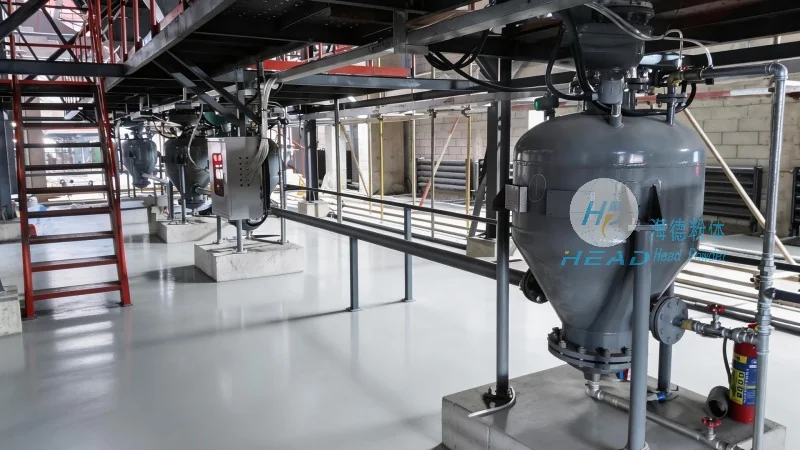
An aluminum nitride material conveying line is a specialized system engineered to transport AlN powder or bulk material from one processing stage to another within a manufacturing facility. These lines are typically integrated into larger production workflows, such as powder mixing, compaction, sintering, or packaging. The primary goal of such a system is to maintain the material's integrity—preserving its particle size distribution, moisture content, and chemical purity—while ensuring smooth, continuous movement. This is particularly important in high-value applications where AlN is used in electronics, semiconductor manufacturing, or advanced ceramics, where even minor contamination or degradation can impact product quality.
The design of an aluminum nitride material conveying line is governed by several critical principles aimed at maximizing efficiency, safety, and material preservation. These principles include:
1. **Material Compatibility**: The conveying equipment must be constructed from materials that are chemically inert to aluminum nitride. Common choices include stainless steel, PTFE-coated components, or specialized ceramics. This prevents any reaction between the material and the conveying surfaces, which could alter the AlN's properties or introduce contaminants.
2. **Low-Pressure and Gentle Handling**: AlN particles are often fine and can be sensitive to mechanical stress. Therefore, conveying systems use low-pressure mechanisms, such as screw conveyors, pneumatic transport, or belt conveyors with minimal friction. The design minimizes particle attrition and agglomeration, which are key to maintaining the material's uniformity.
3. **Temperature Control**: AlN has a high thermal conductivity, and its handling may require temperature control to prevent moisture absorption or thermal degradation. Conveying lines may incorporate heated or insulated sections to maintain the material at a stable temperature, especially during long-distance transport or in environments with temperature fluctuations.
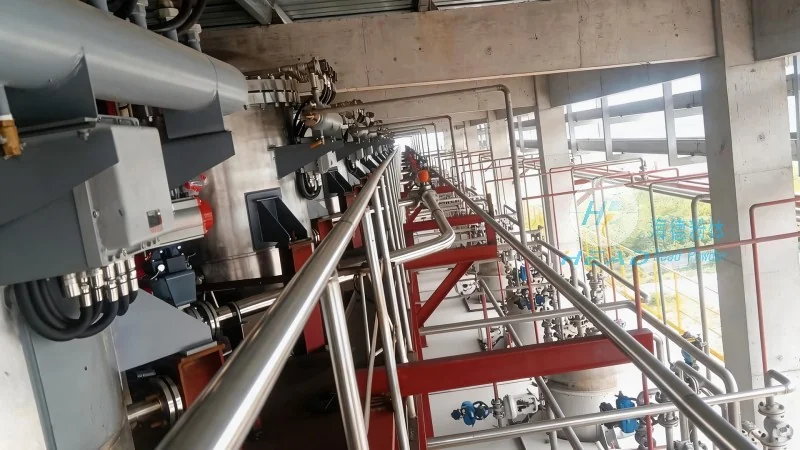
4. **Seal and Containment**: To prevent dust emissions and protect the material from external contaminants, the conveying line is equipped with robust sealing systems. These may include dust collection hoods, vacuum or pressure control, and enclosed ductwork. This is essential for maintaining a clean working environment and complying with industrial safety standards.
The aluminum nitride material conveying line typically consists of several interconnected components, each playing a specific role in the material's transport. These components include:
1. **Inlet and Feeding System**: The system starts with an inlet where AlN material is fed into the line. This may involve hoppers, feeders, or bulk material loaders that ensure a consistent flow rate. The design of the inlet is critical to avoid material bridging or clogging, which can disrupt the entire process.
2. **Conveying Mechanism**: The core of the system is the conveying mechanism, which can vary based on the material's properties and the required transport distance. Common options include screw conveyors (for short to medium distances), pneumatic conveying systems (for longer distances or fine powders), or belt conveyors (for bulk material). The choice of mechanism depends on factors like particle size, moisture content, and the need for gentle handling.
3. **Control and Monitoring Systems**: Modern conveying lines are equipped with advanced control systems that monitor parameters such as flow rate, pressure, temperature, and material level. These systems allow for real-time adjustments to maintain optimal performance and detect any deviations that could affect material quality. Sensors and feedback loops ensure the system operates within predefined limits, enhancing reliability and reducing downtime.
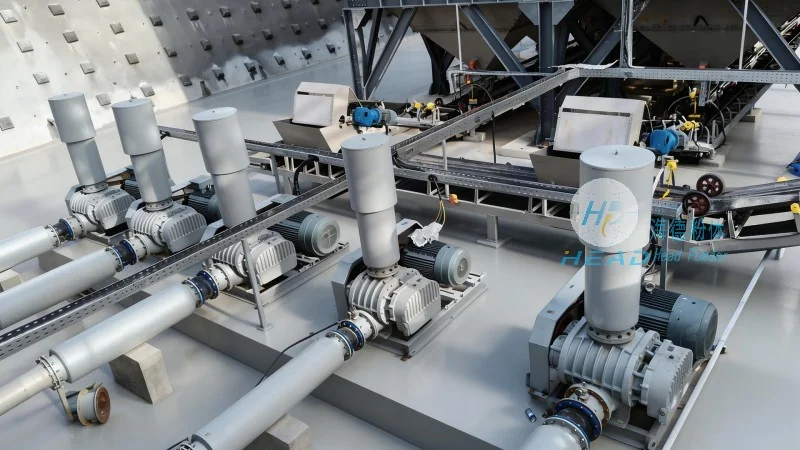
4. **Outlet and Discharge System**: The material exits the conveying line at the discharge point, where it is transferred to the next processing stage. The outlet is designed to minimize material loss and ensure a smooth transition to downstream equipment. In some cases, the discharge may be integrated with a dust collection system to capture any fine particles that escape during transport.
Shandong HeadPowder Engineering Co., Ltd., a leading manufacturer in the field of material handling equipment, specializes in developing customized aluminum nitride material conveying lines tailored to specific industrial needs. With years of experience in handling high-purity ceramic materials, the company understands the unique challenges associated with AlN transport and has developed advanced solutions to address them.
The company's engineers work closely with clients to assess their production requirements, including material properties, processing stages, and operational constraints. By leveraging their expertise in material science and mechanical engineering, they design conveying systems that balance efficiency, durability, and cost-effectiveness. For instance, they may recommend a combination of screw and pneumatic conveyors to achieve both short-distance and long-distance transport, or incorporate specialized sealing technologies to prevent contamination.
Shandong HeadPowder Engineering Co., Ltd. also emphasizes quality control throughout the manufacturing process. Each component of the conveying line is rigorously tested to ensure compliance with industry standards and client specifications. This includes material compatibility checks, performance testing under simulated operating conditions, and durability assessments. The company's commitment to precision and reliability has made it a trusted partner for businesses in the electronics, semiconductor, and advanced ceramics industries, where the quality of material handling directly impacts product performance.
In conclusion, an aluminum nitride material conveying line is a sophisticated system that combines engineering principles with material science to ensure the efficient and safe transport of this critical ceramic. The design principles, including material compatibility, gentle handling, temperature control, and robust sealing, are essential for maintaining the integrity of AlN and optimizing production processes. Companies like Shandong HeadPowder Engineering Co., Ltd. play a vital role in developing and implementing these systems, providing tailored solutions that meet the specific demands of modern manufacturing. As the demand for high-purity AlN continues to grow, the importance of reliable material conveying lines will only increase, making them a cornerstone of efficient and sustainable production in the industry.

 Shandong Headpowder Engineering Co., Ltd.
 156-6277-7102(Manager Zhang)
  0531-83386006
  Zhangqiu District, Jinan City, Shandong Province, China
telephone
WeChatconsult
top