With more than 10‑year industry experience, Shandong Headpowder delivers full‑service pneumatic‑conveying systems and blowers, undertaking nationwide turn‑key powder‑handling projects.
Quicklime, also known as calcium oxide, is a vital industrial material utilized across sectors including construction, chemical manufacturing, and environmental treatment. The efficient and safe transportation of quicklime from production sites to processing facilities is crucial for maintaining operational efficiency and product quality. This article delves into the principle of quicklime pneumatic conveying equipment, detailing its technical foundation, operational mechanisms, and practical applications.
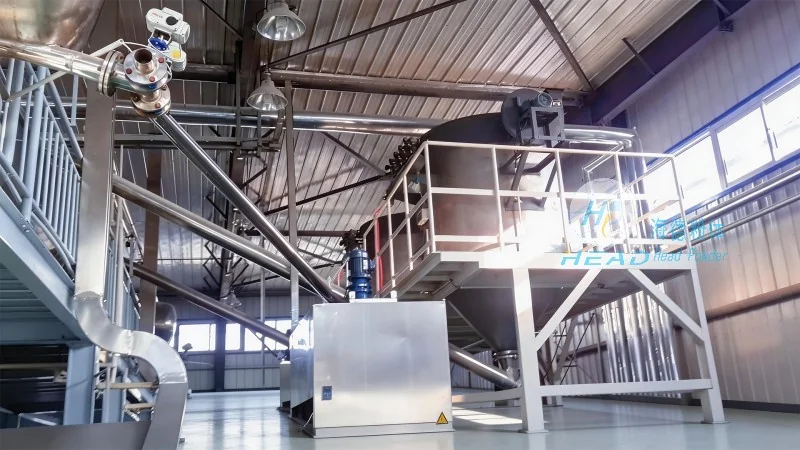
HeadPowder, a leading engineering firm headquartered in Shandong, China, specializes in the design, manufacturing, and installation of advanced material handling systems. With a strong commitment to innovation and customer satisfaction, HeadPowder has established itself as a trusted partner for industries requiring reliable and efficient bulk material transport solutions. The company's expertise in pneumatic conveying technology, particularly for quicklime, reflects its deep understanding of the unique challenges associated with handling this caustic and reactive material.
Quicklime pneumatic conveying equipment operates on the fundamental principle of transporting bulk materials through a pressurized or vacuumed air stream. Unlike traditional mechanical conveying methods that rely on belts or screws, pneumatic systems utilize air as the primary medium to move materials. This approach offers advantages such as reduced wear and maintenance costs, as the material is not in direct contact with mechanical parts. The system typically includes a hopper for material storage, a feeder to control flow rate, a conveying pipe network, and a receiver for material discharge.
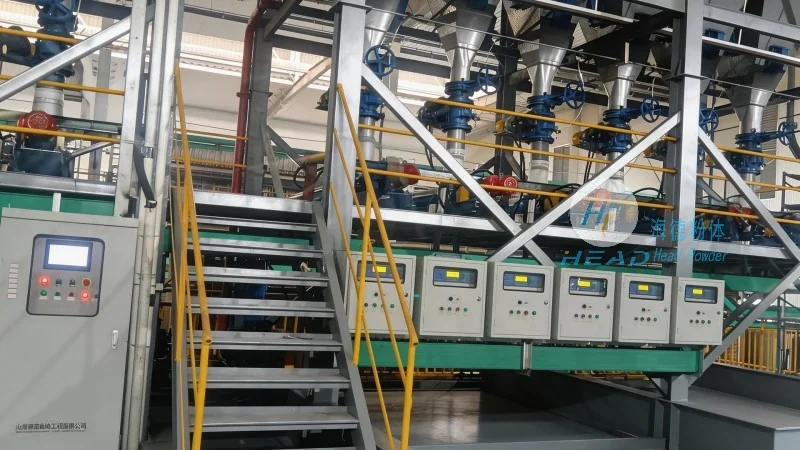
The operation of quicklime pneumatic conveying equipment involves a sequence of steps ensuring smooth material transport. Initially, quicklime is fed from the storage hopper into the feeder, which regulates flow rate to match conveying requirements. The feeder then delivers material into the conveying pipe, where it mixes with a high-velocity air stream generated by a blower or compressor. This air stream propels quicklime particles through the pipe network, maintaining consistent flow and preventing settling or blockages. The system may include elbows, bends, and filters to manage air flow and protect equipment from dust accumulation. At the receiving end, a separator or cyclone separates quicklime from air, allowing material collection in a designated container. The air, now free of dust, is either recirculated or vented, depending on design.
Compared to traditional methods, quicklime pneumatic conveying systems offer key advantages enhancing efficiency and safety. First, the absence of mechanical components reduces material contamination and equipment wear, critical for reactive quicklime. Second, the system provides layout flexibility, with pipes arranged to suit plant designs. Third, it integrates dust collection and filtration, ensuring environmental compliance and a clean workspace. Additionally, it handles varying flow rates and particle sizes, making it suitable for diverse industrial applications.
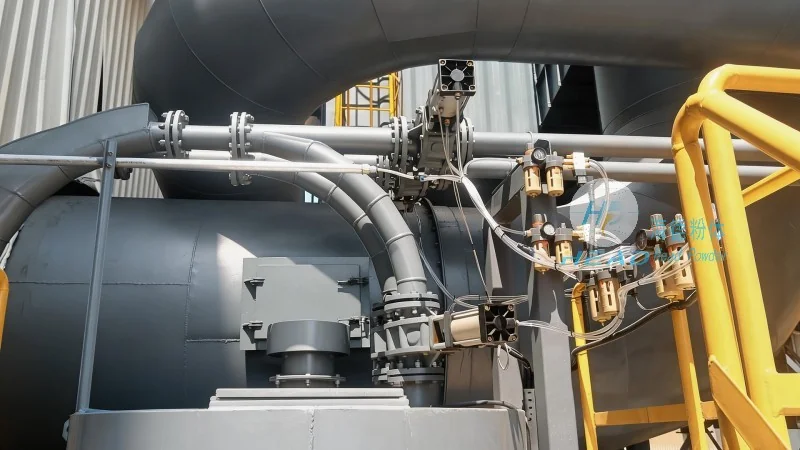
Quicklime pneumatic conveying equipment is widely used in industries reliant on bulk material transport. In construction, it delivers quicklime to cement production facilities, where it is a key raw material for cement clinker. In chemical manufacturing, quicklime is used for calcium-based chemicals, with the system efficiently transporting material between production stages. Environmental treatment facilities also utilize quicklime for flue gas desulfurization and water treatment, where large volume handling is critical. The reliability and efficiency of pneumatic conveying systems significantly boost productivity and cost-effectiveness for these operations.
Quicklime pneumatic conveying equipment represents a sophisticated solution for the efficient and safe transport of this essential industrial material. By leveraging pneumatic transport principles, these systems offer advantages over traditional mechanical methods, including reduced maintenance, improved safety, and operational flexibility. Shandong HeadPowder Engineering Co., Ltd. continues to innovate in this field, providing customized solutions tailored to client needs. With expertise in material handling technology and a commitment to quality, HeadPowder remains a leading provider of quicklime pneumatic conveying equipment, supporting industries in achieving operational goals while maintaining environmental and safety standards.

 Shandong Headpowder Engineering Co., Ltd.
 156-6277-7102(Manager Zhang)
  0531-83386006
  Zhangqiu District, Jinan City, Shandong Province, China
telephone
WeChatconsult
top