With more than 10‑year industry experience, Shandong Headpowder delivers full‑service pneumatic‑conveying systems and blowers, undertaking nationwide turn‑key powder‑handling projects.
The dry powder pneumatic conveying system for flocculants is an advanced industrial solution engineered to efficiently transport flocculant powders from storage to processing points. This system utilizes pneumatic technology to move dry powders through a network of pipes, ensuring reliable and consistent material handling. The fundamental principle involves employing a conveying medium, typically air, to create a flow that propels the flocculant particles through the system. This approach offers substantial advantages over conventional methods such as manual handling or mechanical conveyors, particularly in terms of hygiene, safety, and operational efficiency. By maintaining an enclosed system, it minimizes dust dispersion and reduces the risk of contamination, which is critical in industries where product purity is a top priority.
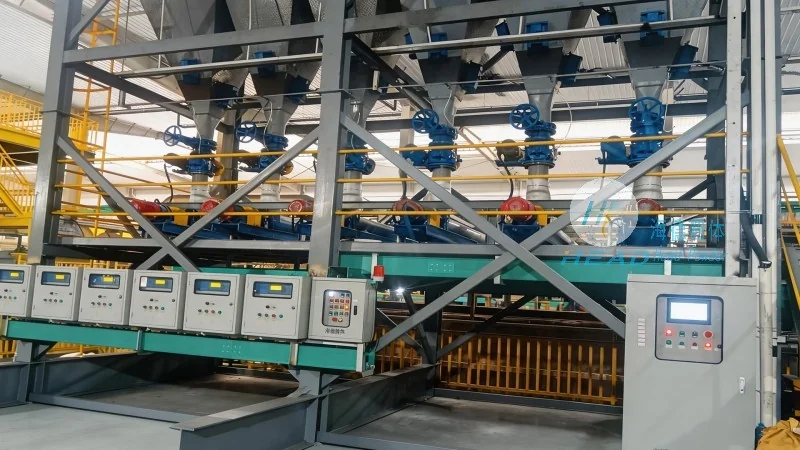
The system comprises several critical components that collaborate to achieve effective flocculant powder transport. The primary components include a hopper for material storage, a rotary valve or feeder to regulate the flow rate, a conveying line (often equipped with pressure or vacuum systems), and a receiver or discharge point. The working principle is based on the creation of a pressure differential or vacuum within the system. When air is introduced into the conveying line, it creates a flow that entrains the flocculant particles, forming a slurry-like mixture. This mixture is then transported through the pipeline to the desired location. The system can operate under either positive pressure (where air is forced into the line) or negative pressure (where air is drawn out, creating a vacuum), depending on the specific application requirements. The choice between positive and negative pressure systems depends on factors such as the distance to be covered, the particle size of the flocculant, and the desired flow rate.
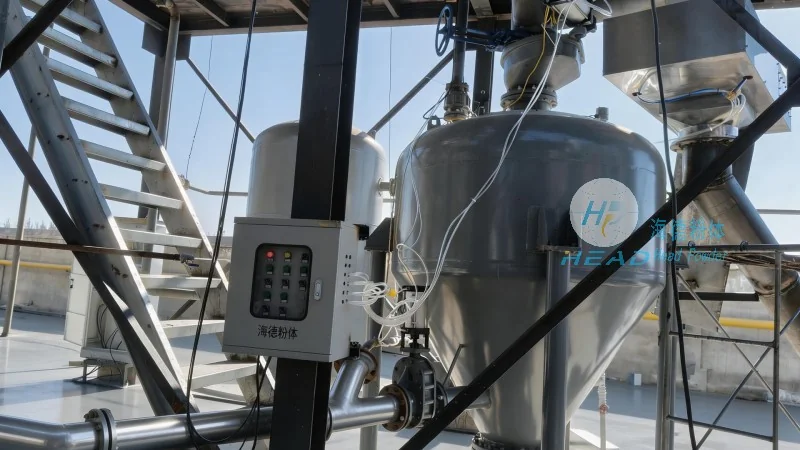
Implementing a dry powder pneumatic conveying system for flocculants brings numerous benefits to industrial processes. Firstly, it enhances operational safety by eliminating the need for manual handling of powders, which can pose respiratory and dust exposure risks. The enclosed system also ensures better hygiene, which is crucial in industries like water treatment or chemical processing where product purity is paramount. Additionally, the system offers improved efficiency and consistency in material delivery, reducing downtime and waste associated with traditional conveying methods. The ability to control flow rates precisely allows for better process control, leading to more stable and reliable production outcomes. Furthermore, the system can handle a wide range of flocculant types and particle sizes, making it versatile for various applications. It can accommodate both fine and coarse powders, ensuring that different production needs are met without compromising on performance.
The dry powder pneumatic conveying system is widely used in industries that rely on flocculants for water treatment, wastewater management, and chemical processing. In water treatment plants, the system efficiently transports flocculant powders to dosing points, ensuring optimal coagulation and flocculation processes. This is critical for achieving high-quality water treatment outcomes and meeting regulatory standards. The system's ability to deliver flocculants in precise quantities helps maintain consistent water quality, which is essential for both municipal and industrial water supply. Similarly, in wastewater treatment facilities, the system helps in delivering flocculants to reactors, enhancing the removal of suspended solids and improving overall treatment efficiency. This leads to better compliance with environmental regulations and reduced treatment costs. In chemical manufacturing, the system can be used to transport flocculant powders to mixing or processing units, supporting the production of various chemical products. The system's adaptability makes it suitable for both large-scale industrial operations and smaller-scale applications, providing a flexible solution for different production needs.
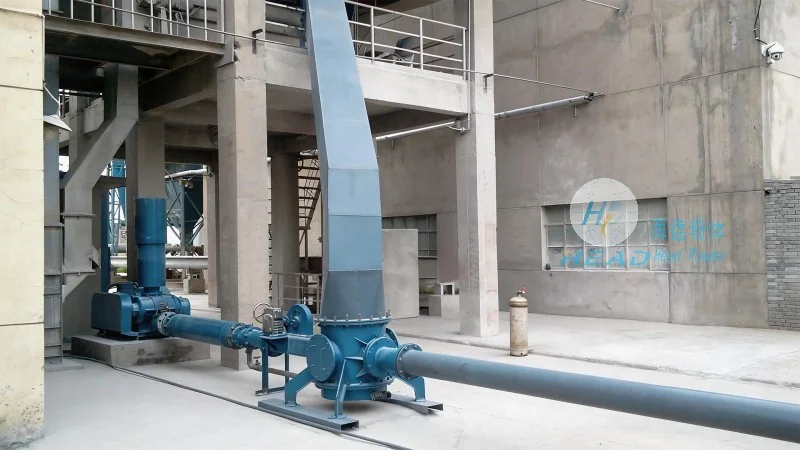
While the dry powder pneumatic conveying system offers significant advantages, proper operation and maintenance are essential to ensure optimal performance and longevity. Regular cleaning of the conveying lines and components is crucial to prevent clogging and maintain consistent flow. The system should be equipped with filters and cyclones to separate any entrained air or fine particles, preventing blockages and ensuring smooth operation. Monitoring pressure and flow rates is also important to detect any issues early and address them promptly. Additionally, the system's design should consider the specific properties of the flocculant powders, such as particle size, moisture content, and flowability, to optimize conveying efficiency. Proper training of operators on the system's operation and safety protocols is also vital to prevent accidents and ensure smooth operations. Regular inspections of the hopper, feeder, and conveying line for wear and tear can help identify potential issues before they escalate into major problems. By adhering to a maintenance schedule, the system can operate at peak efficiency, minimizing downtime and maximizing productivity.

 Shandong Headpowder Engineering Co., Ltd.
 156-6277-7102(Manager Zhang)
  0531-83386006
  Zhangqiu District, Jinan City, Shandong Province, China
telephone
WeChatconsult
top