With more than 10‑year industry experience, Shandong Headpowder delivers full‑service pneumatic‑conveying systems and blowers, undertaking nationwide turn‑key powder‑handling projects.
HeadPowder, a leading engineering company based in Shandong, China, specializes in the design, manufacturing, and implementation of advanced dry material pneumatic conveying systems. These systems are crucial for efficiently transporting bulk dry materials in various industrial sectors, including food processing, pharmaceuticals, chemicals, and mining. This article provides a comprehensive classification of these systems and an analysis of their practical applications, highlighting the technical advantages and operational benefits they offer to industries worldwide.
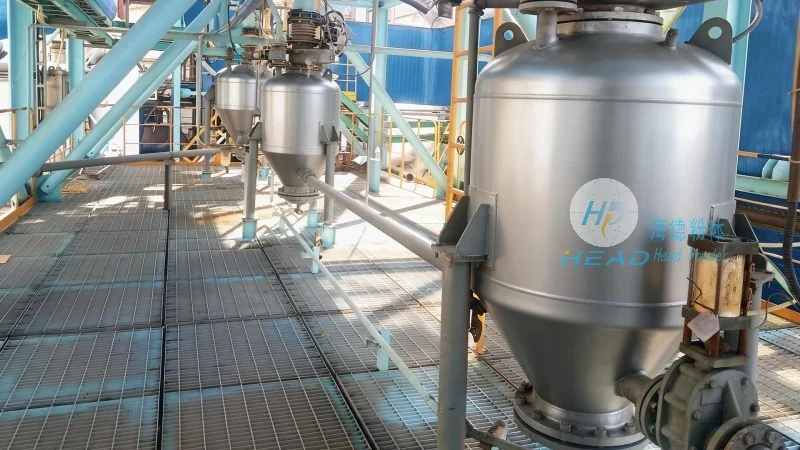
Dry material pneumatic conveying systems utilize air or other gases to transport dry bulk materials from one location to another. Unlike traditional mechanical conveying methods, such as belt conveyors or screw conveyors, pneumatic systems offer advantages like flexibility in layout, ability to handle a wide range of materials, and reduced risk of contamination. The core components of these systems typically include a material feeder, a conveying line, a separator, and a receiver. The choice of system type depends on factors like material properties, distance, and required flow rate.
Dry material pneumatic conveying systems can be broadly classified into two main categories: pressure and vacuum systems. Each category has sub-types based on the pressure differential used to move the material.
Pressure systems operate by introducing compressed air into the conveying line, creating a positive pressure that pushes the material forward. These systems are suitable for long-distance and high-volume material transport. There are two common sub-types:
Positive Displacement Blowers: These systems use a positive displacement blower to generate high pressure, typically ranging from 0.5 to 2 bar. They are ideal for transporting abrasive or high-density materials as they provide consistent pressure and flow. The blower's design ensures stable operation even with variations in material feed.
Centrifugal Blowers: Centrifugal systems use a high-speed impeller to create pressure, often used for shorter distances or when handling lighter materials. They are more cost-effective for moderate flow rates and are commonly employed in food and pharmaceutical industries where noise and maintenance are critical factors.
Vacuum systems operate by creating a negative pressure (vacuum) at the material inlet, drawing the material into the conveying line. These systems are particularly useful for applications requiring material collection from multiple points or for handling materials that are sensitive to pressure changes.
Root Blowers: Root blower systems are suitable for medium to high vacuum levels, making them effective for transporting materials over moderate distances. They are commonly used in chemical and mining industries where the material may contain dust or require gentle handling.
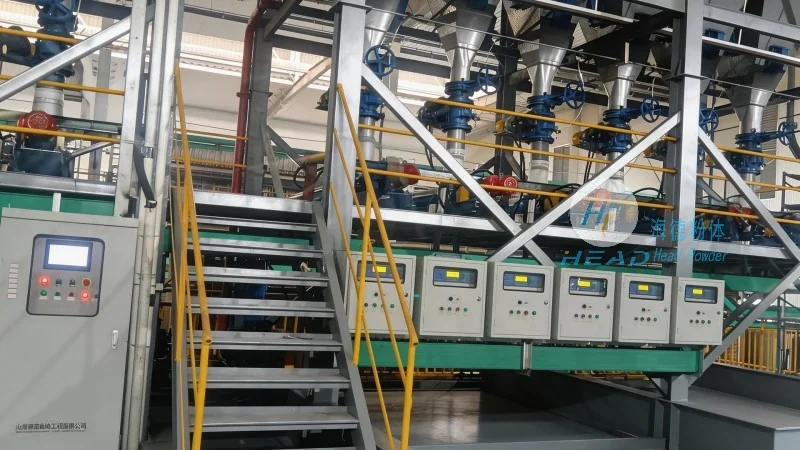
Rotary Vane Pumps: These systems provide high vacuum levels and are ideal for applications involving fine powders or materials that are prone to clogging. The rotary vane design ensures efficient material transport with minimal pressure loss.
Regardless of the system type, several key components are essential for the proper operation of dry material pneumatic conveying systems:
Material Feeder: The feeder is responsible for uniformly feeding the dry material into the conveying line. It can be a screw feeder, a rotary valve, or a hopper with a gate. The feeder's design must match the material's flow characteristics to prevent blockages and ensure consistent flow.
Conveying Line: The line is typically made of stainless steel or other corrosion-resistant materials to handle various materials. The diameter and length of the line are critical factors that affect the system's performance. Proper line sizing ensures minimal pressure drop and efficient material transport.
Separator: The separator is used to separate the material from the air stream at the end of the conveying line. It can be a cyclone separator, a bag filter, or a cartridge filter. The choice of separator depends on the material's particle size and the required level of air purification.
Receiver: The receiver is the final container where the material is deposited after being separated from the air. It is designed to handle the material's bulk density and flow characteristics, ensuring safe and efficient material discharge.
Dry material pneumatic conveying systems are widely used across various industries due to their versatility and efficiency. The following are some key applications:
In the food and pharmaceutical sectors, the primary concerns are hygiene, contamination control, and product quality. Pneumatic systems are ideal for transporting ingredients like flour, sugar, and powders, as well as active pharmaceutical ingredients (APIs). The systems are designed with stainless steel components and sealed connections to prevent cross-contamination. For example, in a food processing plant, a pressure system may be used to transport flour from a silo to a mixing machine, ensuring a clean and efficient process.
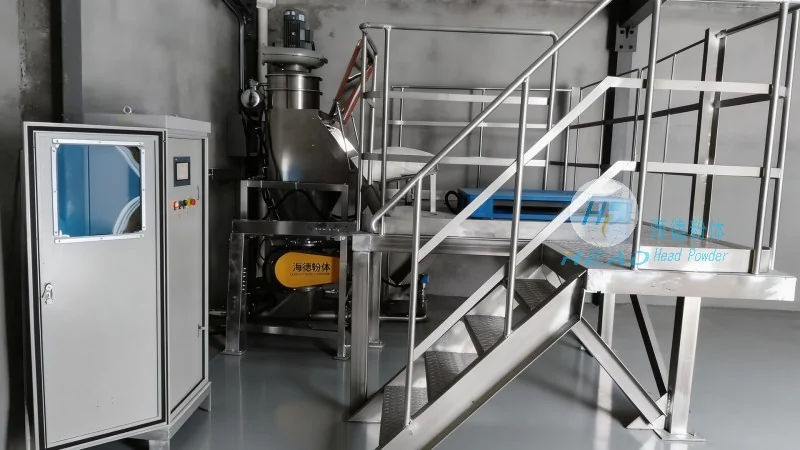
Chemical and petrochemical industries handle a wide range of materials, including powders, granules, and pellets. Pneumatic conveying systems are used to transport raw materials to reactors, transfer products from storage tanks, and move waste materials for disposal. The systems are designed to handle corrosive and abrasive materials, with components made of materials like Hastelloy or PTFE to resist chemical attack. In a chemical plant, a vacuum system may be used to collect dust from a reactor and transport it to a waste treatment facility.
Mining operations require efficient transport of ore and other minerals from the mine site to processing facilities. Pneumatic systems are used to convey crushed ore, tailings, and other materials over long distances. The systems are designed to handle high volumes and abrasive materials, with robust components that can withstand heavy use. For example, in a copper mine, a pressure system may be used to transport crushed ore from the crusher to a flotation plant, improving the overall mining efficiency.
The construction industry relies on pneumatic conveying systems to transport materials like cement, sand, and gravel. These systems are used in concrete mixing plants, ready-mix concrete operations, and construction sites. The systems are designed to handle high flow rates and abrasive materials, with components that can withstand the rigors of construction environments. In a concrete plant, a vacuum system may be used to collect cement from a silo and transport it to the mixing area, ensuring a consistent and efficient production process.
While dry material pneumatic conveying systems offer numerous advantages, there are also considerations that must be taken into account during system selection and operation.
Advantages: These systems provide flexibility in layout, allowing for complex material transport routes. They can handle a wide range of materials, including fine powders and abrasive substances. Pneumatic systems also reduce the risk of material contamination and are suitable for transporting materials in cleanroom environments. Additionally, they can be integrated with automation systems for remote monitoring and control.
Considerations: The initial cost of pneumatic systems can be higher than traditional mechanical systems, especially for large-scale applications. Maintenance requirements, particularly for the blower and separator components, must be considered. The system's performance is also affected by material properties, such as moisture content and particle size, which can impact pressure drop and flow rate. Proper system sizing and material testing are essential to ensure optimal performance and longevity.
Dry material pneumatic conveying systems are a vital component of modern industrial operations, offering efficient and flexible solutions for transporting bulk dry materials. The classification of these systems into pressure and vacuum types, along with their key components and applications, highlights their versatility and adaptability to various industrial needs. As industries continue to demand higher efficiency and quality in material handling, pneumatic conveying systems remain a preferred choice. HeadPowder, with its expertise in engineering and manufacturing, provides tailored solutions that meet the specific requirements of each application, ensuring reliable and efficient material transport for its clients worldwide.

 Shandong Headpowder Engineering Co., Ltd.
 156-6277-7102(Manager Zhang)
  0531-83386006
  Zhangqiu District, Jinan City, Shandong Province, China
telephone
WeChatconsult
top