With more than 10‑year industry experience, Shandong Headpowder delivers full‑service pneumatic‑conveying systems and blowers, undertaking nationwide turn‑key powder‑handling projects.
Shandong HeadPowder Engineering Co., Ltd., commonly known as headpowder, specializes in engineering solutions for material handling, particularly in the transport of heavy calcium powder. This article explores the different types of pneumatic conveying systems used for heavy calcium powder and their practical applications in industrial settings.
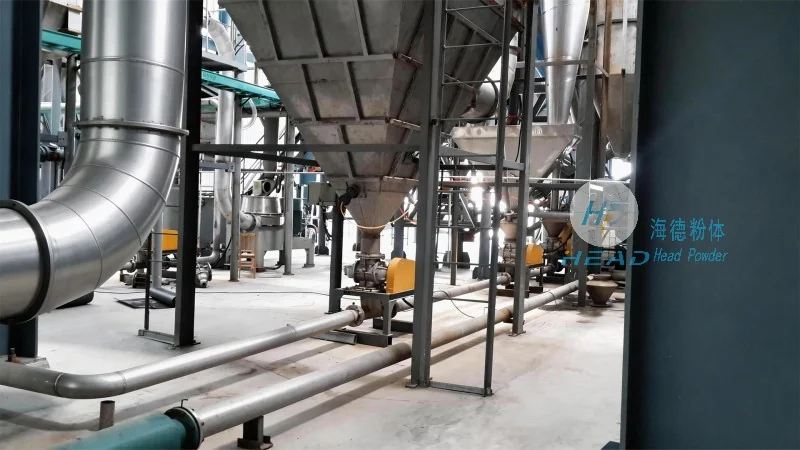
Pneumatic conveying systems are widely used in the chemical and powder processing industries to transport bulk materials like heavy calcium powder from one location to another. These systems utilize air or gas as the conveying medium to move the powder through a pipeline network. The primary advantage of pneumatic conveying is its ability to transport materials without direct contact with mechanical components, reducing wear and tear and minimizing contamination risks.
There are several types of pneumatic conveying systems, each designed for specific material characteristics and operational requirements. The most common types include positive pressure systems, negative pressure systems, and mixed pressure systems.
Positive pressure systems operate by blowing air or gas into the conveying line, creating a pressure higher than the ambient air pressure. This method is suitable for transporting heavy calcium powder over long distances and through complex pipeline networks. The system typically includes a blower, a hopper for material storage, and a discharge device at the end of the line. Positive pressure systems are often preferred for applications requiring high flow rates and continuous operation.
Negative pressure systems, also known as vacuum systems, work by creating a vacuum in the conveying line, drawing the powder into the pipeline. This type of system is ideal for applications where the material needs to be transported from multiple sources or where the material is sensitive to pressure changes. Negative pressure systems are commonly used for short to medium distance transport and for handling materials that are prone to dust generation.
Mixed pressure systems combine elements of both positive and negative pressure systems. They use a combination of pressure and vacuum to transport the material, offering flexibility in handling different material characteristics and pipeline configurations. This system is particularly useful for applications that require both long-distance transport and the ability to handle materials from multiple points.
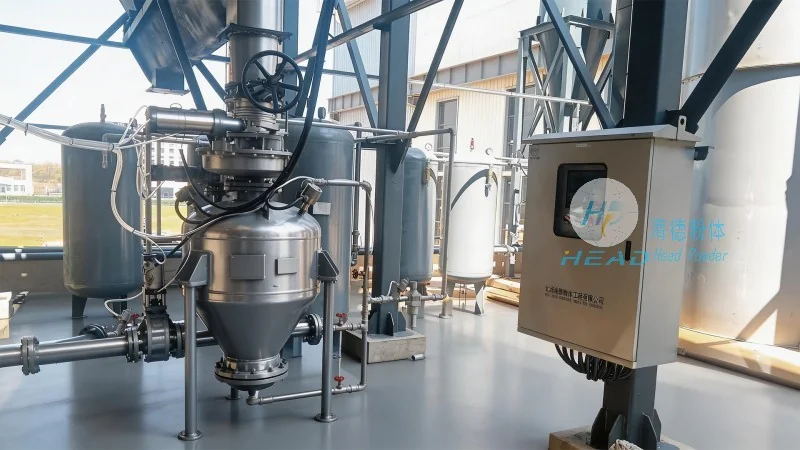
Heavy calcium powder, a key raw material in various industries such as paint, plastics, and paper, requires efficient and reliable transport methods to ensure consistent quality and process efficiency. Pneumatic conveying systems are well-suited for this application due to their ability to handle fine powders without segregation or agglomeration.
In industrial production lines, pneumatic conveying systems are used to transport heavy calcium powder from storage silos to processing equipment, such as mixers and reactors. The systems ensure a continuous and controlled flow of material, reducing downtime and improving overall production efficiency. For example, in a paint manufacturing plant, a positive pressure system may be used to transport heavy calcium powder from a bulk storage tank to a mixing tank, where it is combined with other ingredients to form the final product.
At storage and handling facilities, pneumatic conveying systems are used to move heavy calcium powder between different storage units or to transfer material from a receiving area to a processing plant. These systems help in maintaining inventory levels and ensuring that the material is available when needed. The use of negative pressure systems in these facilities can help in reducing dust emissions and improving workplace safety.
For companies with multiple production facilities, pneumatic conveying systems can be used to transport heavy calcium powder between different plants. This method allows for centralized storage and distribution of the material, reducing transportation costs and improving supply chain efficiency. The long-distance transport capabilities of positive pressure systems make them suitable for interplant material transfer.

When selecting a pneumatic conveying system for heavy calcium powder transport, several factors need to be considered, including the material's properties, the required transport distance, and the desired flow rate. The system must also be designed to handle the specific characteristics of heavy calcium powder, such as its particle size, density, and moisture content.
The particle size and density of heavy calcium powder play a crucial role in determining the appropriate conveying system. Fine powders with high density may require higher air velocities to prevent blockages in the pipeline. The system must be designed to maintain the material's flowability and prevent agglomeration, which can lead to system inefficiencies.
The distance between the source and destination, as well as the required flow rate, influence the choice of system. Long-distance transport typically requires positive pressure systems due to their ability to maintain pressure over extended lengths. For shorter distances, negative pressure systems may be sufficient. The flow rate must be matched to the production requirements to ensure that the system operates efficiently without excessive energy consumption.
Environmental regulations and workplace safety considerations are also important when selecting a pneumatic conveying system. Systems that minimize dust emissions and provide proper ventilation are preferred. Additionally, the system must be designed to prevent material leakage and ensure that the air used in the system is filtered to meet safety standards.
Pneumatic conveying systems offer an effective and efficient solution for the transport of heavy calcium powder in various industrial applications. By understanding the different types of systems and their practical applications, companies can select the most suitable solution to meet their specific needs. Shandong HeadPowder Engineering Co., Ltd. provides expert engineering services to design and implement these systems, ensuring optimal performance and reliability in material handling operations.

 Shandong Headpowder Engineering Co., Ltd.
 156-6277-7102(Manager Zhang)
  0531-83386006
  Zhangqiu District, Jinan City, Shandong Province, China
telephone
WeChatconsult
top