With more than 10‑year industry experience, Shandong Headpowder delivers full‑service pneumatic‑conveying systems and blowers, undertaking nationwide turn‑key powder‑handling projects.
When designing a pneumatic conveying system for borax granules, several critical factors must be considered to ensure efficiency, reliability, and cost-effectiveness. The system's performance is directly influenced by the material's properties, the conveying method, and the overall system design. This article outlines key design considerations that are essential for successful implementation of a borax granule pneumatic conveying system.
HeadPowder, a leading engineering firm based in Shandong, China, specializes in the design and implementation of advanced material handling systems. With years of experience in the industry, HeadPowder has developed expertise in handling various bulk materials, including borax granules. The company's team of engineers and technicians work closely with clients to understand their specific requirements and provide tailored solutions that meet industry standards and operational needs.
The design of a borax granule pneumatic conveying system involves careful evaluation of several parameters to optimize performance. One of the primary considerations is the material's physical properties, such as particle size, density, and moisture content. Borax granules typically have a relatively uniform particle size, which facilitates efficient air flow and reduces the risk of blockages. However, the moisture content must be controlled to prevent clumping, which can impede the conveying process.
Another critical factor is the choice of conveying method. There are two main types of pneumatic conveying systems: dilute phase and dense phase. Dilute phase systems use low air velocity and high air-to-material ratios, making them suitable for long-distance transport and high-volume applications. Dense phase systems, on the other hand, use higher air velocity and lower air-to-material ratios, which are ideal for short-distance transport and sensitive materials. For borax granules, a dilute phase system is often preferred due to its ability to handle larger volumes and longer distances with minimal pressure drops.
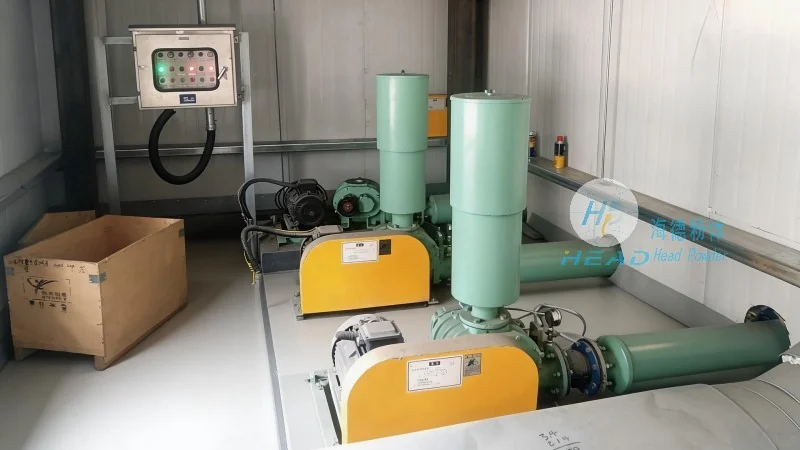
The selection of the air source is also a crucial design consideration. Compressed air is the most common power source for pneumatic conveying systems. The air compressor must be sized appropriately to provide sufficient pressure and flow rate to overcome the system's resistance and maintain the desired conveying velocity. HeadPowder recommends using high-efficiency compressors with proper filtration to ensure clean air, which is essential for preventing material degradation and equipment wear.
Pipeline design is another key aspect of system design. The diameter and length of the pipelines must be selected based on the material's flow characteristics and the required conveying velocity. The use of smooth, corrosion-resistant materials, such as stainless steel or PTFE-coated pipes, is recommended to minimize friction losses and prevent material buildup. Additionally, the inclusion of appropriate fittings, such as elbows, tees, and valves, is necessary to control the flow direction and pressure within the system.
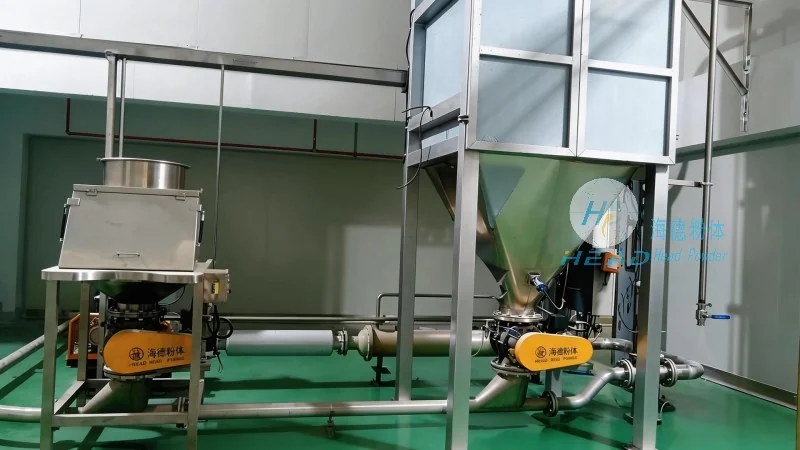
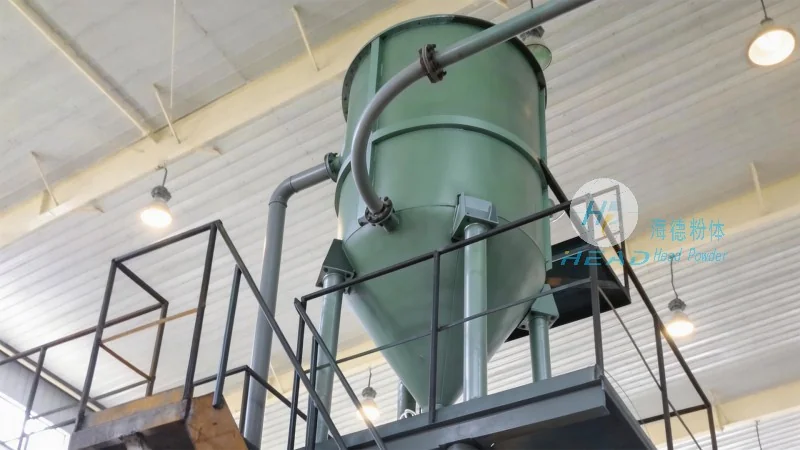
Equipment selection, including the feeder and receiver, plays a vital role in the system's performance. The feeder must be capable of providing a consistent and uniform material flow to the pipeline. For borax granules, a rotary valve or a screw feeder is commonly used due to their ability to handle dry, free-flowing materials without causing blockages. The receiver, or discharge hopper, must be designed to accommodate the material's bulk density and prevent spillage or dust generation. HeadPowder recommends using hoppers with appropriate venting and dust collection systems to maintain a clean and safe working environment.
System control and monitoring are essential for ensuring optimal operation. Modern pneumatic conveying systems often incorporate advanced control systems that allow for real-time monitoring of pressure, flow rate, and material level. These systems can detect anomalies and adjust the operation parameters automatically, reducing downtime and improving overall efficiency. HeadPowder's engineers can integrate such control systems into the design to provide clients with a reliable and user-friendly operation experience.
Finally, maintenance and operational considerations must be addressed during the design phase. Regular maintenance of the air compressor, pipelines, and equipment is necessary to ensure the system's longevity and performance. HeadPowder provides comprehensive maintenance services and training to clients to help them operate and maintain their pneumatic conveying systems effectively.

 Shandong Headpowder Engineering Co., Ltd.
 156-6277-7102(Manager Zhang)
  0531-83386006
  Zhangqiu District, Jinan City, Shandong Province, China
telephone
WeChatconsult
top