With more than 10‑year industry experience, Shandong Headpowder delivers full‑service pneumatic‑conveying systems and blowers, undertaking nationwide turn‑key powder‑handling projects.
When it comes to the efficient handling and transportation of anode materials in industrial settings, selecting the right particle transport method is crucial for maintaining production efficiency and product quality. Anode materials, such as those used in lithium-ion batteries, require specialized handling due to their fine particle size and chemical properties. Among the various methods available, pneumatic conveying stands out as a highly effective solution for transporting anode material particles. This article will explore common particle transport methods for anode materials, with a focus on the advantages and applications of pneumatic conveying systems.
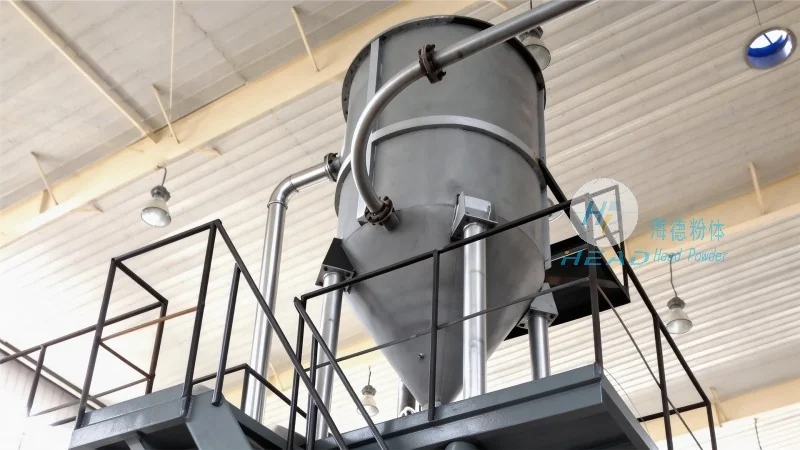
Anode materials are typically composed of fine powders or granules, which can pose challenges during transportation due to issues like dust generation, agglomeration, and the need for gentle handling to prevent particle degradation. Traditional methods like bulk handling and manual transport are often inadequate for meeting the stringent requirements of modern battery manufacturing processes. Therefore, specialized transport systems are essential to ensure the safe and efficient movement of anode materials from storage to processing equipment.
Several methods are commonly employed for transporting anode material particles, each with its own set of advantages and limitations. The primary methods include:
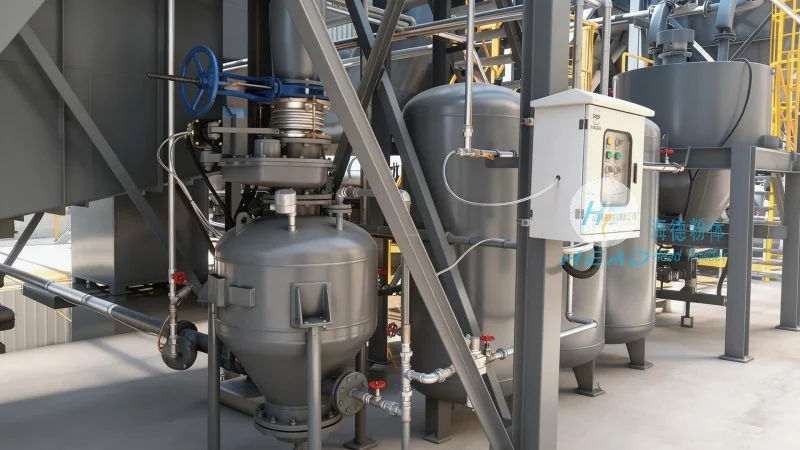
Pneumatic conveying is a versatile and efficient method for transporting anode material particles, offering several key benefits that make it a preferred choice in many industrial applications. The core principle involves creating a flow of air or gas within a pipeline, which then carries the particles along. There are two main types of pneumatic conveying systems: pressure and vacuum.
Pressure systems operate by injecting air or gas into a sealed pipeline at a higher pressure than the ambient environment. The particles are then drawn into the pipeline by the pressure differential. This method is well-suited for applications requiring high transport rates and long-distance transport. It is commonly used in the battery industry for moving anode materials from raw material storage to mixing and coating lines.
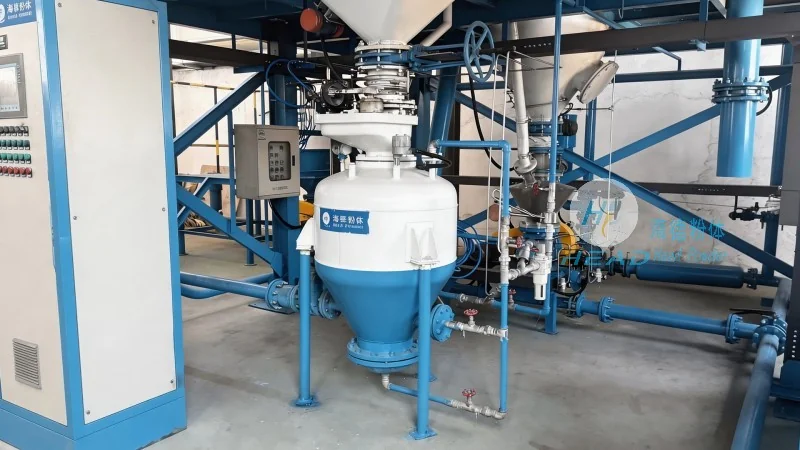
Vacuum systems, on the other hand, use a vacuum pump to create a negative pressure within the pipeline, drawing particles from the source into the system. This method is ideal for applications where the material needs to be transported from multiple collection points to a central processing unit. It is particularly effective for handling fine powders and for minimizing dust emissions during transport.
When compared to other transport methods, pneumatic conveying offers several advantages that are particularly relevant for anode material handling:
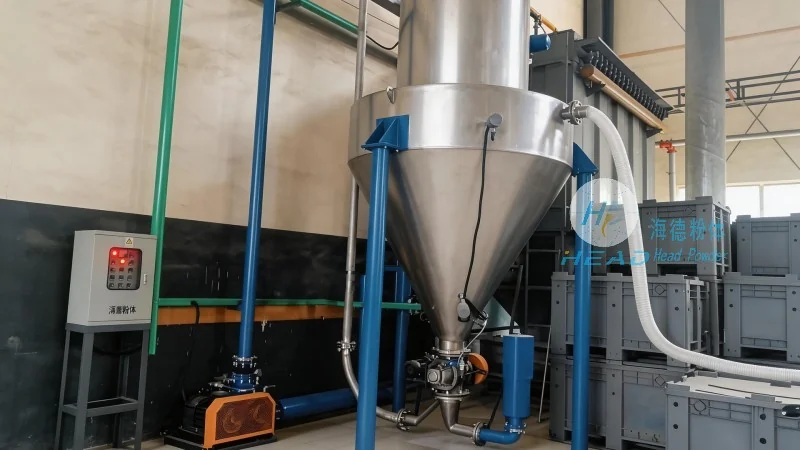
In the battery manufacturing industry, the transportation of anode materials is a critical step in the production process. Pneumatic conveying systems are widely used to move anode powders from storage silos to mixing equipment, coating lines, and other processing units. The ability to transport materials over long distances and at high speeds makes pneumatic systems ideal for meeting the demands of modern battery production lines.
Choosing the right particle transport method for anode materials is essential for optimizing production efficiency and maintaining product quality. While several methods are available, pneumatic conveying systems offer a superior combination of efficiency, gentleness, and flexibility. By understanding the principles and applications of pneumatic conveying, manufacturers can ensure the reliable and safe transport of anode materials, contributing to the overall success of their battery production operations.

 Shandong Headpowder Engineering Co., Ltd.
 156-6277-7102(Manager Zhang)
  0531-83386006
  Zhangqiu District, Jinan City, Shandong Province, China
telephone
WeChatconsult
top