With more than 10‑year industry experience, Shandong Headpowder delivers full‑service pneumatic‑conveying systems and blowers, undertaking nationwide turn‑key powder‑handling projects.
Tonne bag material pneumatic conveying machines represent a sophisticated solution for the efficient and hygienic transport of bulk materials. These systems are integral to modern industrial operations, particularly in sectors where material integrity and contamination control are paramount, such as food processing, pharmaceuticals, and chemical manufacturing. The technology leverages air as the primary conveying medium, enabling the movement of materials from a source, typically a tonne bag or hopper, to a destination, such as a storage silo or processing unit. As a leading manufacturer in this domain, Shandong HeadPowder Engineering Co., Ltd. specializes in designing and supplying customized pneumatic conveying solutions that meet the unique requirements of various industries. Their expertise in material handling ensures that these machines are not only efficient but also compliant with industry standards and regulations.
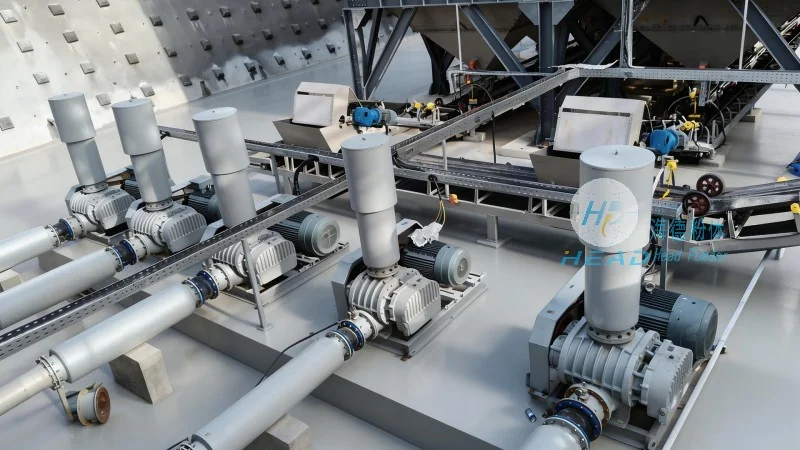
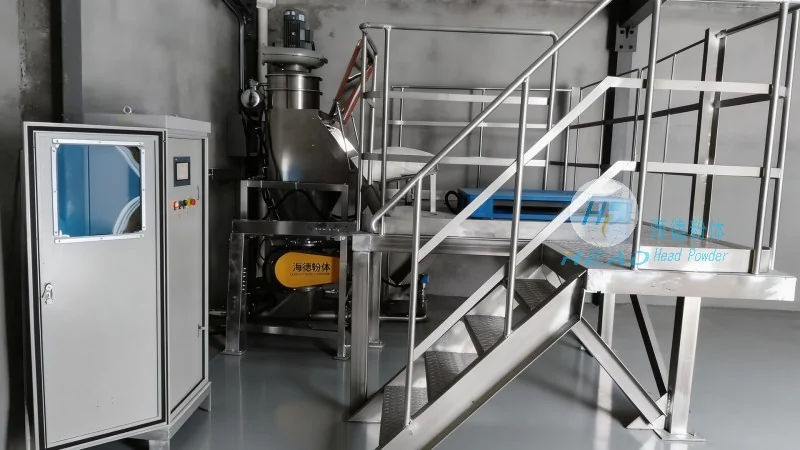
The tonne bag material pneumatic conveying machine comprises several interconnected components, each playing a critical role in the overall operation. The primary components include the material feeder, which regulates the flow of bulk material from the tonne bag into the system; the air compressor or blower, which generates the necessary air pressure to move the material; the pipeline network, which transports the material-air mixture; and the separation or discharge unit, which collects the material at the receiving end. The feeder is typically designed to handle large quantities of material, ensuring a consistent feed rate to maintain system efficiency. The air compressor, whether positive pressure or vacuum type, is selected based on the material characteristics and transport distance. The pipeline system may consist of rigid metal or flexible plastic tubing, with diameters optimized to minimize pressure drop and maximize material transport. The separation unit, often a cyclone or filter, utilizes centrifugal force or filtration to separate the material from the air stream, ensuring clean material discharge and air recycling or treatment.

The operation of a tonne bag material pneumatic conveying machine follows a systematic sequence that ensures smooth and continuous material transport. The process begins with material loading: the bulk material is placed into the hopper or feeder, which holds a sufficient quantity for the conveying cycle. The feeder then regulates the flow of material, preventing overloading or underflow. Next, the air compressor activates, generating high-pressure air that is introduced into the pipeline. The air and material mixture is then propelled through the pipeline to the destination point. At the receiving end, the separation unit operates to separate the material from the air. The material is collected in a container or storage bin, while the air is either recycled back into the system or filtered to remove any residual particles. This cycle repeats as long as material is available and the system is operational. The entire process is automated, with sensors and controls monitoring key parameters such as pressure, flow rate, and material level to maintain optimal performance. The system's efficiency is enhanced by the use of positive pressure or negative pressure (vacuum) conveying, depending on the specific application and material characteristics. Positive pressure systems are suitable for long-distance or high-volume transport, while vacuum systems are ideal for short distances or low-volume applications.
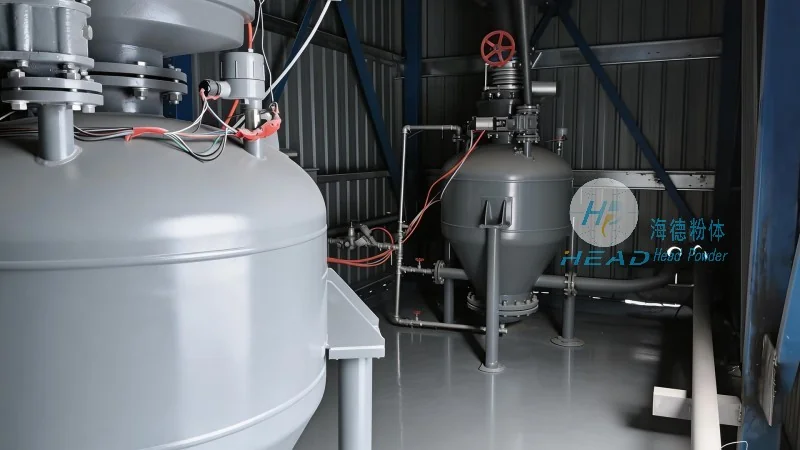
The working principle of the tonne bag material pneumatic conveying machine is rooted in fluid dynamics and particle mechanics. In positive pressure conveying, the air compressor forces air into the pipeline, creating a pressure higher than the ambient air pressure. This pressure difference drives the material particles forward, as they are entrained in the air stream. The air acts as a carrier, lifting and moving the material through the pipeline. The velocity of the air stream is critical; it must be sufficient to overcome the gravitational force acting on the material particles and any frictional losses in the pipeline. The design of the pipeline, including its diameter and length, affects the required air velocity and pressure. In negative pressure (vacuum) conveying, a vacuum pump creates a low-pressure environment at the receiving end, drawing the material and air mixture through the pipeline. This method is often used for short-distance or low-volume transport, as it requires less power compared to positive pressure systems. The separation process at the receiving end is crucial, as it involves the use of cyclones or filters to separate the material from the air. The cyclone works by using centrifugal force to separate particles from the air stream, while filters may use mechanical or electrostatic methods to capture fine particles. The separated air is then either vented to the atmosphere or recycled back into the system, depending on the system design and environmental regulations. The efficiency of the system is further enhanced by the use of airlocks or rotary valves at the inlet and outlet to prevent backflow and maintain system integrity.

 Shandong Headpowder Engineering Co., Ltd.
 156-6277-7102(Manager Zhang)
  0531-83386006
  Zhangqiu District, Jinan City, Shandong Province, China
telephone
WeChatconsult
top