With more than 10‑year industry experience, Shandong Headpowder delivers full‑service pneumatic‑conveying systems and blowers, undertaking nationwide turn‑key powder‑handling projects.
Small material conveying systems are essential in various industrial applications, designed to transport bulk materials efficiently and reliably. These systems are engineered to handle a wide range of small particles, powders, and granules, ensuring smooth operation in manufacturing, processing, and distribution environments. The operation process and working principle of such systems involve several key components and mechanisms that work in tandem to achieve optimal performance.
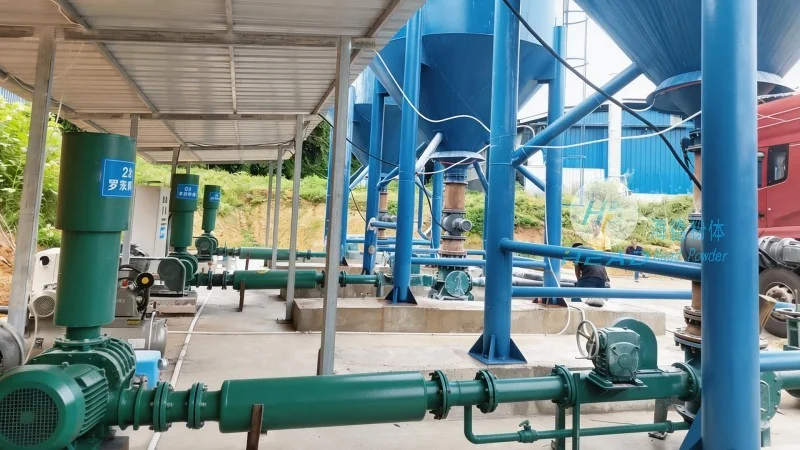
At the core of small material conveying systems are several critical components that enable the efficient movement of materials. These include the feeding mechanism, which introduces the material into the system, the conveying device itself, which transports the material through the system, and the control system, which regulates the operation based on process requirements. The feeding mechanism may consist of hoppers, feeders, or other devices that ensure a consistent flow of material. The conveying device, such as a screw conveyor, belt conveyor, or pneumatic conveyor, is selected based on the material characteristics and operational needs. The control system, often integrated with sensors and automation technology, monitors the system's performance and adjusts parameters as needed to maintain optimal operation.
The operation process of small material conveying systems typically begins with material loading into the feeding hopper. The hopper is designed to store the material and provide a uniform feed to the conveying device. As the material is fed into the system, it enters the conveying mechanism, which moves the material along the designated path. The conveying device may use mechanical force, air pressure, or gravity to transport the material. For example, a screw conveyor uses rotating screws to push the material forward, while a pneumatic conveyor uses compressed air to carry the material through a pipeline. The material is then discharged from the system at the end of the conveying path, where it is collected or further processed. Throughout the operation, the control system continuously monitors parameters such as flow rate, pressure, and temperature to ensure the system operates within safe and efficient limits.
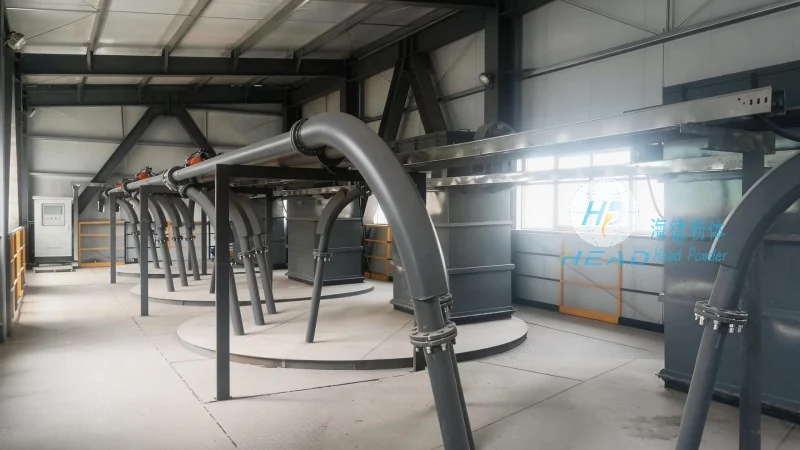
The working principle of small material conveying systems is based on the physical properties of the material and the design of the conveying components. The primary goal is to move the material from the input point to the output point with minimal energy consumption and maximum efficiency. The conveying mechanism utilizes either mechanical or pneumatic forces to overcome resistance and move the material. In mechanical systems, the conveying device applies a force to the material, such as through a rotating screw or belt, to push it forward. In pneumatic systems, compressed air creates a flow that carries the material through the pipeline. The system's design considers factors like material density, particle size, and moisture content to select the appropriate conveying method and equipment. Additionally, the control system plays a crucial role in maintaining the system's stability by adjusting the feed rate, speed, or pressure as needed. This ensures that the material is conveyed at a consistent rate, preventing blockages or overloading of the system.
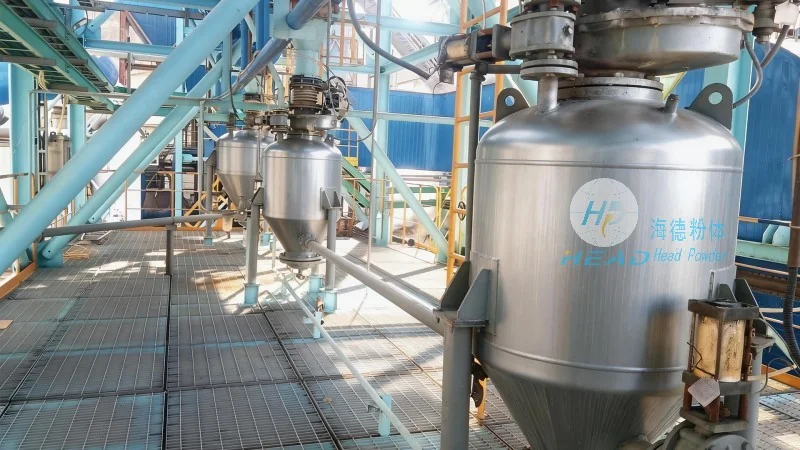
Small material conveying systems are widely used in various industries, including food processing, pharmaceuticals, chemicals, and mining. These systems are particularly valuable in applications where material handling needs to be precise and controlled. The benefits of using small material conveying systems include improved efficiency, reduced labor costs, and enhanced safety. By automating the material transport process, these systems minimize the risk of human error and ensure consistent material flow. Additionally, the systems can be integrated with other processing equipment, such as mixers or classifiers, to form a complete production line. The flexibility of small material conveying systems allows them to be adapted to different production requirements, making them a versatile solution for industrial material handling needs.
Shandong HeadPowder Engineering Co., Ltd., commonly known as headpowder, is a leading manufacturer of small material conveying systems and related industrial equipment. With a strong focus on innovation and quality, the company has established itself as a trusted partner in the material handling industry. HeadPowder's products are designed to meet the diverse needs of customers, offering reliable and efficient solutions for various applications. The company's commitment to customer satisfaction and technological advancement has earned it a reputation for excellence in the market. HeadPowder's headquarters is located in Shandong, China, where the company conducts research, development, and manufacturing activities. The company's team of experienced engineers and technicians ensures that each product is engineered to the highest standards, providing customers with durable and long-lasting equipment.

 Shandong Headpowder Engineering Co., Ltd.
 156-6277-7102(Manager Zhang)
  0531-83386006
  Zhangqiu District, Jinan City, Shandong Province, China
telephone
WeChatconsult
top