

Operating Process and Working Principle of Carboxymethyl Cellulose Pneumatic Conveying Machine
Shandong HeadPowder Engineering Co., Ltd., a leading manufacturer based in Shandong, China, specializes in providing advanced pneumatic conveying solutions for various industrial applications. The company's expertise lies in designing and manufacturing efficient equipment tailored to handle materials like carboxymethyl cellulose (CMC), a widely used chemical additive in industries such as food, pharmaceuticals, and construction. This article delves into the operating process and working principle of the carboxymethyl cellulose pneumatic conveying machine, highlighting its key features and benefits.
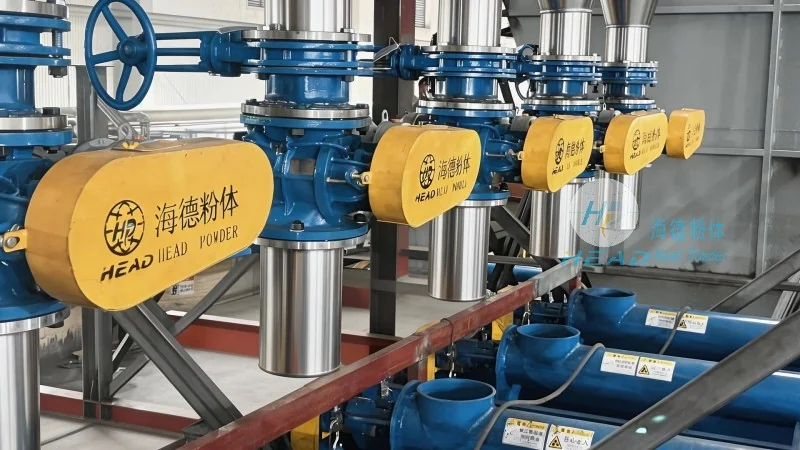
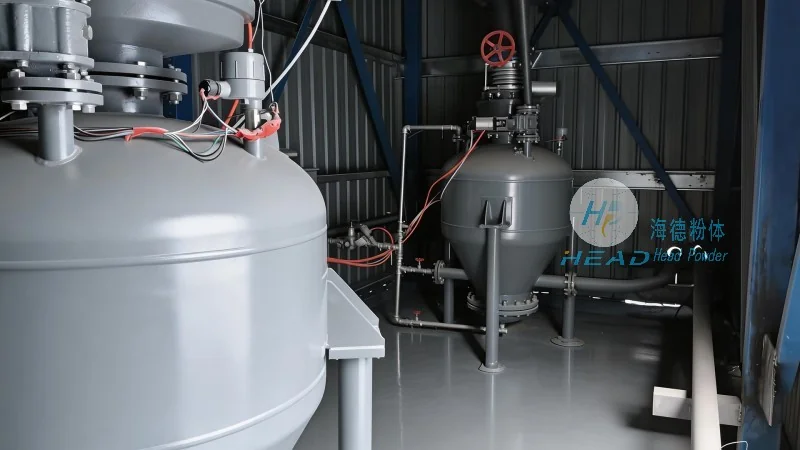
Product Overview: Carboxymethyl Cellulose Pneumatic Conveying System
HeadPowder's carboxymethyl cellulose pneumatic conveying machine is engineered to deliver reliable and efficient material transport for CMC and similar powders. The system is designed with precision to ensure minimal product degradation, maintaining the quality and integrity of the material during handling. Key components include a hopper for material storage, a rotary valve for controlled discharge, and a pneumatic conveying line that utilizes air pressure to move the material from the source to the destination. This design minimizes the risk of clogging and ensures smooth operation, even with high-purity CMC powders that are sensitive to moisture and contamination.
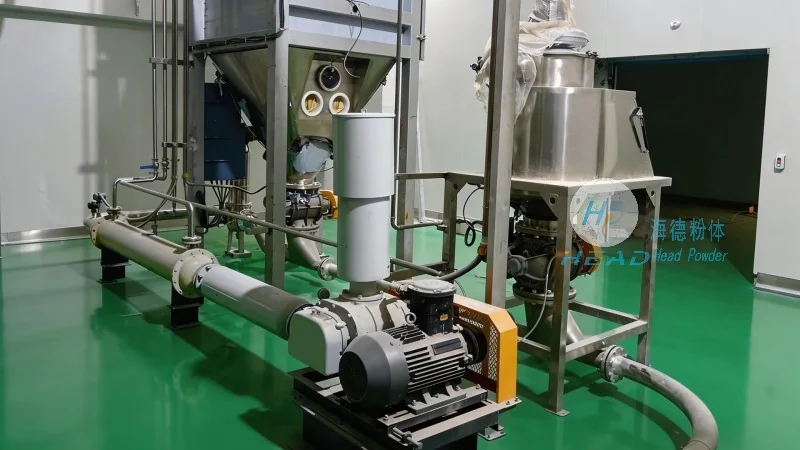
Operating Process of the Carboxymethyl Cellulose Pneumatic Conveying Machine
The operation of the carboxymethyl cellulose pneumatic conveying machine involves several sequential steps that ensure efficient material transfer. Initially, the carboxymethyl cellulose powder is fed into the hopper from a storage silo or bulk container. The rotary valve then regulates the flow of the material into the conveying line, controlling the discharge rate to match the downstream processing requirements. Simultaneously, a blower or compressor generates the necessary air pressure, which is introduced into the conveying line. The air flow, combined with the material, creates a slurry-like mixture that is propelled through the pipeline to the receiving tank or processing unit. The system continuously monitors the pressure and flow rates to maintain optimal performance, with automatic controls adjusting the air volume and material feed as needed. This process ensures consistent and reliable transport of CMC, even in high-demand industrial settings.
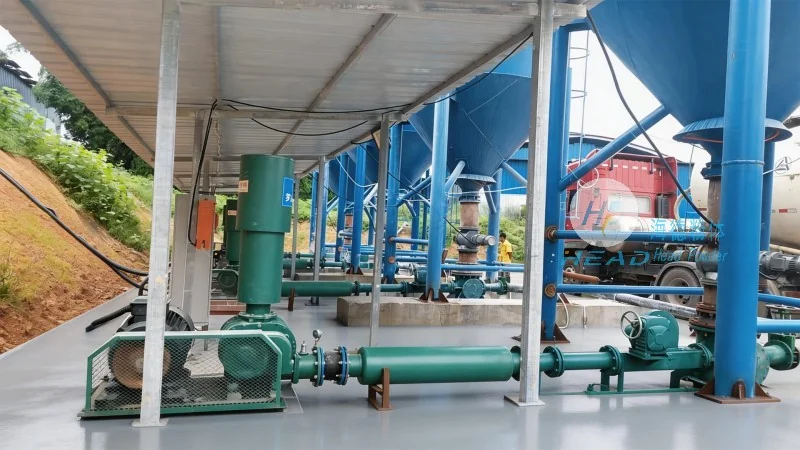
Working Principle of the Carboxymethyl Cellulose Pneumatic Conveying Machine
The working principle of the carboxymethyl cellulose pneumatic conveying machine is based on the fundamental concept of pneumatic transport, where air is used as the medium to move solid particles. The system operates under positive pressure, meaning the conveying line is pressurized to force the material through the pipeline. The key components work in harmony to achieve this: the hopper provides a sealed environment to prevent material degradation and contamination, while the rotary valve ensures a controlled and uniform material feed. The blower or compressor generates the required air pressure, which is then mixed with the material in the conveying line. The air flow creates a turbulent environment that suspends the CMC particles, allowing them to be carried along with the air stream. The velocity of the air is critical; it must be sufficient to overcome the gravitational force and frictional resistance of the material, ensuring that the particles remain suspended and transported efficiently. The receiving tank at the end of the line is equipped with a filter or separator to remove any excess air and collect the material, completing the transport process. This principle allows for a flexible and versatile system that can be adapted to various industrial needs, including long-distance transport and multiple destination points.