With more than 10‑year industry experience, Shandong Headpowder delivers full‑service pneumatic‑conveying systems and blowers, undertaking nationwide turn‑key powder‑handling projects.
For manufacturers and suppliers of lithium-ion battery anode materials, the efficient and safe handling of raw materials is a critical aspect of production. Pneumatic conveying systems have emerged as a key solution for transporting anode powders, such as graphite, silicon, and other active materials, with high precision and minimal contamination. This article explores the working principle and key features of pneumatic conveying systems specifically designed for lithium-ion battery anode material handling, highlighting how these systems enhance production efficiency and material integrity.
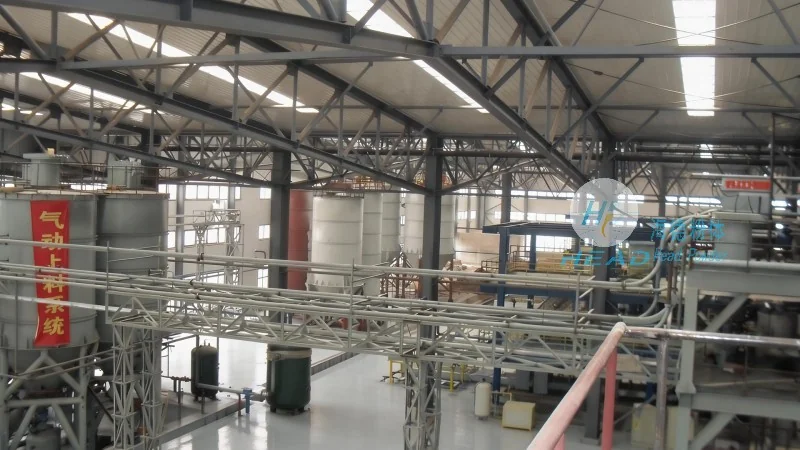
Pneumatic conveying systems operate by using air pressure to move bulk materials through a pipeline. The fundamental principle involves creating a pressure differential between the material source and the destination. There are two primary types of pneumatic conveying systems used in anode material handling: aspiration (or vacuum) systems and pressure (or positive) systems. Aspiration systems use a vacuum to draw material from a hopper or storage silo into the conveying line, while pressure systems use compressed air to push material from a storage bin or silo.
In the context of lithium-ion battery anode materials, aspiration systems are often preferred for their ability to handle materials with low bulk density or those that are sensitive to pressure changes. The system typically includes a hopper equipped with a rotary valve or feeder to control the flow of material, a vacuum pump to create the suction force, and a pipeline network that transports the material to the processing or packaging area. The vacuum pump draws air and material particles into the pipeline, where they are carried by the air flow to the destination. At the receiving end, a cyclone separator or filter separates the material from the air, allowing the material to be discharged and the air to be recirculated or vented.
Pressure systems, on the other hand, use compressed air to force material through the pipeline. This method is suitable for materials with higher bulk density or those that require higher velocity to maintain flow. The system includes a storage silo with a pressure relief valve, a compressor to generate compressed air, and a pipeline with a control valve to regulate the flow. The compressed air pushes the material from the silo into the conveying line, and the material is then transported to the processing area. The receiving end may include a pressure vessel or a filter to separate the material from the air.
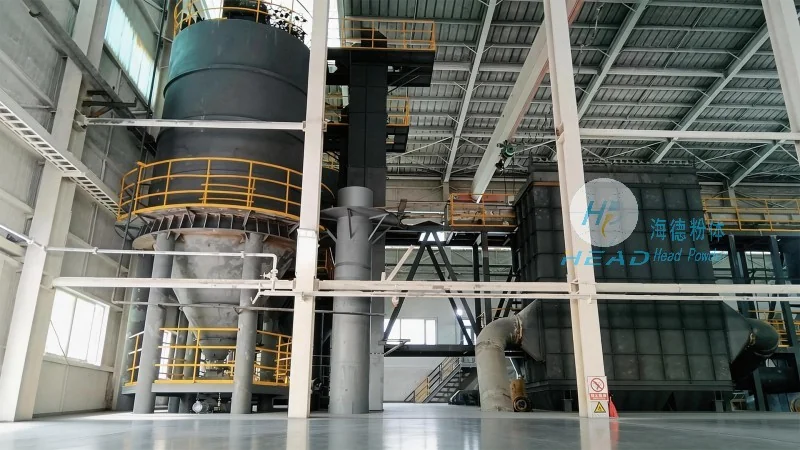
Both systems are designed to handle the unique properties of anode materials, such as their fine particle size, which can cause clogging or abrasion to equipment. Advanced pneumatic conveying systems incorporate features like pulse-jet cleaning, which uses compressed air pulses to remove material buildup from the pipeline, ensuring consistent flow and preventing system downtime. Additionally, the systems are equipped with sensors and controls to monitor pressure, flow rate, and material level, providing real-time data for process optimization.
The pneumatic conveying systems used for lithium-ion battery anode materials offer several distinct advantages that make them ideal for modern manufacturing environments. One of the most significant features is their ability to maintain material integrity. Unlike mechanical conveying methods, which can cause particle attrition or contamination through friction and contact with equipment, pneumatic systems use air as the transport medium, minimizing physical interaction with the material. This is crucial for anode materials, as even minor changes in particle size or surface properties can affect battery performance and lifespan.
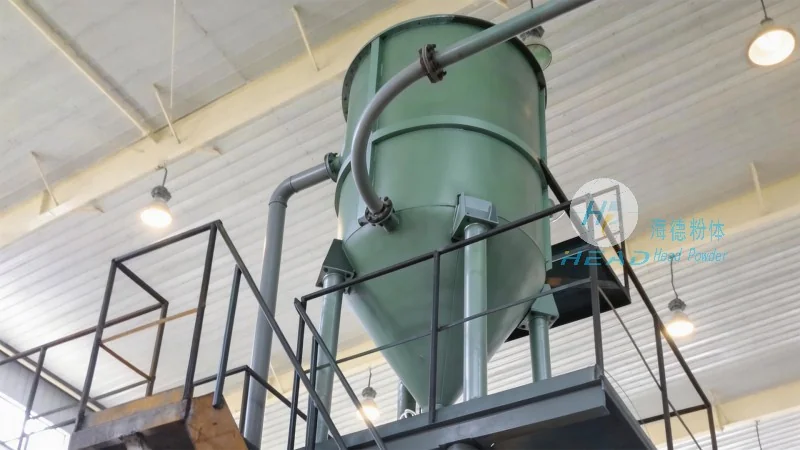
Another key feature is the high efficiency and flexibility of pneumatic conveying systems. These systems can transport materials over long distances and through complex layouts, with the ability to connect multiple source and destination points using a network of pipelines. This flexibility allows manufacturers to optimize their production lines, integrating material handling with other processes such as mixing, coating, or packaging. The systems can also handle varying material flow rates, from low to high, by adjusting the vacuum or pressure levels, providing adaptability to changing production demands.
Environmental considerations are also a critical feature of modern pneumatic conveying systems. Many systems incorporate dust collection and air filtration systems to minimize emissions and comply with environmental regulations. The use of closed-loop systems, where the air is recirculated after filtration, reduces energy consumption and waste. For anode materials, which may contain fine powders that are hazardous if released into the environment, these features are essential for maintaining a safe and compliant manufacturing environment.
Furthermore, pneumatic conveying systems offer enhanced safety and reliability. By eliminating the need for manual handling of powders, the systems reduce the risk of occupational exposure to dust and potential health hazards. The automated control systems also minimize the risk of human error, ensuring consistent operation and reducing downtime. The robust design of the equipment, including corrosion-resistant materials and wear-resistant components, ensures long-term reliability and low maintenance costs.

 Shandong Headpowder Engineering Co., Ltd.
 156-6277-7102(Manager Zhang)
  0531-83386006
  Zhangqiu District, Jinan City, Shandong Province, China
telephone
WeChatconsult
top