With more than 10‑year industry experience, Shandong Headpowder delivers full‑service pneumatic‑conveying systems and blowers, undertaking nationwide turn‑key powder‑handling projects.
Efficient and reliable handling of bulk materials is a cornerstone of modern food processing and manufacturing industries. Among the most critical materials handled are grain and flour, which possess unique physical properties such as friability, flowability issues, and susceptibility to dust. Traditional mechanical conveying methods, such as bucket elevators or screw conveyors, often struggle with these challenges, leading to product breakage, blockages, and hygiene risks. To address these complexities, Shandong Headpowder Engineering Co., Ltd. has developed advanced systems specifically designed for **grain and flour conveying**. Our expertise lies in transforming the logistics of food production through precision engineering and innovative **material handling** technologies.
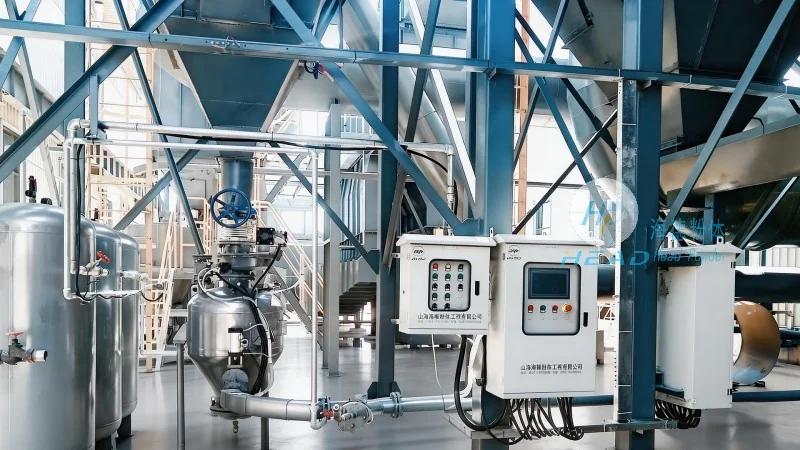
Pneumatic conveying represents a significant leap forward in the **grain and flour conveying** sector. Unlike mechanical systems that rely on physical contact between the conveyor and the material, pneumatic conveying uses a stream of air to transport the product through a pipeline. This method is particularly advantageous for moving sensitive powders and granules without causing physical damage. Shandong Headpowder Engineering Co., Ltd. specializes in **pneumatic conveying** systems that utilize controlled air pressure to move materials from storage silos to processing units or packaging lines. This technology ensures that the integrity of the product is maintained throughout the journey, minimizing waste and maximizing efficiency.
The **pneumatic conveying** systems provided by Shandong Headpowder Engineering Co., Ltd. are built with a focus on durability and operational precision. Our systems typically consist of a robust pipeline network, specialized feeding devices, and high-performance air compressors. We utilize high-quality materials, such as wear-resistant polyurethane and stainless steel, to construct the pipelines, ensuring longevity even in abrasive environments. Furthermore, our systems are equipped with advanced control units that monitor flow rates and air pressure in real-time. This allows for seamless integration into existing production lines, providing operators with the ability to automate the **material handling** process and reduce the need for manual intervention.
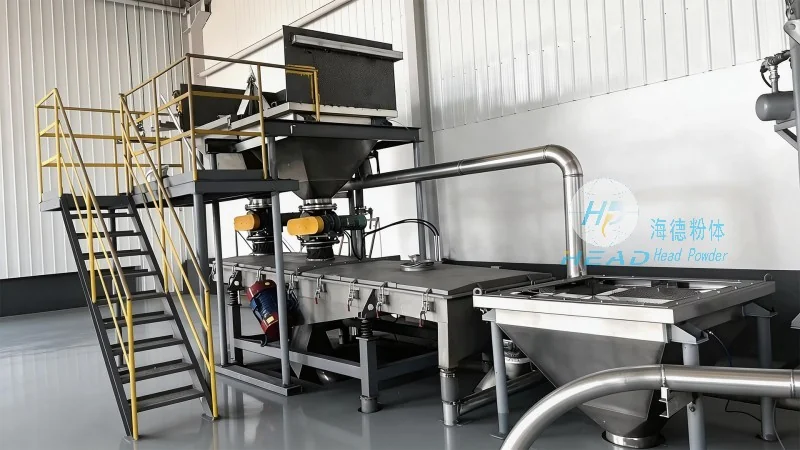
Implementing a pneumatic system for **grain and flour conveying** offers numerous operational benefits. One of the primary advantages is the reduction of dust and cross-contamination. Since the system is fully enclosed, there is no exposure to the external environment, which is crucial for maintaining strict hygiene standards in food production. Additionally, pneumatic conveyors are quieter than mechanical alternatives and can transport materials over long distances, both horizontally and vertically, with minimal energy loss. Shandong Headpowder Engineering Co., Ltd. designs these systems to be energy-efficient, helping factories lower their operational costs while maintaining high throughput. Whether it is transporting rice, wheat, or flour, our **pneumatic conveying** solutions adapt to the specific flow characteristics of the material.
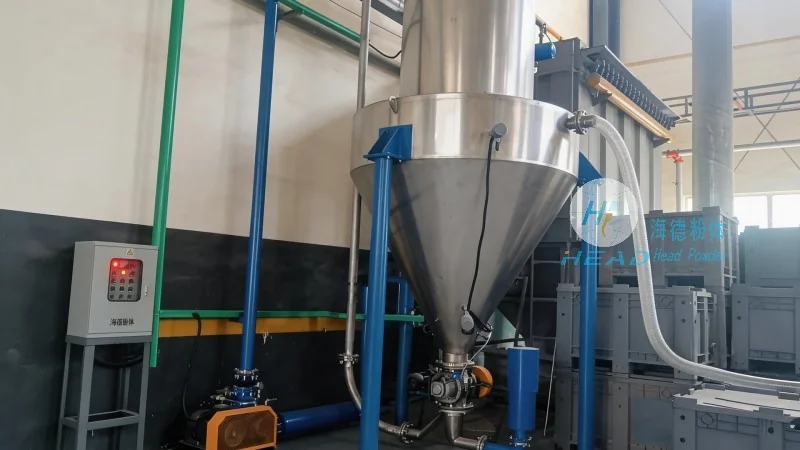
Every production facility has unique requirements, and a one-size-fits-all approach rarely works in **material handling**. Shandong Headpowder Engineering Co., Ltd. prides itself on offering customized solutions tailored to the specific needs of each client. Our engineering team conducts thorough site assessments to determine the optimal layout, pipe diameter, and air-to-material ratio for the project. We provide comprehensive technical support, from initial design and installation to commissioning and after-sales service. Our commitment to quality ensures that every **grain and flour conveying** system we deliver meets international safety and performance standards.
For businesses seeking to upgrade their production capabilities with state-of-the-art **pneumatic conveying** technology, Shandong Headpowder Engineering Co., Ltd. is your trusted partner. Our team of experts is dedicated to providing superior **material handling** solutions that enhance productivity and safety. To discuss your specific requirements or to schedule a consultation, please contact Zhang Manager. We are ready to assist you in optimizing your logistics and ensuring the smooth flow of your valuable **grain and flour** products.

 Shandong Headpowder Engineering Co., Ltd.
 156-6277-7102(Manager Zhang)
  0531-83386006
  Zhangqiu District, Jinan City, Shandong Province, China
telephone
WeChatconsult
top