With more than 10‑year industry experience, Shandong Headpowder delivers full‑service pneumatic‑conveying systems and blowers, undertaking nationwide turn‑key powder‑handling projects.
HeadPowder, a leading provider in the field of material handling solutions, specializes in the design, manufacturing, and integration of advanced powder conveying systems tailored for anode material applications. This article delves into the fundamental working principles and distinctive features of such systems, offering a comprehensive overview for industry professionals and potential clients.
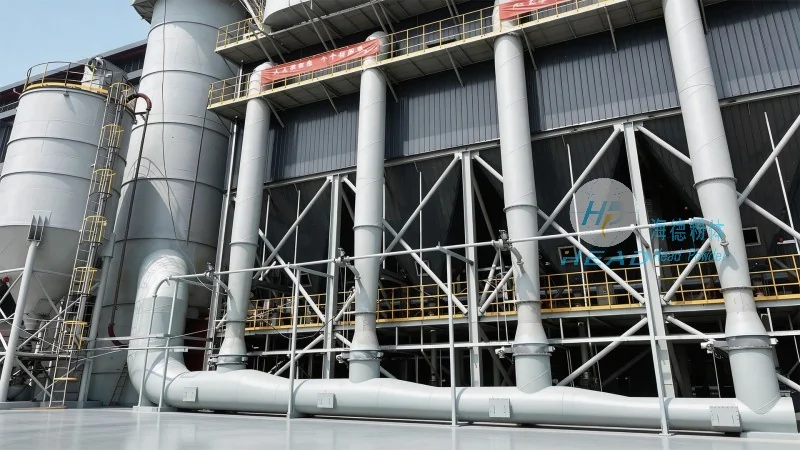
Anode material powder conveying systems are critical components in the production and processing of lithium-ion battery anodes. These systems are engineered to efficiently transport fine powders, such as graphite or silicon-based materials, from storage to processing equipment with minimal loss, contamination, or degradation. The core objective is to ensure consistent material flow, maintain particle integrity, and support high-throughput operations in battery manufacturing facilities.
The operation of anode material powder conveying systems typically involves several key steps and mechanisms. First, the powder is collected from storage silos or hoppers and fed into a conveying device, such as a screw conveyor, pneumatic conveyor, or rotary valve. The chosen method depends on the material's properties—e.g., particle size, moisture content, and abrasiveness—as well as the required conveying distance and throughput. For example, screw conveyors are commonly used for low to medium capacities and horizontal or slight incline applications, while pneumatic conveyors excel in high-volume, long-distance transport, especially for fine powders that are prone to dusting.
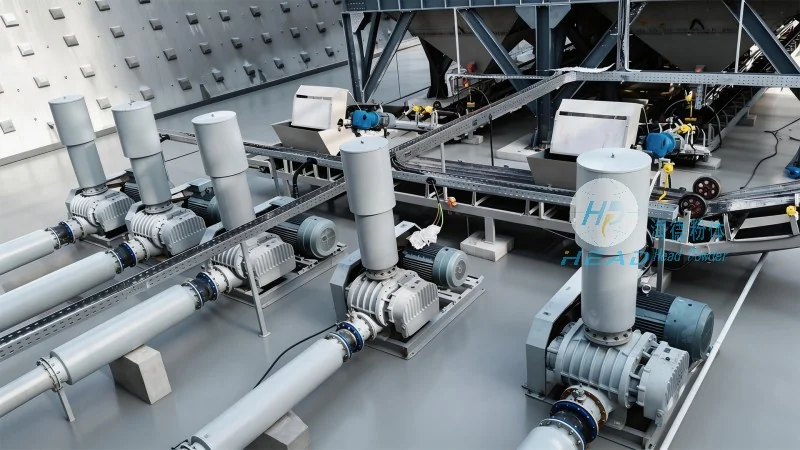
Next, the conveying system utilizes either mechanical or pneumatic forces to move the powder. Mechanical conveyors rely on rotating components (like screws or belts) to push or lift the material, whereas pneumatic systems employ compressed air to create a flow of air and powder particles (a process known as dilute-phase or dense-phase conveying, depending on the air-to-powder ratio). The selection of the conveying method directly impacts the system's efficiency, energy consumption, and the risk of material degradation. For instance, dense-phase pneumatic conveying is preferred for delicate anode powders to minimize particle breakage and maintain their structural integrity.
Several critical characteristics define the performance and suitability of anode material powder conveying systems. Firstly, efficiency and throughput are paramount. The system must be capable of handling the required material volume within the production schedule without bottlenecks. This is achieved through optimized design, including appropriate conveyor dimensions, speed, and capacity matching. Secondly, particle integrity preservation is a key consideration. Anode materials are often sensitive to mechanical stress, moisture, and contamination. Therefore, systems are designed with smooth surfaces, minimal impact zones, and effective sealing to prevent particle degradation. For example, using stainless steel or food-grade materials for components that come into direct contact with the powder reduces the risk of metal contamination and ensures compliance with industry standards.
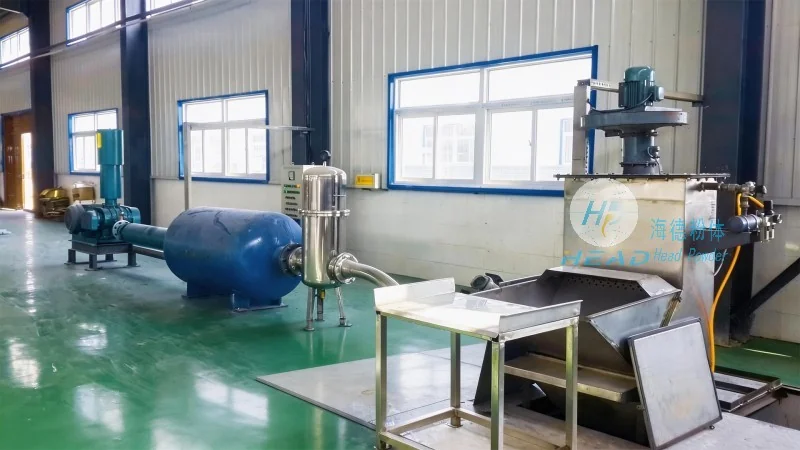
Thirdly, contamination control is essential. In battery manufacturing, even trace amounts of impurities can affect battery performance and safety. Conveying systems incorporate features like dust collection hoods, filtration systems, and sealed transfer points to prevent cross-contamination between batches or with the environment. Additionally, energy efficiency is a modern requirement, as reducing operational costs and environmental impact are increasingly important for manufacturers. Advanced systems may incorporate variable-speed drives, energy recovery mechanisms, or optimized air flow to minimize power consumption while maintaining performance.
Fourthly, flexibility and adaptability are important for accommodating different anode material types and production changes. Many systems are modular, allowing for easy integration of new components or adjustment of conveying parameters. This flexibility enables manufacturers to scale operations or switch between different material formulations without significant downtime or capital investment. Finally, reliability and maintenance are critical for ensuring continuous production. High-quality materials, robust construction, and regular maintenance schedules are essential to minimize downtime and extend the system's service life. For instance, using wear-resistant coatings on conveyor components can reduce maintenance frequency and extend the system's operational lifespan.

 Shandong Headpowder Engineering Co., Ltd.
 156-6277-7102(Manager Zhang)
  0531-83386006
  Zhangqiu District, Jinan City, Shandong Province, China
telephone
WeChatconsult
top