With more than 10‑year industry experience, Shandong Headpowder delivers full‑service pneumatic‑conveying systems and blowers, undertaking nationwide turn‑key powder‑handling projects.
Understanding the pneumatic conveying of desulfurization and denitrification agents is crucial for optimizing industrial processes that aim to reduce air pollution from power plants and other facilities. This method involves transporting powders such as desulfurization and denitrification reagents through a pipeline using air or other gas as the conveying medium. The efficiency and reliability of this system directly impact the overall performance of emission control equipment.
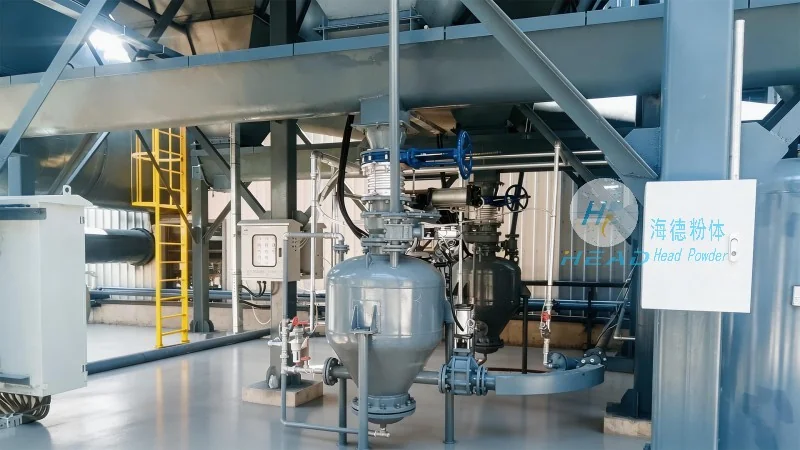
Pneumatic conveying of desulfurization and denitrification agents refers to the technology used to transport dry powders, including those used in flue gas desulfurization (FGD) and selective catalytic reduction (SCR) systems. These agents are typically fine powders that require gentle handling to prevent agglomeration and loss of effectiveness. The conveying process uses a pressure or vacuum system to move the powder from a source, such as a storage silo or reactor, to the point of use, such as a spray dryer or injection point in the boiler. The primary goal is to ensure consistent and controlled delivery of the reagents, which is vital for maintaining the efficiency of the desulfurization and denitrification processes.
The design of a pneumatic conveying system for desulfurization and denitrification agents must consider several key factors to ensure optimal performance. First, the system must be able to handle the specific properties of the powders, including their particle size, density, and flowability. The choice between positive pressure and negative pressure systems depends on the distance, height, and number of turns in the pipeline. Positive pressure systems are often used for short to medium distances and horizontal or slightly inclined runs, while negative pressure systems are suitable for longer vertical or inclined runs. The system design also needs to account for the potential for particle segregation and the need to minimize pressure drops along the pipeline to maintain the conveying velocity.
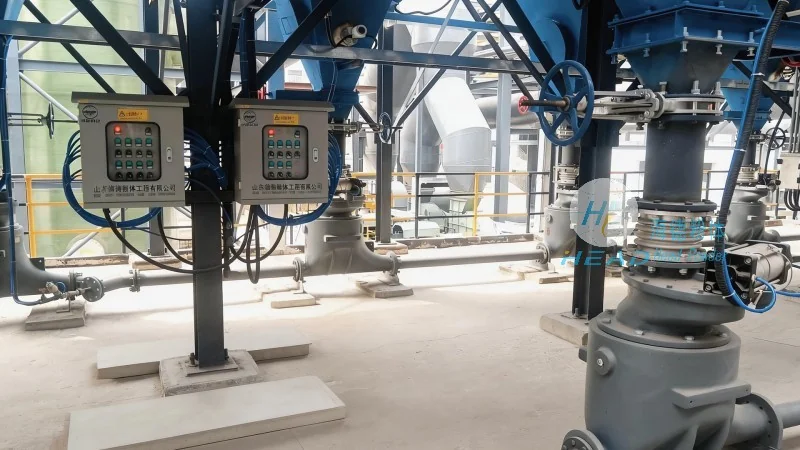
A typical pneumatic conveying system for desulfurization and denitrification agents includes several essential components. The main components are the material feed system, the conveying line, the air supply system, and the control system. The material feed system may include a hopper with a feeder, such as a rotary valve or a screw feeder, to regulate the flow of the powder into the pipeline. The conveying line is usually made of stainless steel or other corrosion-resistant materials to withstand the chemical properties of the reagents and prevent contamination. The air supply system consists of a blower or compressor, a filter to remove moisture and particulates from the air, and a regulator to control the pressure and flow rate. The control system monitors the pressure, flow rate, and other parameters to ensure the system operates within safe and efficient limits.
There are several advantages to using pneumatic conveying for desulfurization and denitrification agents. One of the main advantages is the ability to transport powders over long distances and vertical heights without the need for intermediate storage or handling. This reduces the risk of material loss and contamination, which is critical for maintaining the purity of the reagents. Another advantage is the flexibility of the system, as it can be easily modified to accommodate changes in the process requirements or the type of powder being conveyed. The system also allows for precise control over the flow rate and delivery of the reagents, which is essential for achieving the desired emission reduction levels.
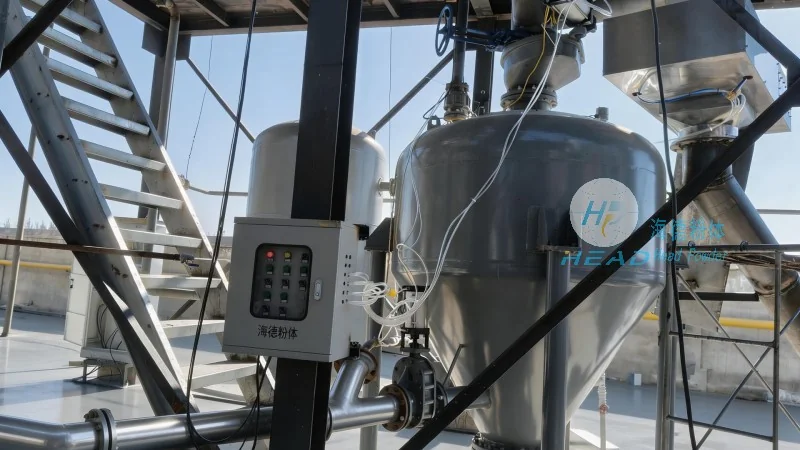
Pneumatic conveying of desulfurization and denitrification agents is widely used in industrial emission control systems, particularly in power plants and other facilities that generate flue gases. The system is used to transport the reagents from storage to the point of injection in the boiler or scrubber. The consistent and controlled delivery of the reagents ensures that the desulfurization and denitrification processes operate efficiently, reducing the amount of sulfur dioxide (SO2) and nitrogen oxides (NOx) emitted into the atmosphere. This not only helps in meeting environmental regulations but also improves the overall performance and lifespan of the emission control equipment.
Shandong HeadPowder Engineering Co., Ltd., commonly known as HeadPowder, is a leading manufacturer and supplier of pneumatic conveying systems and related equipment for industrial applications. With years of experience in the field, HeadPowder specializes in designing and manufacturing customized solutions for the transportation of fine powders, including desulfurization and denitrification agents. The company's products are known for their high efficiency, reliability, and durability, making them suitable for demanding industrial environments. HeadPowder's commitment to quality and customer satisfaction has made it a trusted partner for many industries, including power generation, chemical processing, and environmental protection.

 Shandong Headpowder Engineering Co., Ltd.
 156-6277-7102(Manager Zhang)
  0531-83386006
  Zhangqiu District, Jinan City, Shandong Province, China
telephone
WeChatconsult
top