With more than 10‑year industry experience, Shandong Headpowder delivers full‑service pneumatic‑conveying systems and blowers, undertaking nationwide turn‑key powder‑handling projects.
Mineral sand pneumatic conveying systems represent a critical technology in the handling and transportation of bulk materials, particularly in industries dealing with mineral sands such as silica, kaolin, or other fine mineral powders. These systems utilize air as the primary medium to transport dry, granular, or powdery materials over long distances or within complex processing facilities. The principle of pneumatic conveying involves creating a pressure differential to move material through a pipeline network, making it an efficient alternative to traditional mechanical conveying methods like belt conveyors or bucket elevators.
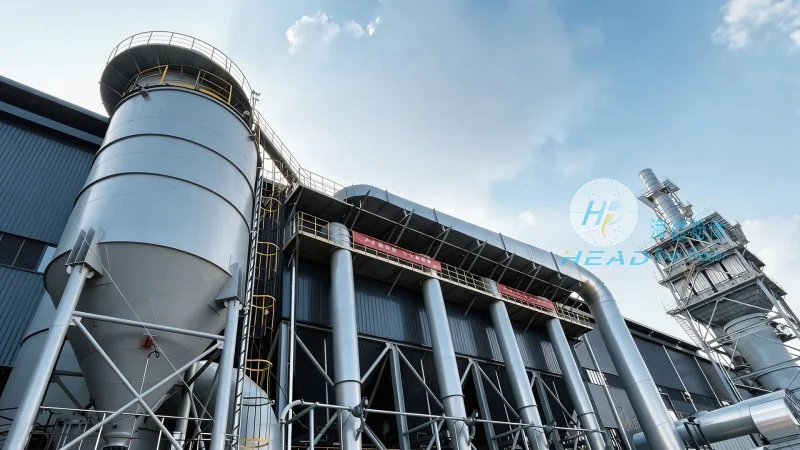
The fundamental principle behind mineral sand pneumatic conveying is the use of compressed air to generate a flow that propels the material through the system. In a typical system, material is fed into a hopper or feeder, where it is then introduced into a pipeline. The air, often supplied by a blower or compressor, is introduced at a specific pressure and velocity to create a flow that entrains the mineral sand particles. The system can operate in either positive pressure (where the entire system is pressurized) or negative pressure (suction) modes, depending on the application requirements. The key to efficient operation lies in maintaining the correct air-to-material ratio, which ensures that the particles are fully suspended and transported without clogging or excessive pressure drops.
A mineral sand pneumatic conveying system consists of several essential components that work in tandem to ensure reliable and efficient material transport. The primary components include a material feeder (such as a rotary valve or screw feeder) to control the flow rate of the mineral sand, a blower or compressor to generate the necessary air pressure, a pipeline network (including straight sections, bends, and elbows) to guide the material, and a receiver or silo to collect the conveyed material at the destination. Additional components may include filters to remove dust from the air, pressure regulators to maintain consistent pressure, and control valves to adjust the flow. Each component is designed to handle the specific characteristics of mineral sands, such as their particle size, density, and moisture content, to prevent issues like blockages or material degradation.
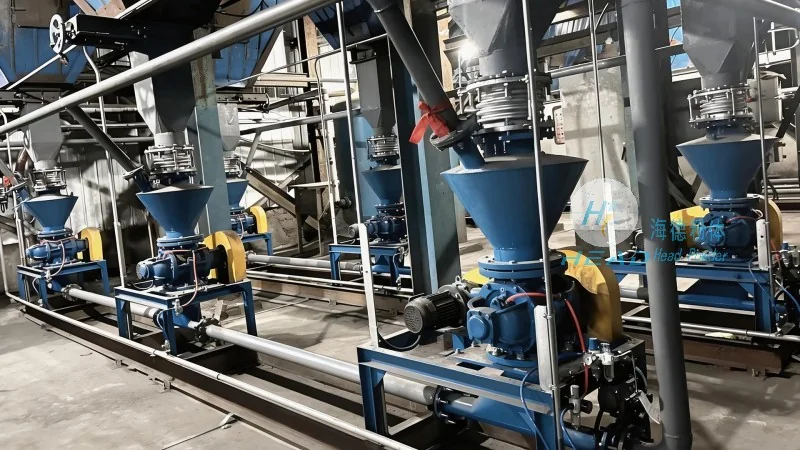
Compared to traditional mechanical conveying methods, mineral sand pneumatic conveying systems offer several advantages that make them a preferred choice in many industrial applications. One of the most significant benefits is the ability to transport materials over long distances or through complex layouts without the need for multiple transfer points. This reduces the overall footprint of the processing facility and minimizes the risk of material spillage or contamination. Additionally, pneumatic conveying systems are highly flexible, allowing for easy integration with existing processing equipment and the ability to change the system layout as production needs evolve. Another key advantage is the reduced maintenance requirements compared to mechanical systems, as there are fewer moving parts that can wear out or require regular servicing. Furthermore, pneumatic conveying can handle a wide range of material characteristics, including fine powders and abrasive particles, without causing excessive wear on the system components.
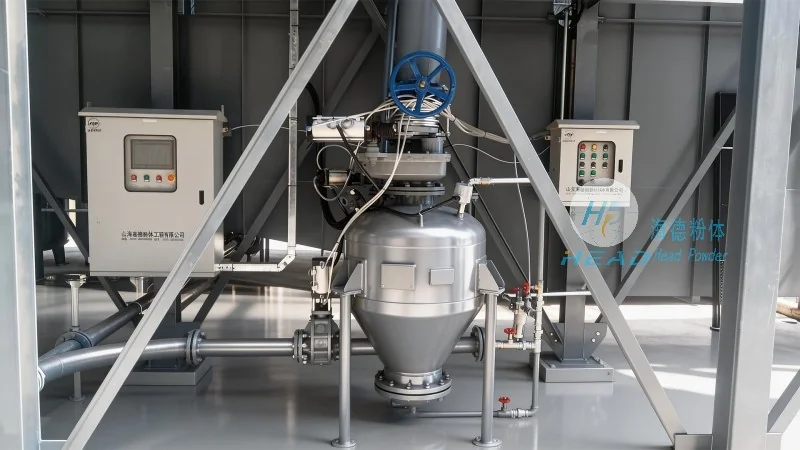
Mineral sand pneumatic conveying systems are widely used in various industries that process mineral sands, including mining, ceramics, and chemical manufacturing. In the mining industry, these systems are used to transport mined mineral sands from processing plants to storage facilities or for further processing. In the ceramics industry, they are employed to convey raw materials like kaolin or silica to production lines, where they are used to manufacture ceramic products. In the chemical industry, pneumatic conveying is used to transport mineral sands as raw materials for the production of various chemicals or as a component in industrial processes. The systems are also used in environmental applications, such as the transport of sand for construction projects or in the handling of sand used in water treatment processes.
Shandong HeadPowder Engineering Co., Ltd., commonly known as HeadPowder, is a leading provider of custom-designed pneumatic conveying systems for mineral sands. With years of experience in the industry, HeadPowder specializes in developing and manufacturing systems that meet the unique requirements of clients in various sectors. The company’s team of engineers and technicians works closely with clients to understand their specific material handling needs and design systems that are efficient, reliable, and cost-effective. HeadPowder’s systems are built using high-quality materials and components, ensuring long-term performance and minimal maintenance. The company’s commitment to quality and customer satisfaction has made it a trusted partner for many businesses in the mineral processing industry. HeadPowder’s headquarters is located in Shandong, China, where the company’s research and development team continues to innovate and improve its products to meet the evolving needs of the market.

 Shandong Headpowder Engineering Co., Ltd.
 156-6277-7102(Manager Zhang)
  0531-83386006
  Zhangqiu District, Jinan City, Shandong Province, China
telephone
WeChatconsult
top