With more than 10‑year industry experience, Shandong Headpowder delivers full‑service pneumatic‑conveying systems and blowers, undertaking nationwide turn‑key powder‑handling projects.
Shandong HeadPowder Engineering Co., Ltd., commonly known as HeadPowder, is a professional manufacturer and supplier specializing in pneumatic conveying systems for various industrial applications. With a focus on efficiency and reliability, the company has established itself as a key player in the field of material handling solutions, particularly for bulk materials like monosodium glutamate (MSG).
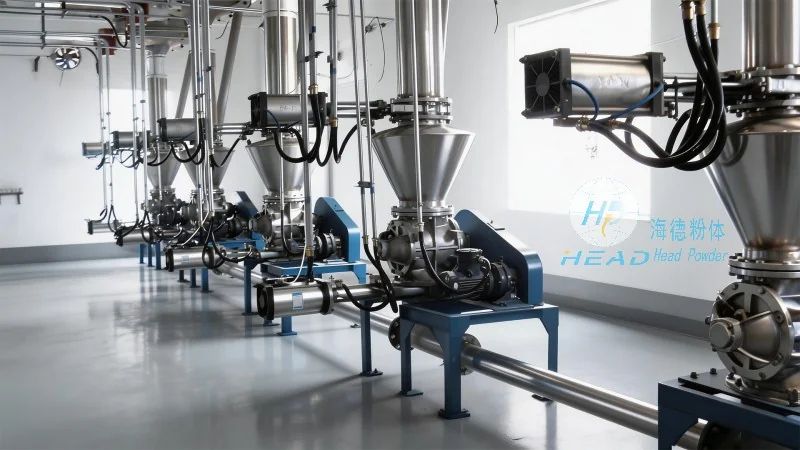
Pneumatic conveying, also known as air conveying, is a method of transporting bulk materials through a pipeline using compressed air or other gases. In the context of monosodium glutamate, this technology involves the use of a closed system where the MSG powder is introduced into a pipeline and propelled by the force of moving air. The process typically begins with the material being fed into a hopper, which then transfers the powder into the conveying line. Compressed air is then introduced, creating a flow that carries the MSG particles through the pipeline to the destination point. This method offers several advantages, including the ability to transport materials in a closed environment, reducing dust emissions and contamination risks, and enabling precise control over the conveying rate.
Pneumatic conveying systems for monosodium glutamate are categorized based on the pressure used to move the material. The two main types are pressure conveying and vacuum conveying. Pressure conveying systems use positive pressure to push the material through the pipeline, typically employing high-pressure air or gas. This method is suitable for long-distance and high-capacity applications, as it can maintain consistent flow rates over extended distances. Vacuum conveying systems, on the other hand, use negative pressure to draw the material into the pipeline, often using a vacuum pump. This type is ideal for short-distance or low-volume applications, particularly in environments where dust control is critical.
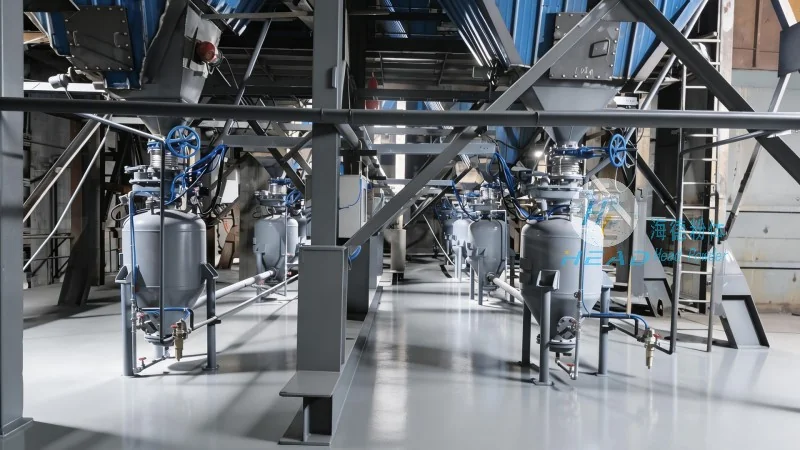
The application of pneumatic conveying in the monosodium glutamate industry is widespread and essential for efficient production and distribution. In manufacturing facilities, these systems are used to transport raw MSG from storage silos to processing units, ensuring a continuous and clean supply. During the production process, pneumatic conveying helps move intermediate products between different stages, such as from grinding to packaging. In storage and distribution centers, the technology is employed to transfer finished MSG products to packaging lines or shipping containers, maintaining product integrity and preventing contamination. Additionally, pneumatic conveying systems are used in quality control areas to transport samples for testing, ensuring that the final product meets the required standards.
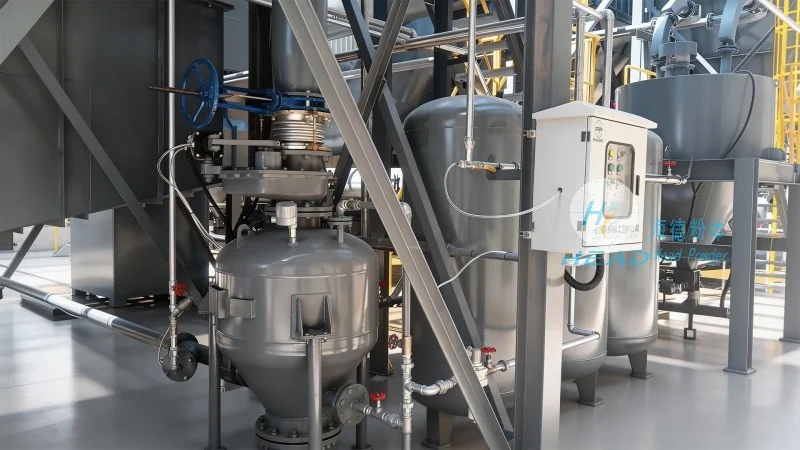
Compared to traditional mechanical conveying methods, pneumatic conveying offers several key advantages for handling monosodium glutamate. Firstly, it provides a closed system, which significantly reduces dust emissions and prevents cross-contamination between different batches of MSG. This is particularly important in food processing industries where hygiene and product safety are paramount. Secondly, pneumatic conveying allows for precise control over the conveying rate, enabling manufacturers to adjust the flow based on production needs. This flexibility helps optimize production efficiency and reduce waste. Thirdly, the technology is suitable for transporting materials over long distances without the need for multiple transfer points, simplifying the overall material handling process. Finally, pneumatic conveying systems are relatively easy to install and maintain, with fewer moving parts compared to mechanical conveyors, leading to lower operational costs and longer service life.
Shandong HeadPowder Engineering Co., Ltd. specializes in providing customized pneumatic conveying solutions tailored to the specific needs of the monosodium glutamate industry. By leveraging advanced technology and years of experience, the company ensures that its systems are efficient, reliable, and compliant with industry standards. The company's commitment to quality and customer satisfaction has made it a trusted partner for many MSG manufacturers and processors. With a focus on innovation and continuous improvement, HeadPowder continues to develop new solutions that enhance the efficiency and safety of material handling in the food processing sector.

 Shandong Headpowder Engineering Co., Ltd.
 156-6277-7102(Manager Zhang)
  0531-83386006
  Zhangqiu District, Jinan City, Shandong Province, China
telephone
WeChatconsult
top