With more than 10‑year industry experience, Shandong Headpowder delivers full‑service pneumatic‑conveying systems and blowers, undertaking nationwide turn‑key powder‑handling projects.
For industries dealing with anhydrous aluminum chloride, efficient material handling is crucial to maintain production efficiency and product quality. Pneumatic conveying offers a reliable solution for transporting this powder and granular material, especially when traditional methods like belt conveyors or bucket elevators are insufficient for handling fine or dusty materials. This article explores the principles and applications of pneumatic conveying for anhydrous aluminum chloride, highlighting how companies like Shandong HeadPowder Engineering Co., Ltd. leverage advanced technology to optimize material transport processes.
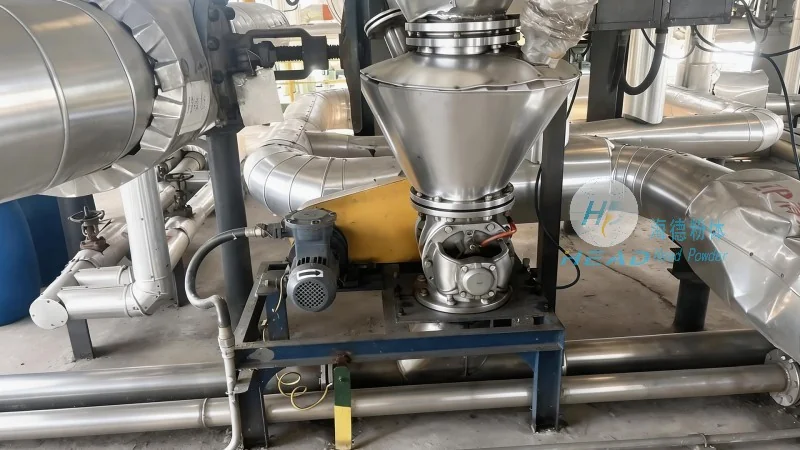
Pneumatic conveying systems use air or gas to transport bulk materials through a pipeline. In the case of anhydrous aluminum chloride, which is a hygroscopic and reactive powder, the choice of conveying system is critical. Traditional vacuum or pressure systems can be adapted to handle such materials, but specialized designs are often required to prevent material degradation, caking, or corrosion. The system typically consists of a material feed hopper, a conveyor line, and a discharge point, with air being introduced to create a flow that moves the material along the pipeline.
Several factors influence the effectiveness of pneumatic conveying for anhydrous aluminum chloride. The first is the air velocity, which must be sufficient to keep the material suspended and prevent blockages. The second is the system pressure, whether vacuum or pressure, which affects the distance and height the material can be transported. The third is the material's properties, such as its density, particle size distribution, and moisture content, which determine the required air flow rate and system design. For anhydrous aluminum chloride, which is a fine powder with a high reactivity to moisture, maintaining a dry and clean environment is essential to prevent clumping and ensure consistent flow.
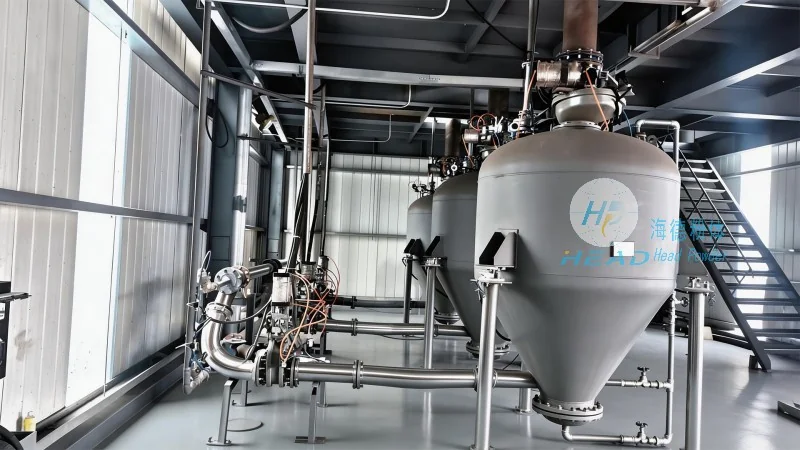
In the production of anhydrous aluminum chloride, pneumatic conveying is used at various stages, from raw material handling to product packaging. For example, after the aluminum chloride is produced in a reactor, it is often in a powder or granular form and needs to be transported to storage silos or processing units. Pneumatic conveying allows for a dust-free and continuous transfer, which is vital for maintaining product purity and preventing contamination. Additionally, in downstream processes like blending or packaging, the material is moved efficiently to different equipment without the need for manual handling, reducing labor costs and improving safety.
Implementing pneumatic conveying for anhydrous aluminum chloride offers multiple benefits. Firstly, it provides a clean and dust-free transfer, which is essential for maintaining the material's quality and preventing health hazards in the workplace. Secondly, it enables continuous and automated material handling, reducing downtime and increasing production throughput. Thirdly, the system can be designed to handle varying material volumes and flow rates, making it adaptable to different production scales. Finally, by eliminating the need for manual handling and reducing equipment wear, the overall operational costs are minimized, leading to higher profitability for the company.

Shandong HeadPowder Engineering Co., Ltd., a leading provider of material handling solutions, specializes in designing and manufacturing pneumatic conveying systems tailored to the needs of industries dealing with anhydrous aluminum chloride. The company's expertise lies in understanding the unique properties of this material and developing customized solutions that ensure efficient and safe transport. For instance, their systems may include special hopper designs to prevent material bridging, advanced air filtration to maintain a clean environment, and control systems that optimize air flow and pressure. By partnering with HeadPowder, companies can improve their material handling processes, reduce operational costs, and enhance overall productivity.
Efficient handling of anhydrous aluminum chloride through pneumatic conveying is a critical aspect of modern industrial operations. By understanding the principles of air flow, material properties, and system design, companies can implement effective solutions that enhance productivity and product quality. With the support of specialized engineering firms like Shandong HeadPowder Engineering Co., Ltd., industries can overcome the challenges associated with transporting this reactive powder and achieve optimal material handling performance. The future of material transport in the aluminum chloride industry lies in leveraging advanced pneumatic conveying technologies to ensure safe, efficient, and cost-effective operations.

 Shandong Headpowder Engineering Co., Ltd.
 156-6277-7102(Manager Zhang)
  0531-83386006
  Zhangqiu District, Jinan City, Shandong Province, China
telephone
WeChatconsult
top