With more than 10‑year industry experience, Shandong Headpowder delivers full‑service pneumatic‑conveying systems and blowers, undertaking nationwide turn‑key powder‑handling projects.
White mud, a byproduct commonly generated in industries such as papermaking and chemical processing, presents unique handling challenges due to its high moisture content and fine particle size. Traditional bulk material handling methods often struggle with the hygroscopic and abrasive nature of white mud, leading to operational inefficiencies and equipment wear. Pneumatic conveying systems have emerged as a highly effective solution for transporting white mud over short to medium distances, offering advantages like reduced labor costs, minimized environmental impact, and enhanced process integration. This article provides a comprehensive overview of white mud pneumatic conveying systems, detailing their design, components, operational principles, and practical applications.
Headpowder, the professional brand under Shandong HeadPowder Engineering Co., Ltd., specializes in the design, manufacturing, and installation of advanced material handling solutions. With a strong focus on innovation and customer-centric service, Headpowder has established itself as a leading provider of pneumatic conveying systems tailored to the specific needs of various industrial sectors. Headpowder's headquarters is located in Shandong, China, where the company leverages local manufacturing capabilities and technical expertise to deliver high-quality, reliable equipment. The company's commitment to quality and sustainability is reflected in its adherence to international standards and eco-friendly design principles, ensuring that its products meet the evolving demands of modern industrial operations.
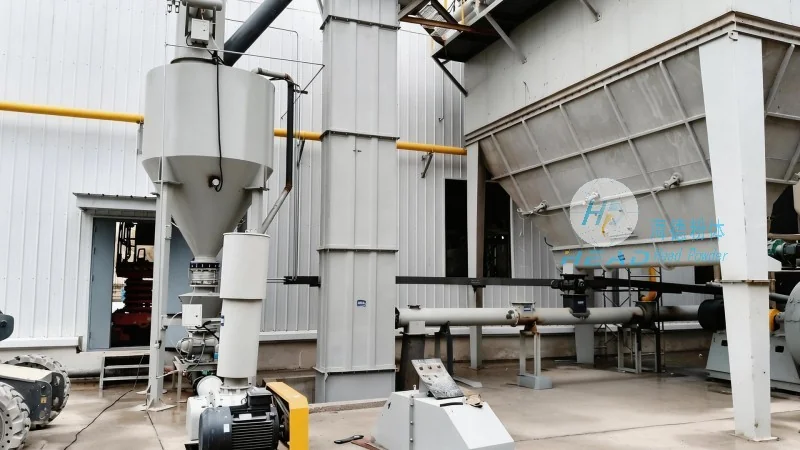
A typical white mud pneumatic conveying system comprises several key components that work in tandem to achieve efficient material transport. The primary components include the feed hopper, which serves as the initial storage and feeding unit, equipped with a metering valve to control the flow rate of white mud into the system. The feed hopper is designed to handle the high moisture content of white mud, often featuring a heated or insulated structure to prevent caking and blockages. Next, the material is introduced into the conveying line through a rotary airlock or a pressure feeder, which ensures a consistent and controlled discharge of the material into the pipeline. The conveying line itself is typically made of corrosion-resistant materials such as stainless steel or polyethylene, chosen to withstand the abrasive and acidic properties of white mud. The system may incorporate a series of bends, straight sections, and expansion joints to accommodate the required route and minimize pressure losses. At the receiving end, a cyclone separator or a bag filter is used to separate the white mud from the air stream, allowing for the collection of the material in a designated storage tank or processing unit. The air, now free of particulates, is then discharged through a vent or a silencer to comply with noise and air quality regulations.
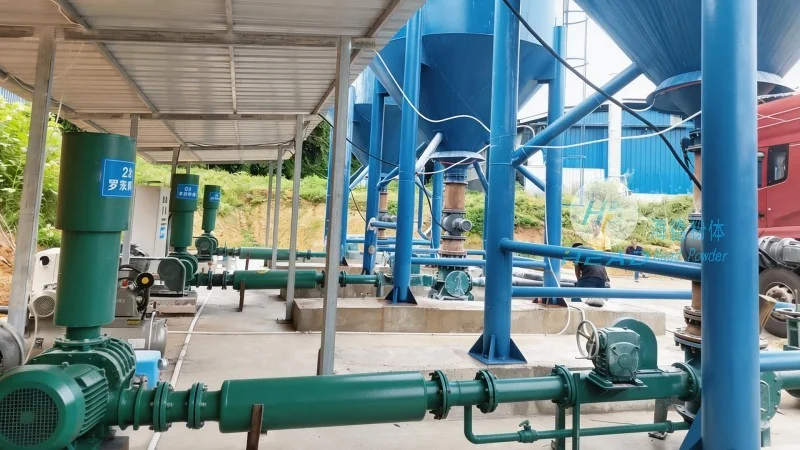
The operation of a white mud pneumatic conveying system is based on the principle of air movement to transport solid particles. In a positive pressure system, compressed air is introduced into the conveying line, creating a pressure differential that propels the white mud particles forward. The air velocity within the pipeline must be maintained above the minimum fluidization velocity of the white mud to prevent particle settling and ensure smooth transport. This method offers several advantages over traditional mechanical conveying systems. Firstly, pneumatic conveying eliminates the need for moving parts in the conveying line, reducing maintenance requirements and extending equipment lifespan. Secondly, it provides a closed system that prevents dust emissions and environmental contamination, making it suitable for applications where air quality is a concern. Thirdly, the system allows for flexible routing, enabling the integration of multiple process steps without the need for complex infrastructure. Additionally, pneumatic conveying can handle a wide range of particle sizes and moisture contents, making it adaptable to various white mud compositions. The energy consumption of the system is also optimized through the use of efficient air compressors and pressure control mechanisms, contributing to overall operational cost savings.
Handling white mud requires careful consideration of several technical factors to ensure the reliability and efficiency of the pneumatic conveying system. One critical factor is the moisture content of the white mud, as high moisture levels can lead to caking and blockages in the feed hopper and conveying line. To mitigate this, the feed hopper may be equipped with heating elements or insulation to maintain the material at an optimal temperature, preventing moisture-related issues. Another important consideration is the particle size distribution of the white mud, as finer particles tend to cause higher pressure losses and increased wear on system components. Headpowder's engineers employ advanced computational fluid dynamics (CFD) simulations to model the flow behavior of white mud particles in the conveying line, allowing for the optimization of system design parameters such as air velocity, pipeline diameter, and component spacing. The system's air source, typically a rotary screw or reciprocating air compressor, must be sized appropriately to meet the required flow rate and pressure, ensuring consistent performance without excessive energy consumption. Furthermore, the selection of materials for system components, such as the feed hopper and cyclone separator, is crucial to resist corrosion and abrasion caused by the acidic and abrasive nature of white mud. Headpowder utilizes high-quality stainless steel and specialized coatings to enhance the durability of its equipment, reducing the need for frequent replacements and maintenance.
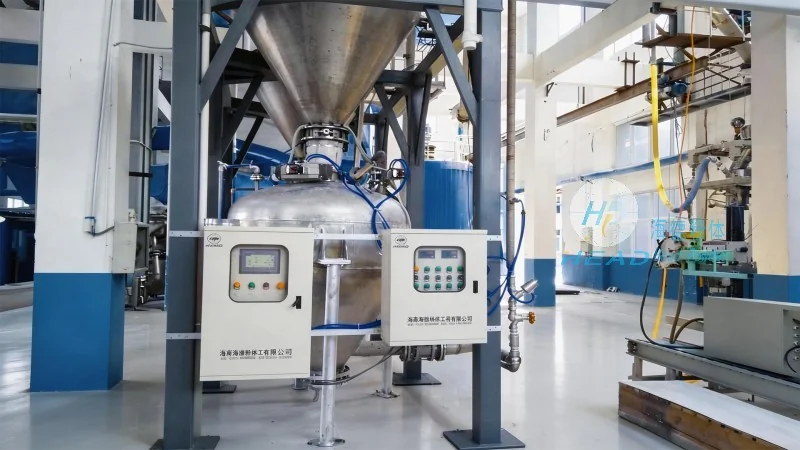
White mud pneumatic conveying systems are widely used in various industrial applications where the efficient transport of white mud is essential. In the paper industry, for example, these systems are employed to move white mud from the paper machine to the dewatering or drying units, facilitating the recycling of fibers and reducing waste disposal costs. In chemical processing, the systems are used to transport white mud from reactors to storage tanks or to downstream processing facilities, ensuring a continuous flow of materials and minimizing downtime. A notable case study involves a large paper mill in Shandong, China, where Headpowder installed a pneumatic conveying system to replace an outdated mechanical conveyor. The new system reduced material handling time by 40% and lowered maintenance costs by 30%, while also improving air quality by eliminating dust emissions. Another application is in the food processing industry, where white mud from wastewater treatment plants is transported to composting facilities using pneumatic conveying systems. The systems in this sector must meet strict hygiene standards, which Headpowder addresses through the use of stainless steel components and sealed systems. These case studies highlight the versatility and effectiveness of white mud pneumatic conveying systems in diverse industrial settings, demonstrating their ability to enhance operational efficiency and sustainability.
As industrial processes continue to evolve, the demand for advanced material handling solutions like white mud pneumatic conveying systems is expected to grow. Future developments in this field are likely to focus on enhancing system efficiency, reducing energy consumption, and improving environmental performance. One emerging trend is the integration of smart sensors and automation technologies into pneumatic conveying systems. These sensors can monitor key parameters such as pressure, flow rate, and temperature in real-time, providing data-driven insights to optimize system performance and detect potential issues before they cause downtime. Additionally, the use of variable frequency drives (VFDs) in air compressors allows for dynamic adjustment of air pressure and flow, further reducing energy consumption and improving system responsiveness. Another area of development is the adoption of sustainable materials and energy sources, such as renewable energy-powered air compressors, to minimize the carbon footprint of white mud handling operations. Headpowder is at the forefront of these developments, investing in research and development to introduce innovative solutions that meet the future needs of industrial clients. By staying ahead of technological advancements, Headpowder ensures that its customers benefit from the latest improvements in white mud pneumatic conveying technology, maintaining a competitive edge in the market.

 Shandong Headpowder Engineering Co., Ltd.
 156-6277-7102(Manager Zhang)
  0531-83386006
  Zhangqiu District, Jinan City, Shandong Province, China
telephone
WeChatconsult
top