With more than 10‑year industry experience, Shandong Headpowder delivers full‑service pneumatic‑conveying systems and blowers, undertaking nationwide turn‑key powder‑handling projects.
This article provides an overview of the limestone and gypsum powder conveying systems, focusing on their structural design and operational principles. These systems are essential in industrial applications where the efficient transport of fine powders is critical, such as in cement production, construction material processing, and chemical manufacturing. The following sections will delve into the key components, design considerations, and functional mechanisms that enable reliable and efficient powder handling.
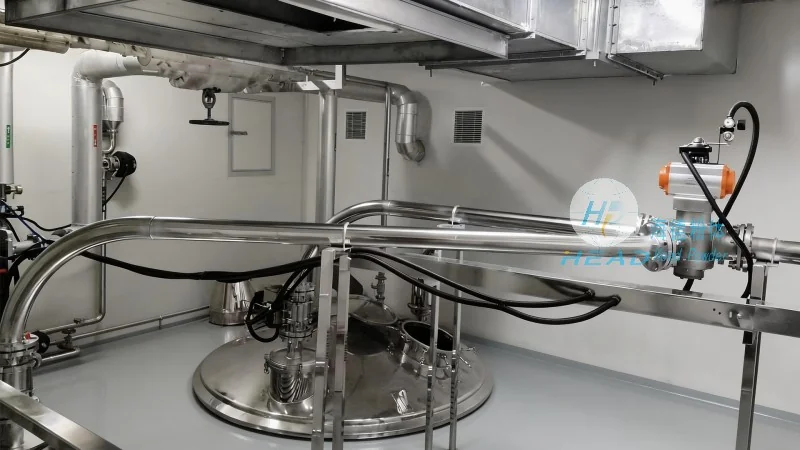
HeadPowder, a leading manufacturer in the field, specializes in developing advanced powder conveying solutions tailored to meet the diverse needs of industrial clients. With a strong commitment to innovation and quality, the company has established itself as a trusted partner for businesses requiring robust and reliable powder transport systems. The systems offered by HeadPowder are designed to enhance productivity, reduce operational costs, and ensure compliance with industry standards and safety regulations.
The limestone and gypsum powder conveying system typically consists of several core components that work in harmony to achieve efficient material transport. The primary components include the hopper for material storage, the conveyor mechanism (such as screw conveyors or pneumatic systems), the control panel for operation management, and the dust collection system to maintain a clean and safe working environment. Each component is carefully engineered to ensure optimal performance and durability under demanding industrial conditions.
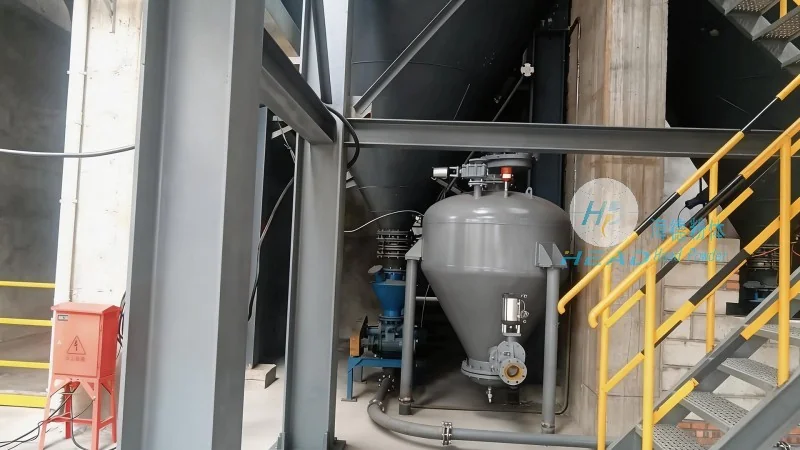
The hopper is designed to hold the bulk material, providing a stable and controlled feed to the conveyor system. It is often equipped with a discharge valve or gate to regulate the flow of powder into the conveyor. The conveyor mechanism, which can be either mechanical (e.g., screw or belt conveyors) or pneumatic (air-based systems), is responsible for moving the powder from the hopper to the destination point. Mechanical conveyors are suitable for dry, free-flowing powders and offer high efficiency and reliability. Pneumatic systems, on the other hand, are ideal for handling fine, dusty powders and can transport materials over longer distances with minimal maintenance.
The structural design of the limestone and gypsum powder conveying system is based on principles of fluid dynamics and mechanical engineering to ensure smooth and continuous operation. The system is engineered to minimize material degradation, blockages, and dust generation during transport. The hopper and conveyor components are constructed from high-quality materials, such as stainless steel or corrosion-resistant alloys, to withstand the abrasive nature of limestone and gypsum powders. This ensures long-term durability and reduces the need for frequent maintenance.
The working principle of the system involves the controlled feeding of powder from the hopper into the conveyor. In mechanical systems, the screw or belt rotates, pushing the powder forward through the conveyor tube. The speed and torque of the motor are precisely controlled to maintain a consistent flow rate, preventing overloading or underloading of the system. In pneumatic systems, compressed air is used to create a flow of air and powder through the pipeline. The air pressure and flow rate are regulated to ensure efficient transport without causing excessive pressure drops or material degradation.
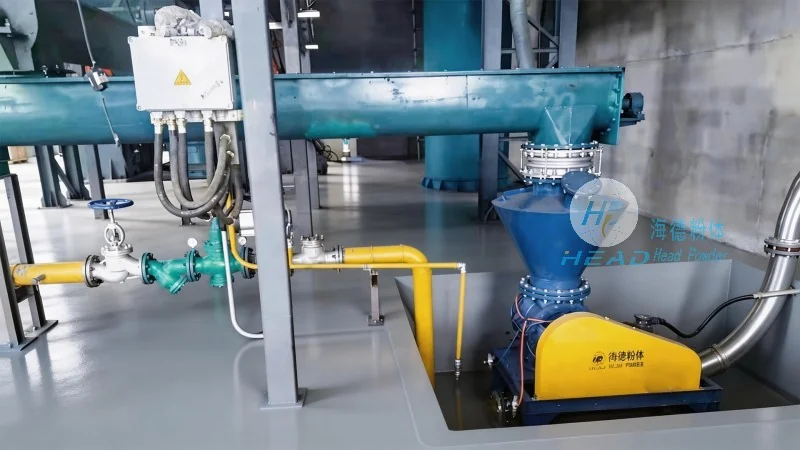
The limestone and gypsum powder conveying systems developed by HeadPowder offer several advantages that make them ideal for various industrial applications. These systems are designed to handle high volumes of material with minimal energy consumption, reducing operational costs and improving overall efficiency. The compact and modular design allows for easy installation and integration into existing production lines, minimizing downtime during setup. Additionally, the systems are equipped with advanced control features, such as real-time monitoring and automatic shut-off in case of blockages or overloads, enhancing safety and reliability.
These conveying systems are widely used in the cement industry for transporting limestone and gypsum to the grinding mills. In construction material processing, they are used to move powders for concrete production and other building materials. The systems are also utilized in chemical manufacturing for transporting fine powders used in pharmaceuticals, fertilizers, and other chemical products. The versatility and reliability of the systems make them a preferred choice for businesses seeking to optimize their powder handling processes.

 Shandong Headpowder Engineering Co., Ltd.
 156-6277-7102(Manager Zhang)
  0531-83386006
  Zhangqiu District, Jinan City, Shandong Province, China
telephone
WeChatconsult
top