With more than 10‑year industry experience, Shandong Headpowder delivers full‑service pneumatic‑conveying systems and blowers, undertaking nationwide turn‑key powder‑handling projects.
Plastic powder pneumatic conveying systems are essential in industrial applications for efficiently transporting plastic powders from one location to another. These systems utilize air or gas as the conveying medium to move bulk materials, offering advantages such as reduced contamination, improved safety, and the ability to handle materials in enclosed environments. The equipment involved in these systems is designed to ensure reliable and efficient operation, with components working in harmony to achieve optimal performance.
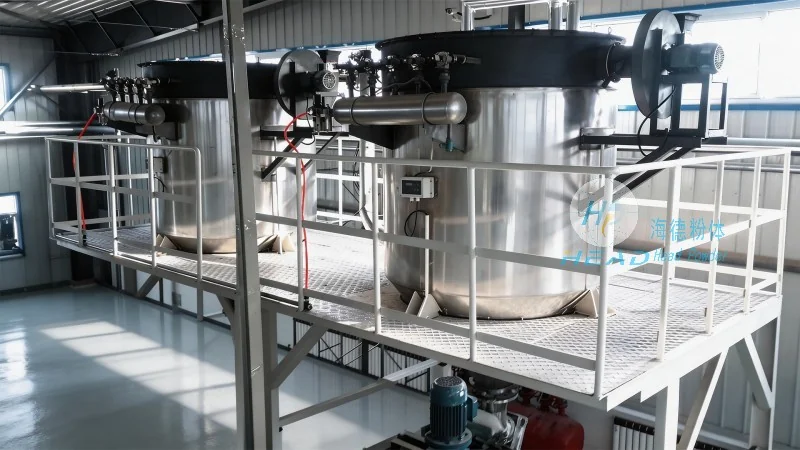
The core components of a plastic powder pneumatic conveying system typically include a hopper for material storage, a conveyor line (either positive or negative pressure), a separator to remove air from the material stream, and a discharge unit for delivering the material to its destination. Each component plays a critical role in the overall functionality of the system. The hopper is responsible for holding the plastic powder, ensuring a consistent feed to the conveyor. The conveyor line, which can operate under positive or negative pressure, moves the material through the system. Positive pressure systems use a blower to push air and material forward, while negative pressure systems use a vacuum to pull material through. The separator is crucial for removing entrained air from the material, preventing clogging and ensuring the material reaches the discharge point in a dry, free-flowing state. Finally, the discharge unit delivers the plastic powder to the intended location, such as a processing machine or storage container.
The structural principles of plastic powder pneumatic conveying systems are based on the physics of fluidization and particle movement. When air is introduced into the material in the hopper, it creates a fluidized bed, allowing the particles to move freely. This fluidization is essential for preventing agglomeration and ensuring the material can be conveyed smoothly. The system's design considers factors such as the particle size, density, and moisture content of the plastic powder, as these properties affect the air velocity required for effective conveying. For example, finer particles may require higher air velocities to overcome friction and maintain a stable flow, while larger particles may need lower velocities to avoid damage or clogging. The operational mechanisms involve the controlled introduction of air at specific points in the system, such as the hopper or conveyor line, to create the necessary pressure differentials that drive the material movement. Proper control of air flow and pressure is critical to maintain system efficiency and prevent issues like material buildup or air leakage.
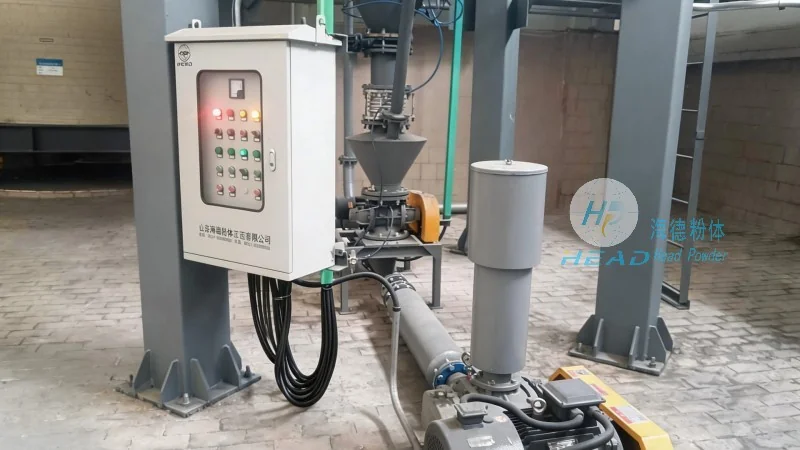
Plastic powder pneumatic conveying systems offer several advantages over traditional mechanical conveying methods. One of the primary benefits is the reduction of material contamination, as the system operates in an enclosed environment, preventing exposure to dust, moisture, or other contaminants. This is particularly important for food-grade or pharmaceutical-grade plastic powders, where purity is paramount. Additionally, these systems enhance safety by minimizing the risk of dust explosions, as the material is contained within the system. The enclosed design also reduces the risk of material spillage or loss, improving overall operational efficiency. Another advantage is the flexibility of the system, which can be easily adapted to different production needs, such as varying material flow rates or changing processing requirements. The ability to transport materials over long distances without the need for intermediate storage or handling also contributes to improved workflow and reduced labor costs.
Plastic powder pneumatic conveying systems are widely used in various industrial sectors, including manufacturing, packaging, and chemical processing. In the manufacturing industry, these systems are commonly employed to transport plastic powders to extrusion machines, injection molding equipment, or other processing units. The consistent and controlled delivery of material ensures that production processes run smoothly, with minimal downtime due to material shortages or blockages. In the packaging industry, the systems are used to move plastic powders into packaging machines, where they are converted into pellets or other forms for distribution. The ability to handle large volumes of material efficiently supports high-speed production lines. In chemical processing, the systems are used to transport plastic powders to mixing or blending equipment, where they are combined with other chemicals to create new products. The precision and reliability of pneumatic conveying systems are crucial in these applications, as any variation in material flow can affect the final product quality.
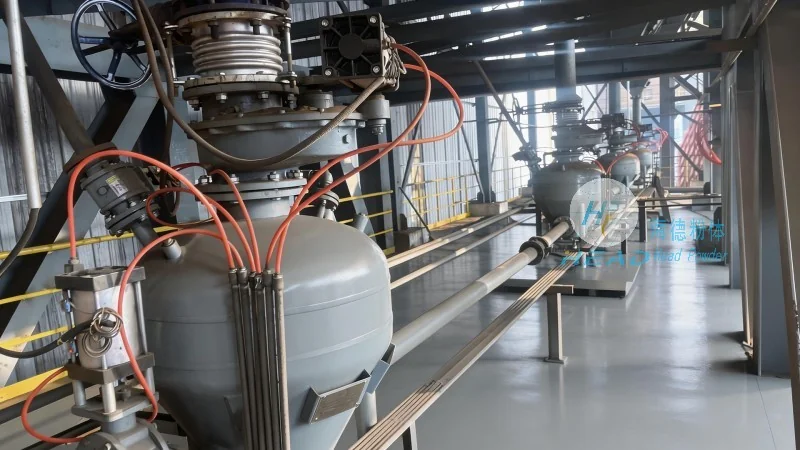
Proper maintenance is essential to ensure the long-term performance and reliability of plastic powder pneumatic conveying systems. Regular cleaning of the hopper, conveyor line, and separator is necessary to prevent material buildup and clogging, which can reduce system efficiency and increase maintenance costs. The air filter and blower or vacuum pump should be inspected and maintained regularly to ensure optimal air flow and pressure. Additionally, checking for leaks in the system is important to maintain the desired pressure differentials and prevent energy waste. Operational considerations include monitoring the material flow rate and air velocity to ensure they remain within the optimal range for the specific plastic powder being conveyed. Adjustments to the system may be required based on changes in material properties or production demands. Proper training of operators on the system's operation and maintenance is also crucial to prevent issues and ensure safe and efficient operation.
Plastic powder pneumatic conveying systems are sophisticated and efficient solutions for transporting plastic powders in industrial applications. The combination of proper structural design, operational mechanisms, and maintenance practices ensures reliable performance and contributes to improved productivity and safety. As industries continue to demand higher efficiency and quality in material handling, these systems remain a vital component of modern manufacturing processes. The expertise of companies like Shandong HeadPowder Engineering Co., Ltd. in designing and implementing such systems plays a key role in meeting the evolving needs of the industry.

 Shandong Headpowder Engineering Co., Ltd.
 156-6277-7102(Manager Zhang)
  0531-83386006
  Zhangqiu District, Jinan City, Shandong Province, China
telephone
WeChatconsult
top