With more than 10‑year industry experience, Shandong Headpowder delivers full‑service pneumatic‑conveying systems and blowers, undertaking nationwide turn‑key powder‑handling projects.
HeadPowder, the professional brand under Shandong HeadPowder Engineering Co., Ltd., specializes in the design, manufacturing, and implementation of advanced dust gas-pneumatic conveying systems. Based in Shandong, China, the company has established itself as a key player in providing efficient and reliable solutions for material handling in various industrial sectors. This article provides an overview of the dust gas-pneumatic conveying line, detailing its structural components and operational principles to help users understand its functionality and benefits.
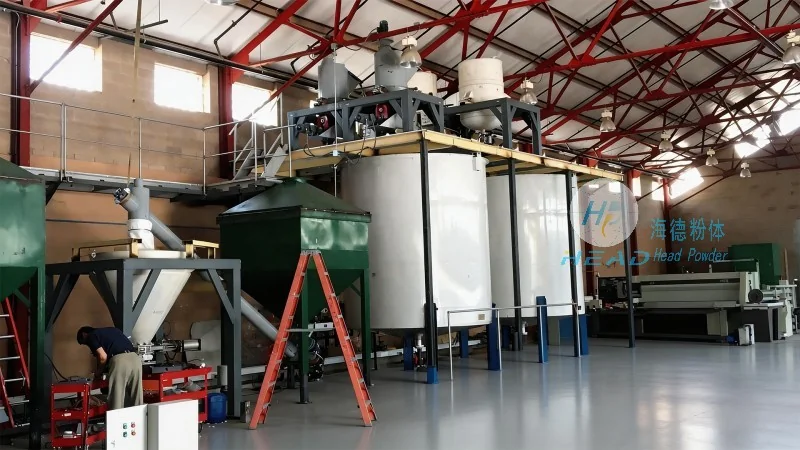
HeadPowder, a division of Shandong HeadPowder Engineering Co., Ltd., is dedicated to delivering high-quality dust gas-pneumatic conveying systems. With a strong foundation in engineering and industrial experience, the company focuses on developing innovative solutions that meet the diverse needs of clients across different industries. HeadPowder's commitment to excellence is reflected in its rigorous quality control processes and customer-centric approach, ensuring that each system is tailored to specific operational requirements while maintaining optimal performance and durability.
A dust gas-pneumatic conveying system is a technology used to transport powders, granules, and other bulk materials through a pipeline using compressed air or other gas streams. This method offers a flexible and efficient alternative to traditional mechanical conveying systems, such as belt conveyors or screw conveyors, especially for materials that are dusty, abrasive, or require minimal contact with equipment. The system typically consists of a series of components that work in tandem to move material from the source to the destination, ensuring a smooth and continuous flow.
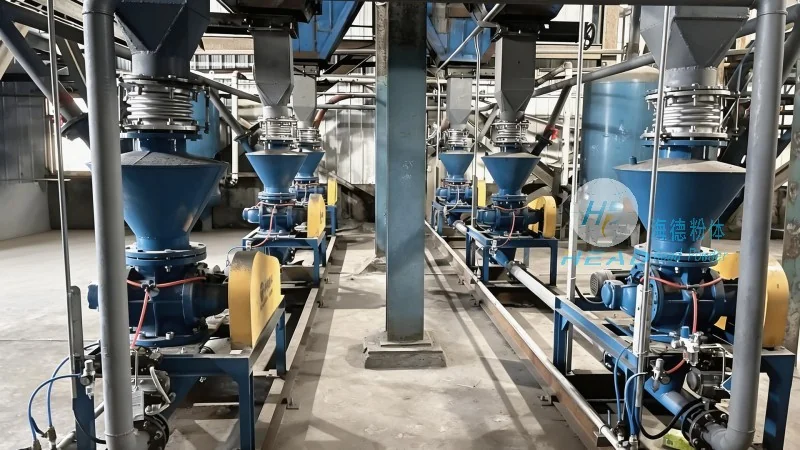
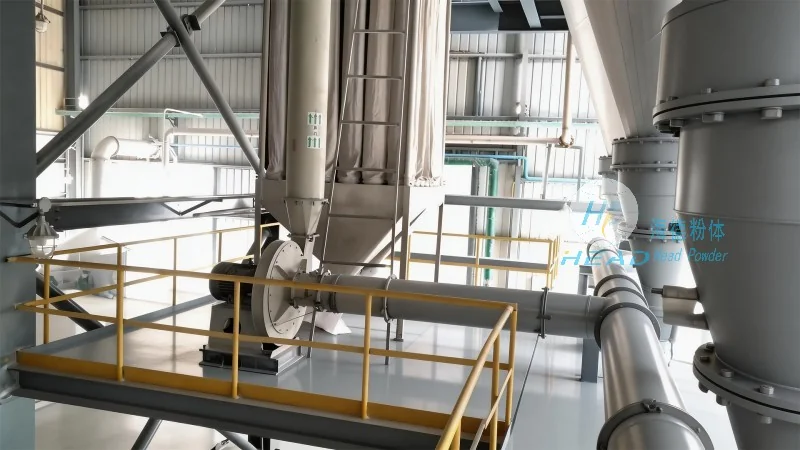
The core components of a dust gas-pneumatic conveying system include the material feed hopper, the conveying pipeline, the air compressor or blower, the control valves, and the discharge hopper. The material is first loaded into the feed hopper, where it is then drawn into the pipeline by the pressure differential created by the air compressor. As the compressed air flows through the pipeline, it lifts and transports the material particles, maintaining a consistent velocity and preventing clogging. The system may also incorporate features such as cyclone separators or filters to separate the material from the air stream, ensuring that the material is delivered to the discharge point without contamination.
HeadPowder's dust gas-pneumatic conveying systems offer several advantages over conventional conveying methods. These include reduced material degradation due to minimal contact with equipment, improved safety by eliminating the need for manual handling of powders, and enhanced flexibility in system layout and expansion. The systems are also designed to be energy-efficient, with adjustable air pressure and flow rates that can be optimized for different material types and conveying distances. Additionally, the modular design allows for easy maintenance and repair, minimizing downtime and maximizing operational efficiency.
The versatility of dust gas-pneumatic conveying systems makes them suitable for a wide range of applications across various industries. In the pharmaceutical industry, these systems are used to transport fine powders and granules with high precision, ensuring that the materials remain sterile and uncontaminated. In the food processing sector, the systems are employed to handle dry ingredients like flour, sugar, and spices, maintaining product quality and hygiene standards. The chemical industry also benefits from these systems, as they can handle abrasive and corrosive materials without causing wear and tear on the equipment. Furthermore, in the mining and construction industries, the systems are used to transport bulk materials such as sand, gravel, and cement, improving operational efficiency and reducing labor costs.
HeadPowder's dust gas-pneumatic conveying systems represent a significant advancement in material handling technology, offering efficient, reliable, and cost-effective solutions for industries dealing with bulk materials. By understanding the structural components and working principles of these systems, users can make informed decisions about their material handling needs. As the company continues to innovate and expand its product offerings, it remains committed to providing cutting-edge solutions that meet the evolving demands of the market. With its strong engineering background and customer-focused approach, HeadPowder is poised to remain a leader in the dust gas-pneumatic conveying industry for years to come.

 Shandong Headpowder Engineering Co., Ltd.
 156-6277-7102(Manager Zhang)
  0531-83386006
  Zhangqiu District, Jinan City, Shandong Province, China
telephone
WeChatconsult
top