With more than 10‑year industry experience, Shandong Headpowder delivers full‑service pneumatic‑conveying systems and blowers, undertaking nationwide turn‑key powder‑handling projects.
HeadPowder, a leading provider of industrial conveying solutions, specializes in the design, manufacturing, and application of solid powder pneumatic conveying equipment. Based in Shandong, China, the company has established itself as a trusted partner for businesses seeking efficient and reliable methods to transport bulk solid materials. This article delves into the operation process and working principles of such equipment, highlighting the technical aspects and practical applications that make it an essential tool in various industries.
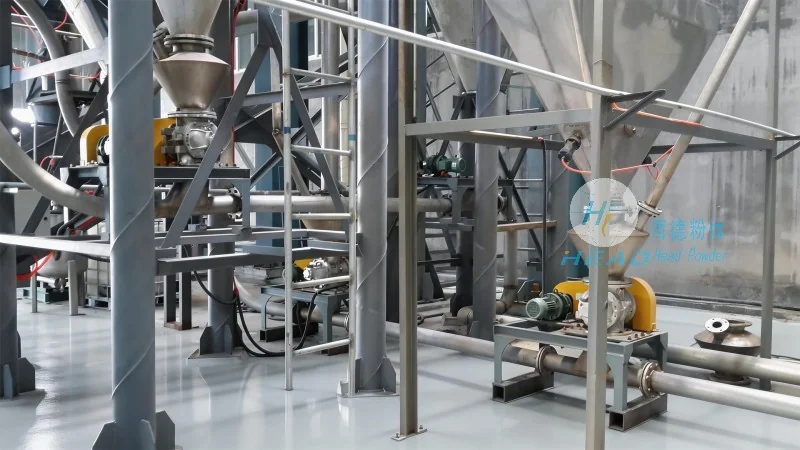
A solid powder pneumatic conveying system typically consists of several key components that work in harmony to transport materials. The primary elements include a material hopper or feeder, a conveying line (often a pipeline), a blower or air compressor to generate the necessary airflow, and a discharge device at the receiving end. Each component plays a critical role in ensuring the smooth and efficient movement of solid powders from the source to the destination. The material hopper is designed to store and feed the solid powder into the system, while the feeder controls the flow rate to maintain consistent conveying performance. The blower or air compressor provides the pressure and airflow required to move the material through the pipeline. The conveying line, usually made of metal or flexible tubing, transmits the material and air mixture. Finally, the discharge device, such as a rotary valve or a venturi, releases the material at the receiving point, completing the process.
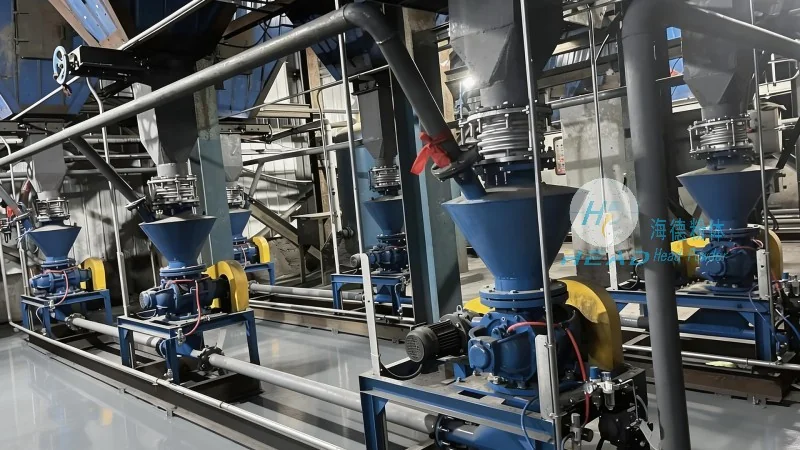
The operation process of a solid powder pneumatic conveying system involves a series of steps that ensure the material is transported safely and efficiently. The process begins with the loading of the solid powder into the material hopper. The feeder then regulates the flow of the material, feeding it into the conveying line at a controlled rate. Simultaneously, the blower or air compressor starts operating, generating a high-pressure airflow that enters the conveying line. As the air flows through the pipeline, it picks up the solid particles from the hopper and carries them along the line. The mixture of air and solid particles travels through the conveying line to the discharge point. At the receiving end, the discharge device separates the material from the air, typically using a venturi or a rotary valve to control the release of the solid powder. The air is then either recirculated back to the blower or released into the atmosphere, depending on the system design. This continuous cycle allows for the consistent and reliable transport of solid powders over varying distances and at different flow rates.
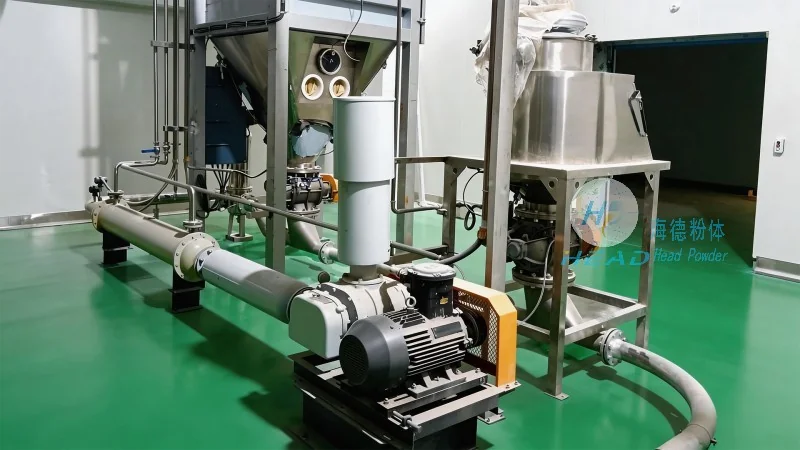
The working principle of solid powder pneumatic conveying is based on the fundamental concept of fluidization and the use of air as the conveying medium. When air is introduced into the conveying line at a sufficient velocity, it creates a turbulent flow that lifts and transports the solid particles. This process is often referred to as pneumatic transport, where the air acts as a carrier for the solid material. The key to effective conveying lies in achieving the right balance between the airflow velocity and the particle size and density of the material. If the airflow velocity is too low, the particles may not be fully suspended and may settle in the pipeline, leading to blockages or uneven flow. Conversely, if the velocity is too high, excessive energy consumption and potential wear on the system components may occur. The system design, including the blower capacity, pipeline diameter, and material characteristics, must be carefully optimized to ensure optimal performance. Additionally, the use of different conveying modes, such as dilute-phase or dense-phase transport, can affect the efficiency and suitability of the system for specific applications. Dilute-phase conveying uses high airflow rates to transport particles in a dispersed state, while dense-phase conveying uses lower airflow rates to move material in a more compacted form, often with higher pressure. These variations allow for flexibility in handling different types of solid powders and operational requirements.
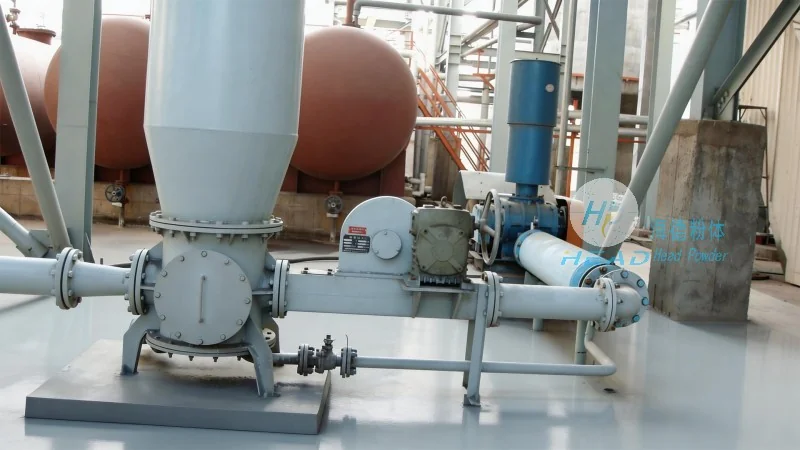
Solid powder pneumatic conveying equipment is widely used across various industries due to its versatility and efficiency. It is commonly employed in the chemical, pharmaceutical, food, and agricultural sectors for transporting materials such as powders, granules, and bulk solids. The benefits of using pneumatic conveying systems include reduced labor costs, improved safety by eliminating manual handling of materials, and increased process efficiency. Unlike traditional methods like belt conveyors or bucket elevators, pneumatic systems can transport materials vertically, horizontally, or in a combination of both, making them suitable for complex layouts and challenging environments. The ability to handle a wide range of materials, from fine powders to coarse granules, and the flexibility in system design also contribute to its popularity. Furthermore, the systems can be integrated with other process equipment, such as mixers, dryers, and reactors, to form a complete production line. This integration enhances overall operational efficiency and reduces downtime. The use of solid powder pneumatic conveying equipment also helps in maintaining product quality by minimizing contamination and degradation during transport. The enclosed system design prevents exposure to dust and other contaminants, ensuring that the material remains clean and free from external factors. This is particularly important in industries where product purity is critical, such as pharmaceuticals and food processing.

 Shandong Headpowder Engineering Co., Ltd.
 156-6277-7102(Manager Zhang)
  0531-83386006
  Zhangqiu District, Jinan City, Shandong Province, China
telephone
WeChatconsult
top