With more than 10‑year industry experience, Shandong Headpowder delivers full‑service pneumatic‑conveying systems and blowers, undertaking nationwide turn‑key powder‑handling projects.
HeadPowder, a leading enterprise in the field of powder handling technology, specializes in the design and implementation of pneumatic conveying systems for various industrial applications. This article provides an in-depth exploration of the principles underlying polypropylene resin powder pneumatic conveying systems, alongside an analysis of their typical working scene characteristics. The information is presented to assist potential clients and industry professionals in understanding the technical aspects and practical applications of these systems, with a focus on the expertise and solutions offered by Shandong HeadPowder Engineering Co., Ltd. based in Shandong, China.
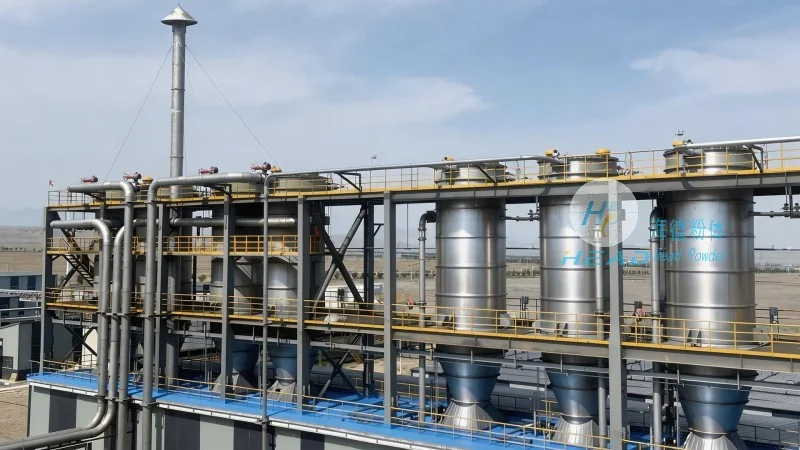
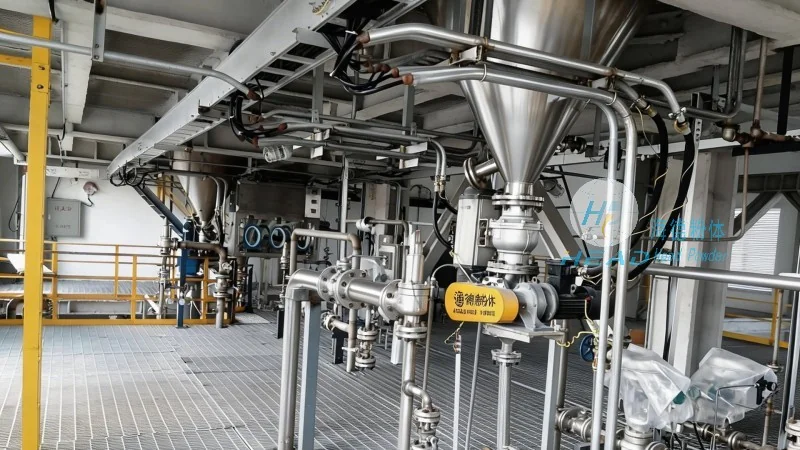
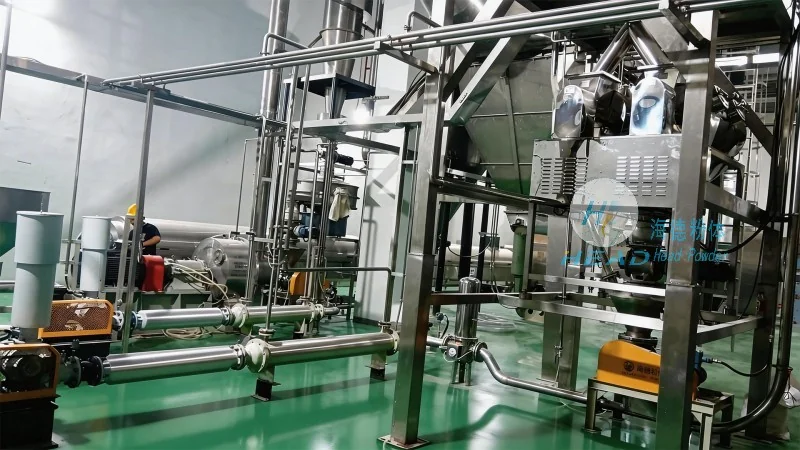
Pneumatic conveying systems operate by using air or other gases to transport solid materials, such as polypropylene resin powders, through a pipeline. The core principle involves creating a pressure differential that propels the material forward. In the case of polypropylene resin powder, the system typically employs a combination of positive and negative pressure or vacuum to move the material from the source to the destination. The process begins with the material being fed into a hopper or feeder, where it is then introduced into the conveying line. A fan or blower generates the necessary airflow, which carries the resin powder particles through the pipeline. The design of the system, including the type of airlock, the velocity of the air, and the pipeline configuration, is critical to ensuring efficient and reliable transport. The principle also considers factors like particle size, density, and moisture content of the polypropylene resin, as these characteristics influence the system's performance and the required air volume. Proper system design ensures that the polypropylene resin powder is conveyed without degradation, clogging, or excessive energy consumption, maintaining the material's quality and the system's efficiency.

 Shandong Headpowder Engineering Co., Ltd.
 156-6277-7102(Manager Zhang)
  0531-83386006
  Zhangqiu District, Jinan City, Shandong Province, China
telephone
WeChatconsult
top