With more than 10‑year industry experience, Shandong Headpowder delivers full‑service pneumatic‑conveying systems and blowers, undertaking nationwide turn‑key powder‑handling projects.
Corn starch, a critical raw material in numerous industrial and consumer products, demands efficient material handling solutions to maintain smooth production workflows. Pneumatic conveying emerges as a key technology for transporting corn starch, offering benefits such as reduced contamination, enhanced safety, and improved process control. This article explores the working principles of corn starch pneumatic conveying systems and examines the various classification applications tailored to diverse industrial needs.
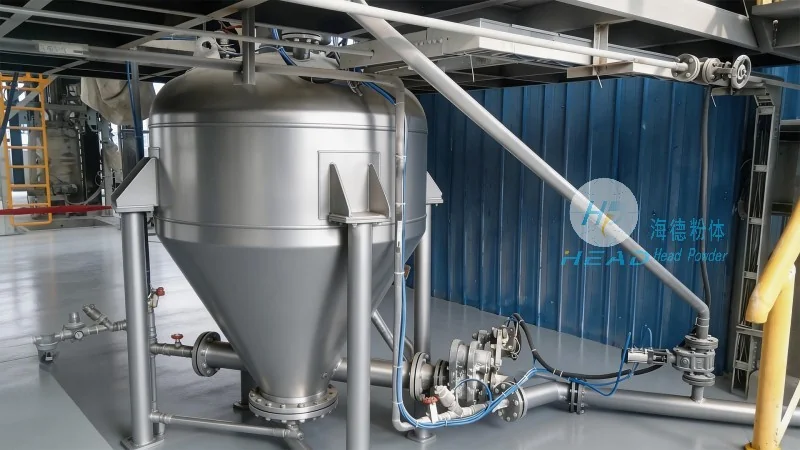
Before delving into the technical aspects of pneumatic conveying, it is essential to grasp the physical and chemical characteristics of corn starch. Corn starch is a granular powder with a particle size typically ranging from 10 to 200 microns. Its moisture content, bulk density, and flowability are pivotal factors affecting the design and operation of a pneumatic conveying system. For example, high moisture levels can lead to caking or agglomeration, which may obstruct the conveying line and diminish system efficiency. Similarly, variations in particle size distribution can impact the air velocity required for effective transport. These properties necessitate customized pneumatic conveying solutions that optimize material flow while minimizing operational challenges.
Pneumatic conveying systems operate by utilizing compressed air or other gases to transport solid materials through a pipeline. The core principle involves creating a pressure differential between the inlet and outlet of the conveying line. In a positive pressure system, air is introduced at the inlet, carrying corn starch particles through the pipeline to the discharge point. Conversely, a negative pressure system draws air and material from the discharge end, creating a vacuum that pulls the material through the line. The choice between positive and negative pressure depends on factors such as the distance to be covered, the height of the vertical lift, and the need for dust control. Key components of a corn starch pneumatic conveying system include the feed hopper, rotary valve or star feeder, air compressor or vacuum pump, conveying pipeline, and a separation or filtration system at the discharge end. The feed hopper ensures a consistent supply of corn starch, while the rotary valve controls the flow rate and prevents backflow. The air compressor or vacuum pump provides the necessary pressure or vacuum to move the material. The conveying pipeline, often constructed from stainless steel or other corrosion-resistant materials, is designed to withstand the abrasive nature of corn starch particles. The separation system, such as a cyclone or bag filter, removes any entrained air and fine particles from the discharged material, ensuring a clean and dry product.
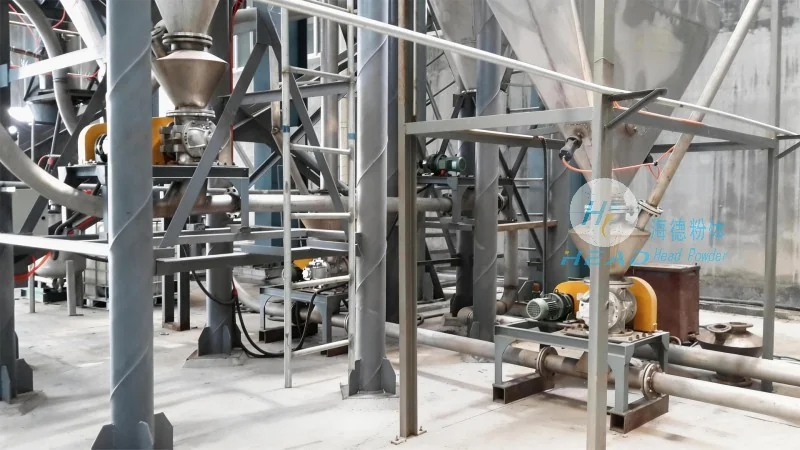
Based on air velocity and material flow characteristics, corn starch pneumatic conveying systems are classified into two primary categories: dilute phase and dense phase. Dilute phase systems operate at higher air velocities, typically 20 to 30 meters per second, and transport material in a dispersed state. This method is suitable for short to medium distances and low to moderate material loads. The main advantage of dilute phase conveying is its ability to handle large volumes of material efficiently with minimal pressure drop. However, it may require larger air volumes and can be less effective for fine powders prone to segregation. Dense phase systems, in contrast, operate at lower air velocities, around 5 to 10 meters per second, and transport material in a more concentrated state, often with the material forming a plug or slurry within the pipeline. This method is ideal for long-distance transport, high vertical lifts, and sensitive materials that require gentle handling. Dense phase conveying reduces the risk of particle degradation and minimizes dust generation, making it suitable for applications where product quality is paramount.
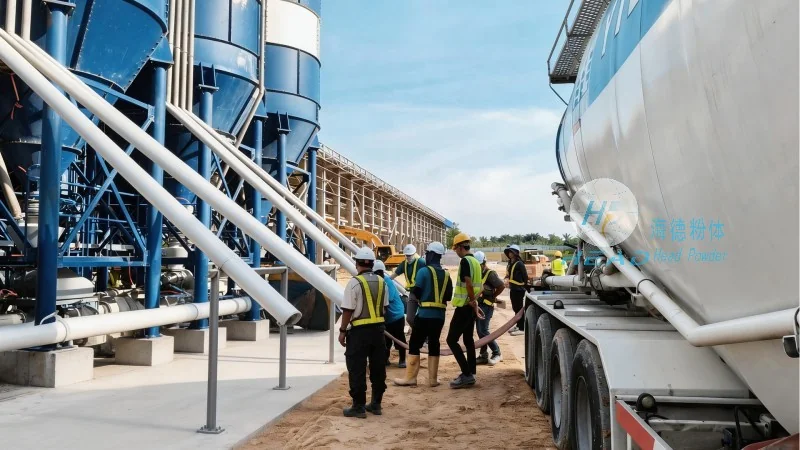
The versatility of corn starch pneumatic conveying systems makes them indispensable in various industrial applications. In the starch processing industry, these systems are used to transport raw corn starch from storage silos to processing units, such as milling and refining equipment. This ensures a continuous and uninterrupted supply of raw material, which is crucial for maintaining production rates. Additionally, pneumatic conveying is employed to move processed starch products, such as modified starches or starch derivatives, from the production line to packaging or storage facilities. The ability to handle both raw and finished products in a single system reduces the need for multiple handling steps, thereby improving overall operational efficiency. In the food and beverage industry, corn starch is used as a thickening agent and stabilizer in products like sauces, soups, and dairy alternatives. Pneumatic conveying systems facilitate the transfer of corn starch from bulk storage to production lines, ensuring consistent quality and reducing the risk of contamination. The pharmaceutical and cosmetic industries also utilize corn starch as an excipient or filler. Here, pneumatic conveying is employed to transport starch powders to blending and packaging equipment, where precise dosing is essential for product consistency. Furthermore, in the agricultural sector, corn starch is used as a feed additive or soil amendment. Pneumatic conveying systems enable the efficient distribution of starch-based products to farms or agricultural facilities, supporting sustainable farming practices.
Shandong HeadPowder Engineering Co., Ltd., commonly known as HeadPowder, is a leading provider of specialized engineering solutions for material handling and processing. With a strong focus on innovation and customer satisfaction, HeadPowder has established itself as a trusted partner in the design, manufacturing, and installation of pneumatic conveying systems for various industries. The company's expertise lies in understanding the unique challenges of different materials, such as corn starch, and developing customized solutions that meet specific operational requirements. HeadPowder's team of engineers and technicians utilizes advanced technology and rigorous testing to ensure that each system is optimized for performance, reliability, and safety. The company's commitment to quality is reflected in its adherence to international standards and continuous improvement initiatives. HeadPowder serves clients across China and beyond, delivering tailored solutions that enhance productivity and reduce operational costs. With a deep understanding of the material handling industry, HeadPowder continues to be at the forefront of technological advancements, providing sustainable and efficient solutions for its clients.

 Shandong Headpowder Engineering Co., Ltd.
 156-6277-7102(Manager Zhang)
  0531-83386006
  Zhangqiu District, Jinan City, Shandong Province, China
telephone
WeChatconsult
top